OpenAI readies hundreds of AI math results for GitHub despite mathematicians' request for papers going unheeded
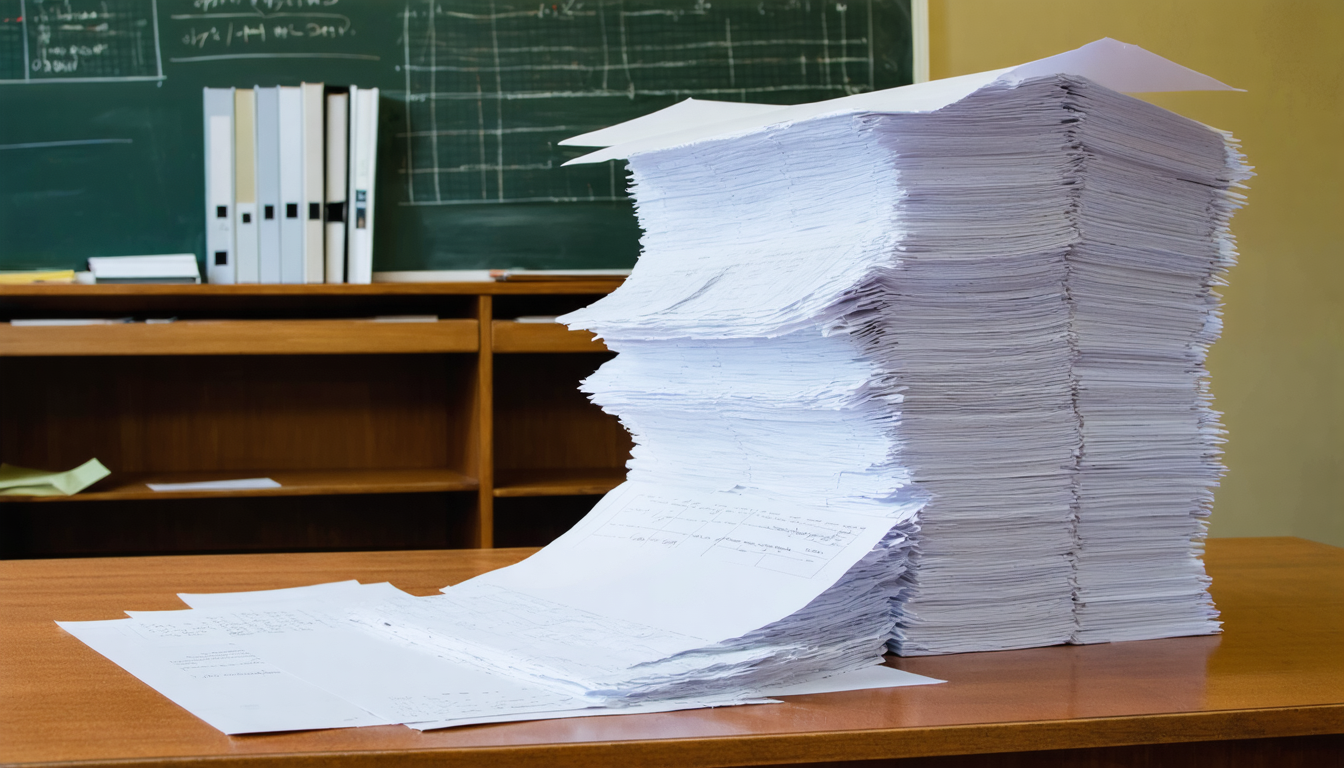
OpenAI plans to post hundreds of AI-generated math results on GitHub on Tuesday, people familiar with the plans told WIRED. The mathematicians it consulted in August asked for papers they could absorb and use, so a bulk upload leaves that work to every reader.
The Product Desk
What happened
- At an August meeting, about 40 mathematicians asked OpenAI to publish papers explaining its results, not blog posts or tweets like those it used for 10 problems that month.
- OpenAI spokesperson Lindsay McCallum said a model OpenAI began training on August 28 has resolved more than 100 long-standing open problems, plus the Navier-Stokes Millennium Prize problem.
- Attendees say OpenAI representatives promised not to release the solutions all at once, an assurance McCallum said the company is "not aware of."
- In September, NYU mathematician Tristan Buckmaster accused OpenAI of front-running unpublished Millennium Prize work he had done with Anthropic employee Levent Alpöge.
Why it matters
- What it costs cost A bulk upload without papers puts the work of understanding each result on the mathematicians who receive it, the cost the August group asked OpenAI to carry itself.
- What doesn't add up contradiction OpenAI's spokesperson says no release time is set while people familiar with the plans describe a Tuesday upload, so the date and size rest on unofficial accounts until OpenAI confirms them.
- Who has to decide decision Anyone who wants to cite or build on these results has to choose between waiting for independent write-ups and working from output released against the advice Kra's group gave.
Next story · Build · Sep 16
Lean's guarantee ends at 8,000 lines of C++ and its dependenciesConfirmed2 publishers
Attendees met OpenAI's hints of hundreds of solved problems with "a mixture of excitement and dread," Northwestern University mathematician Bryna Kra told WIRED [4]. According to Kra, the group's reason for asking for papers was practical: mathematicians need the explanation before they can absorb a result and use it [3]. "Apparently, that input was ignored," she said [8].
A team shipping in bulk tells itself users want volume. McCallum's statement leads with a count [15], and that count is more than ten times the 10 problems OpenAI announced by blog and tweet in August [11]. These users said that before doing anything with a result, they would read a paper explaining it [3]. WIRED's account does not describe what each entry in the repository will contain, though Kra's response suggests the entries are not the papers her group requested [8].
McCallum pitches a careful release. McCallum said OpenAI is "working to responsibly release the next math results from our model, drawing on advice and public recommendations from the Advisory Group on Mathematics and Artificial Intelligence at the Institute for Advanced Study to inform how we release these results" [1]. People familiar with the plans describe a bulk upload [12]. It would be the latest of the tens of thousands of mathematical solutions AI has generated this year [16].
Several mathematicians told WIRED the field has become a playground for OpenAI and Anthropic to show off their models as both companies prepare for initial public offerings [9]. In the rush, they said, the field's long-standing norms for publishing results and assigning credit have been abandoned [9]. WIRED's clearest example came in September, when OpenAI deployed thousands of agents on a Millennium Prize problem after hearing "rumors" that others were closing in [10]. Nestor Guillen, a visiting math professor at NYU, said "there's a perception of mobster behavior" from the AI companies among mathematicians [6]. "We disagree with that characterization," McCallum said [7].
For anyone deciding how much weight to give an AI capability claim, I'd sort releases on two axes. One is explanation: a write-up someone outside the company can work through, or bare output. The other is pace: staged so readers can keep up, or everything at once. The explained, staged corner is closest to what the August group asked for [2]. In the opposite corner, bare output released all at once, each reader has to work out every result on their own.
My recommendation is to treat anything in that last corner as a claim until an outside write-up exists. The tradeoff is speed. A team that waits will trail one that builds on raw output now, and if the results hold up, the waiting team lost that time.
What to watch
- Whether the GitHub repository appears on Tuesday, and whether its entries include explanations a mathematician outside OpenAI can work through.
- What the Institute for Advanced Study's Advisory Group on Mathematics and Artificial Intelligence publishes as recommendations, and whether OpenAI's release matches them.
- Independent write-ups confirming or refuting any of the more than 100 results McCallum cited, starting with the Navier-Stokes claim.
Clarity's read
What the record supports and how the coverage leans. The claims behind it follow.
Reality
- Evidence45
- Adoption
- Not scored
- Hype gap+55
- Incentives70
- Confidence50
Claim ledger
Ranked by verification strength, evidence, and original report placement.
- [1]
"We are working to responsibly release the next math results from our model, drawing on advice and public recommendations from the Advisory Group on Mathematics and Artificial Intelligence at the Institute for Advanced Study to inform how we release these results," McCallum said.
- [2]
In August OpenAI convened around 40 mathematicians; the group asked the firm not to just publish results in a blog or tweet, as it had done with 10 problems earlier that month, but to publish papers explaining the work.
- [3]
According to Kra, it would be important for OpenAI to publish papers explaining the work so that mathematicians could absorb, digest, and use the results.
- [4]
Attendees responded to OpenAI's hints that its models had solved hundreds of longstanding math problems with "a mixture of excitement and dread," Northwestern University mathematician Bryna Kra recalls.
- [5]
"We have not set a release time," McCallum said.
- [6]
Nestor Guillen, a visiting math professor at NYU, said "there's a perception of mobster behavior" from the AI companies among mathematicians.
- [7]
"We disagree with that characterization," McCallum said.
- [8]
"Apparently, that input was ignored," Kra said.
- [9]
Academics told WIRED the field has become a playground for OpenAI and Anthropic to show off their models as both prepare for initial public offerings, and that in their rush traditional scientific processes for releasing and attributing results have been cast aside.
- [10]
In September, OpenAI deployed thousands of agents to solve a Millennium Prize problem after hearing "rumors" that others were closing in on solutions; WIRED called it the most striking case so far.
- [11]
OpenAI's claimed count of more than 100 resolved problems is more than ten times the 10 problems it announced by blog and tweet in August.
- [12]
OpenAI has told people it plans to post hundreds of the results it referenced in the August meeting on GitHub on Tuesday, according to people familiar with the plans who spoke to WIRED.
- [13]
Tristan Buckmaster, a mathematician and professor at NYU, accused OpenAI of front-running work he had done toward an element of a Millennium Prize problem with Anthropic employee Levent Alpöge; the pair had not published but had been using OpenAI's tools.
- [14]
People who attended the August meeting say company representatives assured them OpenAI would not release the solutions all at once; McCallum says the company is "not aware of" that assurance.
- [15]
OpenAI spokesperson Lindsay McCallum said OpenAI began training a new internal model on August 28 which, in addition to resolving the Navier-Stokes Millennium Prize problem, "has now resolved more than 100 long-standing open problems across most areas of mathematics."
- [16]
The release would be the latest of tens of thousands of mathematical solutions generated by AI this year.
Sources
2 independent publishers whose own reporting we read for this story.
- cryptobriefing.comOpenAI previously released solutions to 10 open math problems on GitHub
1 article · October 6, 2026
- wired.comOpenAI Is Pissing Off a Bunch of Mathematicians—Again
1 article · October 6, 2026
Topics and entities
Topics
- Formal Verification
- Scientific publishing and attribution
- AI for Mathematics