Used bookshops sell out by the pallet: provenance is now a line item, not a research problem
A single order matched a week of sales at one Northumberland shop. The legal machinery behind it turns clean pre-LLM text into a purchasable commodity with a jurisdictional price.
The Product Desk
What happened
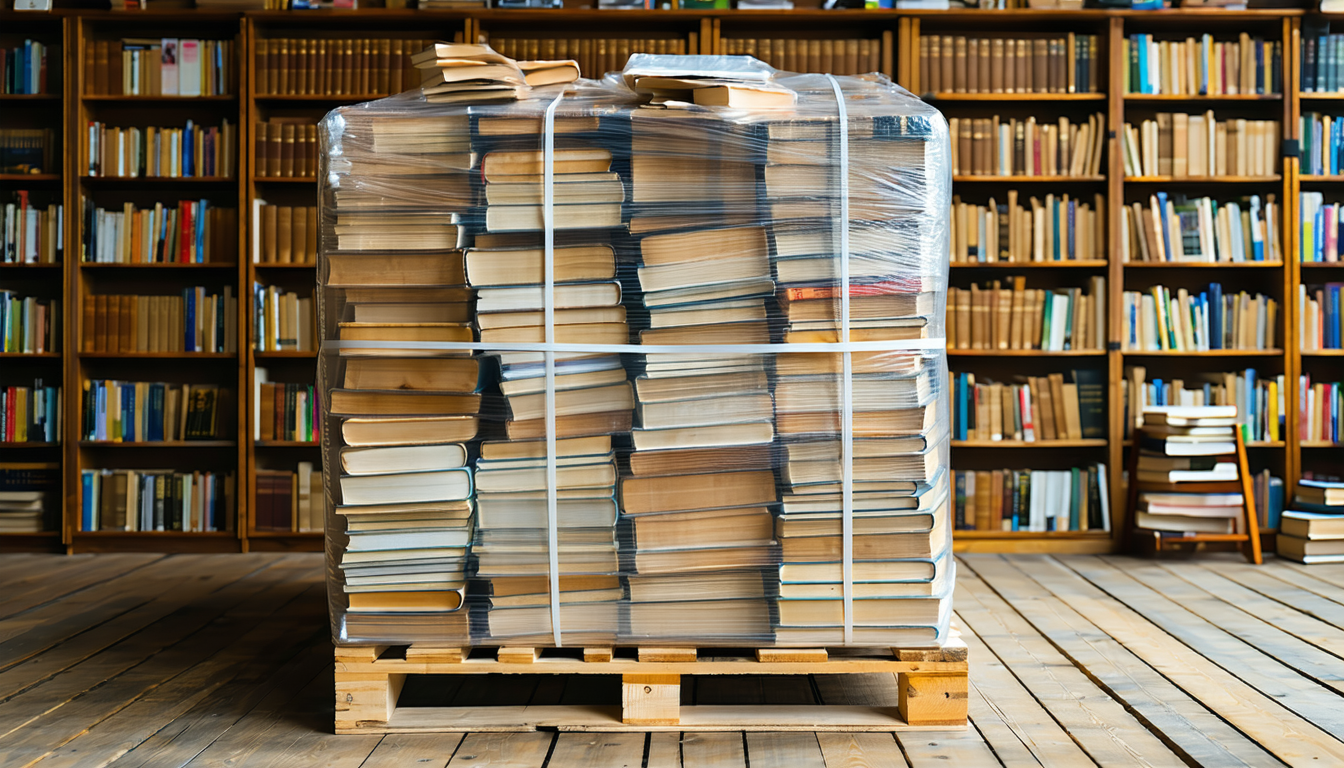
- Stuart Manley of Barter Books in Northumberland told the BBC that one recent single bulk order from a Canadian company equalled what he would expect to sell in seven days.
- In a typical week, Stuart Manley of Barter Books would sell two or three thousand books.
- Booksellers from around the world have reported similarly unusual mega orders.
- The booksellers are not sure what the final destination for their books is.
- Manley says he has "never seen the like of this after 30 years in the second-hand book trade".
Why it matters
Stuart Manley of Barter Books in Northumberland told the BBC that one recent bulk order from a Canadian company equalled what he would expect to sell in seven days, and that a typical week for him is two or three thousand books [1][2]. That puts a single purchase order in the range of a couple of thousand volumes [19], and the booksellers filling these orders say they do not know where the stock ends up [10].
Manley says he has "never seen the like of this after 30 years in the second-hand book trade" [18]. Booksellers elsewhere in the world report similar mega-orders [9]. David Tobin of Walden Books in north London has also had unusual sales, and told the BBC it is "very nice to sell some of these titles which haven't been sold for many years, but it would be sad if they are ultimately destroyed" [11].
The reason the trade suspects AI buyers is procedural rather than mystical. In 2025 a US judge ruled that using books purchased this way to train AI was not a copyright violation, with Judge William Alsup calling Anthropic's use "exceedingly transformative" in a suit brought by three authors [3][4]. Anthropic separately paid $1.5 billion to settle a class action over the use of illegal copies of books as training data [12]. Court documents unsealed last month showed books being destroyed in the course of training Claude, under an internal name, "Project Panama", with the stated aim to "destructively scan all the books in the world" [5][6][7]. Destructive scanning means shipping books to be digitised at industrial scale, cutting the spine off so pages can be fed through quickly, and recycling the remains [8].
An Anthropic spokesperson said Claude "is trained on a mix of publicly available web data, commercially acquired datasets, and data we generate ourselves", called book sourcing a widely used industry approach, and added that "none of our data acquisition programs buy and destroy rare or antiquarian books" [13][14][15]. Manley says the Panama name is new to him but the reality is not, that it has been discussed on bookseller forums, and that he does not know whether his books went to it or to a similar project at another firm [20].
Here is the part worth reading as a market signal. Gizmodo, citing 404 Media, argues that older books are becoming a premium product because anything published after the adoption of LLMs may contain LLM output, and that up to roughly 2022 only humans wrote books, which is the writing model builders want [24][25]. The purchasing behaviour is not neatly date-bounded on the evidence available: Manley describes the orders as having "no rhyme or reason", running from obscure Latin texts to cowboy novels, and experts told the BBC that the eclectic mix itself points to AI buyers looking for material not already in the pile [21][26].
The provenance cost is also jurisdictional. Professor Emily Hudson, an intellectual property specialist at Oxford University, told the BBC that the UK starting point is that building a training library and training on it both require the copyright owner's permission, unlike the US position [22]. The same pallet therefore carries a different legal bill depending on where the scanner sits [23].
Booksellers are drawing their own tiers. Derek Walker of McNaughtan's in Edinburgh notes that an academic text printed in 100 copies with 75 already in libraries is no great loss if one is destroyed, while he has sold books that are the only known surviving example of an 18th century edition [16][17].
What to watch: whether buyers begin specifying publication-date cutoffs in their orders, which would confirm the pre-2022 premium; whether the UK permission default pushes scanning work to US sites; and whether Anthropic's carve-out for rare and antiquarian books [15] is stated in a way any supplier can audit at the point of sale.
Clarity's read
What the record supports and how the coverage leans. The claims behind it follow.
Reality
- Evidence55
- Adoption30
- Hype gap+35
- Incentives55
- Confidence50
Perspective Coverage
3 publishers- Builder
- Builder 30%
- Operator
- Operator 43%
- Investor
- Investor 27%
Claim ledger
Ranked by verification strength, evidence, and original report placement.
- [1]
Stuart Manley of Barter Books in Northumberland told the BBC that one recent single bulk order from a Canadian company equalled what he would expect to sell in seven days.
- [2]
In a typical week, Stuart Manley of Barter Books would sell two or three thousand books.
- [3]
In 2025 a US judge ruled that using books purchased in this way to train AI software was not a violation of US copyright law; Judge William Alsup said Anthropic's use of the authors' books was "exceedingly transformative" and therefore allowed under US law.
- [4]
The decision resulted from a lawsuit brought against Anthropic by three authors.
- [5]
When court documents were unsealed last month, it emerged that books were being destroyed in the process of training Anthropic's chatbot Claude.
- [6]
Court documents showed the project of ingesting old books was referred to in internal company communications as "Project Panama".
- [7]
The documents indicated the company's aim was to "destructively scan all the books in the world".
- [8]
Destructive scanning is the process of shipping books to locations where they can be digitised at industrial scale, including removing a book's spine so all pages can be scanned rapidly, with the remains recycled.
- [9]
Booksellers from around the world have reported similarly unusual mega orders.
- [10]
The booksellers are not sure what the final destination for their books is.
- [11]
David Tobin, who runs Walden Books in north London, has also had unusual sales and said: "In some ways it's very nice to sell some of these titles which haven't been sold for many years, but it would be sad if they are ultimately destroyed."
- [12]
Anthropic paid out $1.5 billion to settle a class action lawsuit over using illegal copies of books as training data.
- [13]
An Anthropic spokesperson said: "Claude is trained on a mix of publicly available web data, commercially acquired datasets, and data we generate ourselves."
- [14]
The Anthropic spokesperson said sourcing books for training was a widely used approach across the AI industry.
- [15]
The Anthropic spokesperson said: "None of our data acquisition programs buy and destroy rare or antiquarian books."
- [16]
Derek Walker, owner of Edinburgh bookshop McNaughtan's, says a recent academic text published in only 100 copies, 75 of which are already in libraries, may be very rare on the market but is perhaps not such a great loss if one copy is destroyed.
- [17]
Walker says his shop has had and sold books that are the only known surviving example of an 18th century edition, and that it would be a much more significant problem if one like that were bought for destruction.
- [18]
Manley says he has "never seen the like of this after 30 years in the second-hand book trade".
- [19]
A single bulk order to Barter Books was therefore on the order of two to three thousand books.
- [20]
Manley says a lot of mystery surrounds Project Panama, that the name is new to him but the reality of the project is not and has been much discussed on bookseller forums, and that he does not know whether his books are being bought for it or for similar projects by other AI firms.
- [21]
Manley says the sales appear random with "no rhyme or reason", varying from obscure Latin texts to cowboy novels.
- [22]
Professor Emily Hudson, intellectual property specialist at Oxford University, says UK copyright law differs from the US and that the starting point in the UK is that all these acts of copying, creating the training library and doing the training, require the permission of the copyright owner.
- [23]
Identical book-acquisition-and-scanning activity carries different legal exposure by jurisdiction: permitted as transformative fair use under the 2025 US ruling, but requiring copyright owner permission as the UK starting point.
- [24]
Gizmodo, citing 404 Media, wrote that old books are becoming a premium product because anything published after the adoption of LLMs might contain LLM outputs.
- [25]
Gizmodo states that up until about 2022 only humans wrote books, and that it is human writing these companies need to train future LLMs.
- [26]
Experts told the BBC that the diverse subject matter of the orders also points to AI, as unusual and rare texts could provide fresh material to improve the training of large language models.
Sources
3 independent publishers whose own reporting we read for this story.
- bbc.co.ukSecondhand book sales are booming. Is it because of AI?
1 article · August 15, 2026
- fastcompany.comAI companies are buying used books by the thousands. Some may be destroyed for training
1 article · August 17, 2026
- gizmodo.comUsed Booksellers Are Racking Up Huge Sales. They’re Not Thrilled About the Likely Reason
1 article · August 16, 2026
Topics and entities
Topics
- AI training data
- Destructive Book Scanning
- AI and Copyright
- Secondhand Book Trade