Britain buys into Ukraine's battlefield data, and the first thing built with it watches a UK fence
Avengers AI Labs holds about 5 million combat-labelled frames, and the UK is the first foreign partner let in. The first technology out of the deal guards a British base perimeter.
The Watch · Security desk
What happened
- Zelensky and Andy Burnham signed an agreement on Monday making Britain the first foreign partner with access to Ukraine's Avengers AI Labs.
- The platform holds about 5 million battlefield images and video frames, much of it drawn from Ukraine's DELTA system and topped up with new combat data.
- Pilots are already running with three British firms: Sintela in Bristol, Mind Foundry in Oxford and Skyral in London.
- The first technology out of the deal turns buried fibre-optic cable into an AI sensor and is due at a UK defence site.
Why it matters
- Who's exposed exposure Custody of the corpus stops being a single ministry's problem: whoever wants to know what allied models recognise can now aim at UK accredited holders instead of Kyiv.
- What it sets up precedent Access to live combat telemetry is settling in as the price of allied defence-tech cooperation, so the next partner will ask for a tier of it by name.
- Who has to decide decision Someone in Whitehall now has to rule on how far a wartime targeting dataset may travel into domestic policing of prisons, railways and airports.
- What's now possible capability Low-power chips trained against this data would let British autonomous systems be tuned on Russian equipment signatures rather than proxies for them.
Next story · Security · 2h ago
Telegraph says Musk proposed the Starlink speed cap on Ukraine to TrumpConfirmed2 publishers
Every frame in the pile was labelled by combat. Daylight cameras and infrared sensors recorded tanks, artillery, air defence systems, infantry and aerial targets including Shahed drones and reconnaissance UAVs [2], and what happened next in each engagement is what makes the annotation trustworthy. The UK government's phrase for the collection is a "goldmine of battlefield data" [4]. The more useful word is ground truth, established by people who were being shot at while the sensor was running.
Most of the corpus arrives from DELTA, Ukraine's battlefield management and situational awareness system, and it is continually supplemented with fresh combat data [11]. So Britain has bought a subscription to an active war rather than taken delivery of a hard drive, and the value of that subscription depends on the fighting continuing and the sharing continuing with it.
Ukraine's Defence Ministry has said systems trained on the platform analyse more than 100,000 drone video feeds a month and help identify about 70% of enemy targets in real time [3]. That is roughly 3,300 feeds a day [12]. Both publishers carry those numbers as a previous ministry statement rather than an independently verified metric, and the 30% the ministry does not claim [13] is where the British pilots will either earn their keep or not.
Germany was promised access to DELTA and other digital systems in April, with then-defence minister Mykhailo Fedorov saying partners would gain unique battlefield data to strengthen their own capabilities [17]. Britain is described as the first foreign partner into Avengers itself [1], which implies tiers rather than a queue: source-system access for one ally, the curated training platform for another [19]. Combat telemetry has become something Kyiv can spend, and it buys concrete goods, among them MBDA's clearance to release classified information on UK components of the SCALP missile so local assembly lines can be set up in Ukraine [18], plus access to British universities, researchers and technology companies [20]. All of it sits under the two countries' 100 Year Partnership [9].
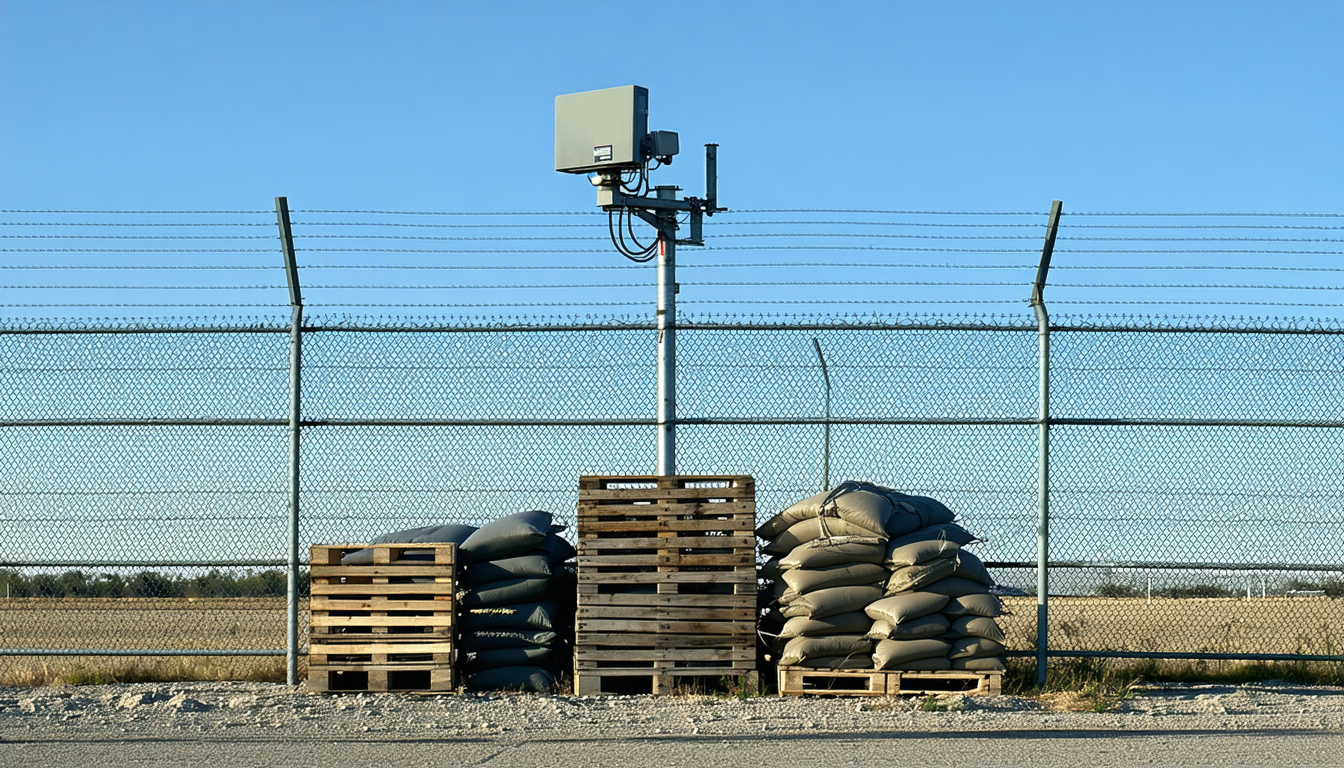
The awkward part is the first fielded product. Andy Burnham said combining Ukrainian battlefield data with British expertise would accelerate capabilities that strengthen national security and better protect critical infrastructure [16]; the stated job of the resulting fibre-optic sensor is to protect bases from protestors and hostile actors trying to gain intelligence [c11b]. Those two populations share one sentence in the official description, and the same technology is offered onward for airports, prisons, railways and energy sites [8]. Data gathered to distinguish an artillery piece from a decoy now feeds a system that will be asked what a person outside a perimeter is doing. AI minister Kanishka Narayan calls the arrangement AI sovereignty in practice [15]. Part of that sovereignty is deciding, at home, what the imported models get pointed at, and nobody has said where the line falls.
A corpus that defines what allied models can recognise is also a record of what they cannot. It now exists in two national systems and inside three private British firms [5], each of them a cheaper target than Ukraine's Ministry of Defence, which controls the accreditation [10].
What to watch
- Whether any published rule limits use of the Avengers-derived models to military perimeters, given the stated extension to airports, prisons, railways and energy sites.
- Whether other allies are granted Avengers access, and on which tier: the curated training platform or DELTA itself.
- Whether the accreditation regime for the three British pilot firms is disclosed, including where copies of the dataset are held and for how long.
Clarity's read
What the record supports and how the coverage leans. The claims behind it follow.
Reality
- Evidence55
- Adoption40
- Hype gap+30
- Incentives80
- Confidence62
Claim ledger
Ranked by verification strength, evidence, and original report placement.
- [1]
The agreement, signed Monday by Ukrainian President Volodymyr Zelensky and British Prime Minister Andy Burnham, makes the UK the first foreign partner to gain access to Ukraine's Avengers AI Labs, a defence platform built around millions of images and other battlefield data.
- [2]
The data is collected through thousands of daylight cameras and infrared sensors deployed across the battlefield, capturing tanks, artillery, air defence systems, infantry and aerial targets including Shahed drones and reconnaissance UAVs.
- [3]
Ukraine's Defence Ministry has previously said systems trained on the Avengers platform analyse more than 100,000 drone video feeds each month and help identify about 70% of enemy targets in real time.
- [4]
The British government described Avengers Labs as a "goldmine of battlefield data" giving researchers access to operational information collected during Russia's war against Ukraine.
- [5]
Pilot projects are already under way with Bristol-based fibre-optic sensing company Sintela, Oxford-based AI firm Mind Foundry and London-based modelling and simulation software company Skyral.
- [6]
The first technology developed under the initiative is due to be deployed at a UK defence site, combining Ukrainian data with UK technology to turn buried fibre-optic cables into an AI-enabled sensor.
- [7]
The first technology is expected to be deployed at a British defence facility "to protect bases from protestors and hostile actors trying to gain intelligence".
- [8]
British authorities said the technology could eventually be used to protect airports, prisons, railways and energy infrastructure as well as military facilities.
- [9]
The agreement was signed in Ukraine, forms part of the UK and Ukraine's 100 Year Partnership, and will focus initially on defence and national security.
- [10]
Avengers AI Labs is run by Ukraine's Ministry of Defence and allows approved defence companies to use battlefield data to develop and test AI models, particularly for drones and other autonomous systems.
- [11]
The platform contains about 5 million battlefield images and video frames and is closely linked to DELTA, Ukraine's military battlefield management and situational awareness system; much of the Avengers dataset comes from DELTA and is continually supplemented with new combat data.
- [12]
More than 100,000 drone video feeds a month is roughly 3,300 a day.
- [13]
The ministry's claim of about 70% real-time target identification leaves about 30% not identified in real time.
- [14]
A second project will examine development of next-generation low-power AI chips for future drones, robotics and autonomous systems, intended to operate for longer, respond faster and function where conventional systems face limitations.
- [15]
Minister for AI Kanishka Narayan described the arrangement as AI sovereignty in practice, focused on turning frontline experience into technologies for military and critical infrastructure protection.
- [16]
Burnham said that by combining Ukrainian battlefield data with British expertise, "we will accelerate the development of capabilities that not only strengthen our national security but better protect our critical infrastructure".
- [17]
Ukraine announced a similar partnership with Germany in April, giving German partners access to battlefield information from DELTA and other military systems; then-defence minister Mykhailo Fedorov said partners would gain access to unique battlefield data from DELTA and other digital systems to develop technologies and strengthen their own capabilities.
- [18]
The partnership follows the UK government's announcement that defence firm MBDA can release classified information on UK components for the long-range SCALP missile to establish local assembly lines in Ukraine.
- [19]
Germany's April arrangement covered DELTA and other military systems while the UK is described as the first foreign partner into Avengers itself, so the two allies were granted different tiers of access rather than the same one in sequence.
- [20]
The UK will provide access to its universities, researchers, technology companies and AI ecosystem, while Ukraine provides operational experience and datasets generated during the war.
Sources
2 independent publishers whose own reporting we read for this story.
- thecyberexpress.comBritain Gains Access to Ukraine’s ‘Goldmine’ of Battlefield AI Data
1 article · August 25, 2026
- therecord.mediaUkraine to give Britain access to battlefield data to train AI
1 article · August 25, 2026
Topics and entities
Topics
- UK-Ukraine Defence Cooperation
- Drone and Autonomous Systems
- Defence Data Sharing
- AI Sovereignty and National Security Framing
- Military AI
- Critical Infrastructure Protection
Entities
- UK-Ukraine 100 Year Partnership
- Andy Burnham
- Avengers AI Labs
- United Kingdom Government
- Mykhailo Fedorov
- Ukraine Ministry of Defence
- Kanishka Narayan
- Volodymyr Zelensky