Michael Smith gets 18 months in the first US criminal case over AI bot streaming fraud
Michael Smith got 18 months in prison for collecting more than $8 million in royalties with bots and AI songs, in the first US criminal case of its kind. Prosecutors wanted at least 46 months, so the deterrent the music trade groups asked for comes in at well under half that length.
The Investor · Invest desk
What happened
- Judge John G. Koeltl also ordered Smith to forfeit $8,091,843.64, the loss figure both prosecutors and the defense agreed on.
- The US Probation Office had recommended 24 months, while Smith's lawyers asked for probation with no prison time at all.
- Smith argued that a music industry lawyer had told him his conduct would at worst bring civil penalties, a claim prosecutors disputed.
Why it matters
- What it costs cost Because royalties are split pro rata from one pool, every fake stream shrank the payout to artists and songwriters whose songs real listeners played.
- What it sets up precedent The next defendant's lawyers can cite a first sentence set at 39% of the guideline floor when they negotiate a plea.
- What it limits constraint Song-level anomaly checks are weak against a fraudster who can generate hundreds of thousands of tracks and spread streams thin across them, as Smith did.
- Who's exposed exposure The dispute over Smith's lawyer, who prosecutors say vouched for his catalogue to The MLC, brings the advisers around a fraud within reach of the same scrutiny.
Next story · Product · 2d ago
YouTube Music lets partners declare AI use in three tiers and adds its own detectionConfirmed20 publishers
Judge Koeltl imposed 18 months [1] against a federal guideline range of 46 to 57 [5]. That is 39% of the prosecutors' floor [20] and 75% of the 24 months the Probation Office recommended [6][21]. The money was settled by agreement. The $8,091,843.64 forfeiture is the loss figure both sides accepted [3].
For anyone pricing the next scheme, the forfeiture takes the gain to zero. What remains is 18 months inside plus two years of supervised release [4], multiplied by the odds of being caught at all. Smith's scheme ran from 2017 to 2024 [9], and he pleaded guilty in March 2026 [14].
The money came out of other artists' pay. In the Justice Department's description, royalties are paid proportionately from a pool of funds, so fake streams divert money from musicians whose songs real listeners played [8]. Prosecutors say Smith's hundreds of thousands of AI-generated songs were streamed billions of times [12]. Billions of streams against $8.09 million [3] works out to no more than about 0.4 cents a stream [23].
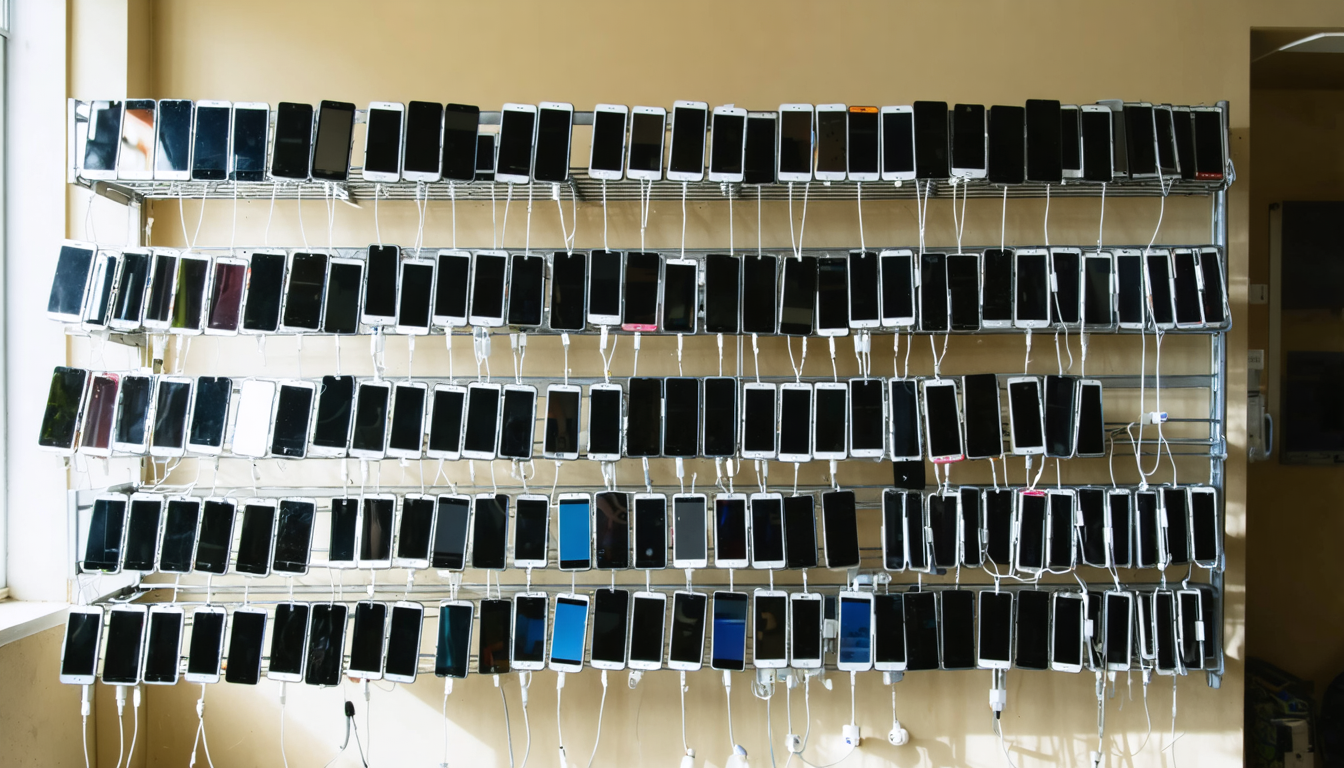
At that rate the fraud needs volume, and volume on one track gets noticed. Smith spread his streams across thousands of songs to avoid anomalous streaming on any single one [10]. He ran as many as 10,000 bot accounts at once, opened with fake email accounts and fraudulently obtained debit cards [9]. In an email he wrote that he needed "a TON of songs fast" to get around the platforms' "anti fraud policies" [11]. In April 2023 his bots logged 80.9 million family-plan streams on YouTube Music, 8.7 times the 9.3 million that Taylor Swift's entire catalogue drew there that month [13][22].
US Attorney Jamie McDonald said Smith "robbed millions in royalty payments from genuine artists and their fans" [15]. The sentencing announcements do not say whether any of the forfeited money will reach them.
The deterrent can still erode. The 18 months may become the anchor for the next defendant's plea. The US Attorney's Office argued against that outcome in its sentencing letter, writing that "a lenient sentence will send precisely the wrong message: streaming fraud will not result in meaningful punishment" [17]. Prosecutions may also stay rare. IFPI said the result "sends a clear message that streaming fraud is a crime and has serious consequences," while adding that "enforcement is only one part of tackling streaming fraud" and pointing to the industry's Streaming Integrity Initiative [18][19].
Or the case reaches the people around the fraud. Smith argued that a music industry lawyer told him his conduct would at worst bring civil penalties [24]. Prosecutors say they believe the same lawyer emailed The MLC in March 2023 insisting none of Smith's works were computer-generated [25]. The defense letter says a witness confirmed the lawyer "100% knew that Smith was manipulating streams" [26].
I think the case does make streaming fraud a prison risk as well as a takedown problem, because the whole gain is clawed back and a custodial term is added to it. The Music Fights Fraud Alliance wrote to the court that the sentence would "serve as the first real signal to the public regarding the actual legal consequences of streaming fraud" [16]. The counter-case is that the signal arrived at well under half the guideline floor, years after the conduct began [20][9]. This view is wrong if no second federal case follows, or if the next defendant gets the probation Smith's lawyers asked for [6].
What to watch
- Whether the government routes any of the $8,091,843.64 forfeiture back to the artists and songwriters whose pool share the bot streams diluted.
- Whether prosecutors act on the lawyer whom a defense witness says '100% knew' Smith was manipulating streams.
- Whether the Streaming Integrity Initiative publishes detection figures showing what platforms now catch before royalties are paid.
Information, not investment advice. This story is general information about companies and markets, drawn from cited reporting. It is not a recommendation to buy, sell or hold any security; check the cited sources before acting.
Clarity's read
What the record supports and how the coverage leans. The claims behind it follow.
Reality
- Evidence82
- Adoption
- Not scored
- Hype gap+18
- Incentives62
- Confidence78
Perspective Coverage
12 publishers- Builder
- Builder 26%
- Operator
- Operator 54%
- Investor
- Investor 20%
Claim ledger
Ranked by verification strength, evidence, and original report placement.
- [1]
Michael Smith was sentenced to 18 months in prison by US District Judge John G. Koeltl in Manhattan federal court on Tuesday, October 6.
- [2]
Prosecutors say Smith's bot streams allowed him to fraudulently obtain more than $8 million in royalties from the streaming platforms.
- [3]
Judge Koeltl ordered Smith to forfeit $8,091,843.64, the loss figure agreed by both sides.
- [4]
Smith was sentenced to two years of supervised release in addition to the prison term.
- [5]
Prosecutors asked for at least 46 months, the low end of the 46-to-57-month range set by federal sentencing guidelines.
- [6]
The US Probation Office recommended 24 months; Smith's lawyers asked for probation with no prison time.
- [7]
Prosecutors and the defense both described the case as the first criminal prosecution of its kind in the US.
- [8]
Royalty payments are made proportionately to musicians and songwriters from a pool of funds, so streaming fraud diverts funds from musicians and songwriters whose songs were legitimately streamed by real consumers.
- [9]
Smith's fraud lasted from 2017 to 2024; he created thousands of bot accounts, at times using as many as 10,000 at once, with fake email accounts and fraudulently obtained debit cards.
- [10]
Smith spread his automated streams across thousands of songs to avoid anomalous streaming as to any single song, which would likely have caused the platforms to discover the scheme.
- [11]
In an email, Smith said he needed "a TON of songs fast" in order to circumvent the "anti fraud policies" of the streaming platforms.
- [12]
Smith's hundreds of thousands of AI-generated songs were streamed by his bot accounts billions of times.
- [13]
In April 2023, Taylor Swift's entire catalogue received 9.3 million family-plan streams on YouTube Music, while Smith's bot accounts used family plans to stream his AI-generated music 80.9 million times.
- [14]
Smith, 54, of Cornelius, North Carolina, pleaded guilty on March 19, 2026, to one count of conspiracy to commit wire fraud.
- [15]
"By flooding music streaming platforms with automated bots in the place of consumers, and fake songs in the place of creativity, Smith robbed millions in royalty payments from genuine artists and their fans."
- [16]
"the sentence the Court imposes will serve as the first real signal to the public regarding the actual legal consequences of streaming fraud."
- [17]
"If the public is watching this case, as the defendant claims, a lenient sentence will send precisely the wrong message: streaming fraud will not result in meaningful punishment."
- [18]
"This result sends a clear message that streaming fraud is a crime and has serious consequences."
- [19]
IFPI said "enforcement is only one part of tackling streaming fraud" and that the industry is acting through the Streaming Integrity Initiative.
- [20]
The 18-month sentence is about 39% of the 46-month low end prosecutors sought.
- [21]
The 18-month sentence is 75% of the Probation Office's 24-month recommendation.
- [22]
Smith's bots logged about 8.7 times as many YouTube Music family-plan streams in April 2023 as Taylor Swift's entire catalogue.
- [23]
Upper bound on Smith's take per fake stream is about 0.4 cents, treating 'billions' of streams as at least 2 billion.
- [24]
Smith argued that a music industry lawyer he consulted told him that, at worst, his conduct would lead to civil penalties.
- [25]
Prosecutors said they believe the same lawyer emailed The Mechanical Licensing Collective in March 2023 insisting none of Smith's works were computer-generated.
- [26]
The defense letter says disclosures from August 2025 show at least one witness confirmed the lawyer "100% knew that Smith was manipulating streams".
Sources
12 independent publishers whose own reporting we read for this story.
- arstechnica.comOutstreaming Taylor Swift is easy with 10K bots and AI songs, fraudster admits
2 articles · October 7, 2026
- bleepingcomputer.comMusician sent to prison for $10 million streaming fraud using AI bots
2 articles · October 7, 2026
- cryptobriefing.comNorth Carolina man gets 18 months in first federal AI music streaming fraud case
1 article · October 7, 2026
- dexerto.comMan sentenced to prison after pocketing $8 million from AI songs streamed by bots - Dexerto
2 articles · October 7, 2026
- gizmodo.comGuy Who Made Millions by Creating AI Music Ouroboros Receives 18-Month Prison Sentence
1 article · October 7, 2026
- hothardware.comAI Music Fraudster Forced To Face The Music With 18-Month Sentence
1 article · October 7, 2026
- justice.govSouthern District of New York | North Carolina Man Sentenced To 18 Months In Prison For Super Intelligence-Assisted Music Streaming Fraud | United States Department of Justice
1 article · October 6, 2026
- musicbusinessworldwide.comMichael Smith, man behind $8M AI song and bot streaming fraud, sentenced to 18 months in prison - Music Business Worldwide
1 article · October 7, 2026
- techrepublic.comAI Music Streaming Fraud: Musician Gets 18 Months for $8M Scheme
1 article · October 8, 2026
- techspot.comMan who made $8 million using AI-generated songs and an army of streaming bots gets 18 months in prison
1 article · October 8, 2026
- US Man Given Prison Sentence for Bot-Farming Music Streams
thequietus.com
1 article · October 10, 2026
- tomshardware.comAmerican jailed for commanding 10,000 bots to stream his own AI-generated songs
1 article · October 8, 2026
Topics and entities
Topics
- AI-Generated Music
- Wire fraud prosecution
Entities
- US Attorney's Office for the Southern District of New York
- Streaming Integrity Initiative
- Deezer
- Jamie McDonald
- Spotify
- International Federation of the Phonographic Industry
- Music Fights Fraud Alliance
- YouTube Music
- The Mechanical Licensing Collective