Four-hour batteries undercut open-cycle gas peakers in all 43 markets Wood Mackenzie studied
Wood Mackenzie found four-hour battery storage costs less than open-cycle gas turbines in all 43 markets it studied, across every continent. It expects battery costs to keep falling for decades while gas-turbine power gets more expensive.
The Engineer · Build desk
Peaker buyers: open-cycle turbines take two to four years to procure. Closed-cycle buyers: queues into the early 2030s. Gas plant builders: turbine backlog raises build costs. Energy companies: turbine prices could raise costs. Middle East and Africa: batteries 33% cheaper by 2035.
- What it limits constraint Open-cycle peaker buyers Procuring an open-cycle turbine now takes two to four years., claim 8
- What it limits constraint Closed-cycle turbine buyers Order queues for closed-cycle turbines stretch into the early 2030s., claim 9
- What it costs cost New gas plant developers Accumulated orders for both turbine types are raising the cost of building new natural-gas power plants., claim 10
- What it costs cost Energy companies Rising turbine prices could increase their costs., claim 18
- Who's exposed exposure Middle East and Africa gas Four-hour batteries forecast 33% cheaper by 2035, displacing gas peaking capacity across the region's gas markets., claim 11
| Who | How | Kind | Claim |
|---|---|---|---|
| Open-cycle peaker buyers | Procuring an open-cycle turbine now takes two to four years. | constraint | 8 |
| Closed-cycle turbine buyers | Order queues for closed-cycle turbines stretch into the early 2030s. | constraint | 9 |
| New gas plant developers | Accumulated orders for both turbine types are raising the cost of building new natural-gas power plants. | cost | 10 |
| Energy companies | Rising turbine prices could increase their costs. | cost | 18 |
| Middle East and Africa gas | Four-hour batteries forecast 33% cheaper by 2035, displacing gas peaking capacity across the region's gas markets. | exposure | 11 |
What happened
- Buyers who want an open-cycle gas turbine for peaking now face a two-to-four-year wait to take delivery.
- Solar is the cheapest source of new generating capacity in every market Wood Mackenzie studied, North America included.
- By 2035 Wood Mackenzie expects four-hour batteries to run 33% cheaper across Middle East and Africa gas markets.
Why it matters
- Who has to decide decision On these numbers a buyer defaulting to a new open-cycle peaker is picking the dearer option in every market priced, so the storage-versus-gas comparison has to be run before the order goes in.
- What it limits constraint A new gas peaker ordered now will not arrive for two to four years, so for any near-term capacity shortfall it is off the table at any price.
- What it costs cost Rising turbine prices feed through to what energy companies pay, and the order backlog lifts the cost of building any new gas plant.
Next story · Invest · Oct 7
LG Energy buys four years of Canadian lithium it can steer to storage cells or car batteriesConfirmed2 publishers
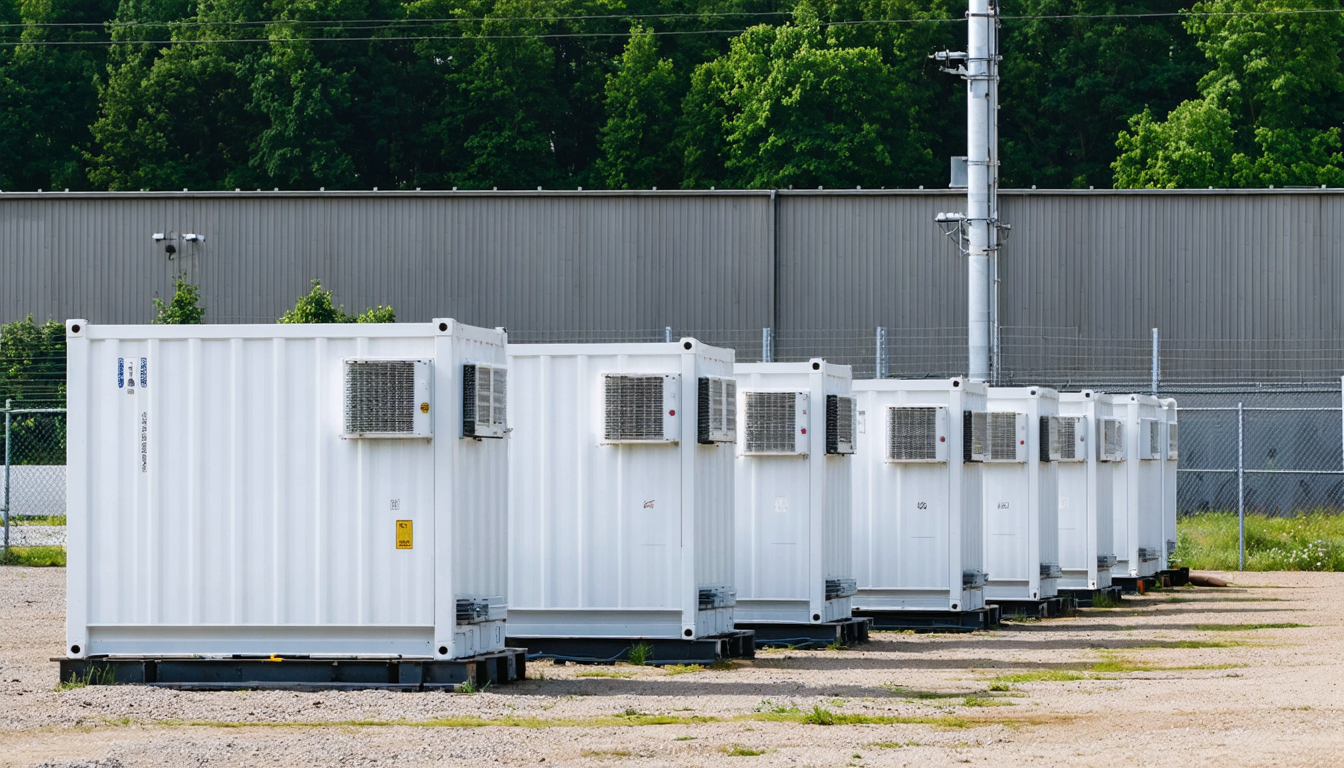
The comparison is deliberately narrow. Utilities run open-cycle turbines as peakers, firing them to generate power when demand spikes [4]. A four-hour battery covers that same window, and Wood Mackenzie priced the two in that role. In all 43 markets, on every continent, the battery came out cheaper [1].
The case strengthened on supply. Rising turbine prices and long procurement delays are what tilt the economics toward storage, the firm says [14]. The report also lands as US energy prices climb, feeding inflation, and as data centers push electricity demand to new highs [3]. AI data-center developers are buying up the gas turbines that are available and pushing prices up, with open-cycle models hit hardest [5]. Those models are easier to get than closed-cycle machines, but less efficient and more expensive to run [6][7]. An open-cycle turbine now takes two to four years to procure, and the order queue for closed-cycle units runs into the early 2030s [8][9]. The backlog on both makes any new gas plant more expensive to build [10].
Treat the 43-market result as a claim about someone else's project, because that is what it is. It transfers to yours only where the peak you need to cover fits inside four hours and your local market resembles one Wood Mackenzie priced. The firm's regional splits show how much that varies: four-hour batteries are forecast 33% cheaper across Middle East and Africa gas markets by 2035 [11], while storage in China already costs 55% less than in neighboring countries [12].
Solar is the cheapest source of new capacity in every market studied, North America included [13]. There the result is more contingent. Wood Mackenzie says tariffs and import limits are pressuring solar prices, though large plants are expected to fare better [15]. About 168 GW is largely shielded from near-term price shocks by safe-harbor provisions in the One Big Beautiful Bill, which keep tax credits for projects that start or finish construction before the end of 2027 [16].
The gap is expected to widen. Wood Mackenzie expects battery costs to keep falling for decades while gas-turbine power gets more expensive [2], and it expects the US gas oversupply to shrink over the next decade [19]. Ahmed Jamil Abdulla, the firm's principal analyst, said in a press release that the economic shift is decisive and growing stronger [17].
What to watch
- Whether turbine makers add enough capacity to clear the backlog, which would ease the lead-time half of the battery case.
- Whether US solar tariffs and import limits tighten, since that moves the cheapest-new-capacity figure in North America.
- Whether the US gas oversupply shrinks on Wood Mackenzie's schedule, which would push gas-peaking costs up faster.
Clarity's read
What the record supports and how the coverage leans. The claims behind it follow.
Reality
- Evidence38
- Adoption
- Not scored
- Hype gap+20
- Incentives
- Not scored
- Confidence45
Perspective Coverage
3 publishers- Builder
- Builder 25%
- Operator
- Operator 45%
- Investor
- Investor 30%
Claim ledger
Ranked by verification strength, evidence, and original report placement.
- [1]
In every one of the 43 markets Wood Mackenzie studied, on all continents, four-hour battery storage systems cost less than open-cycle gas turbines, the firm's new report found.
- [2]
Wood Mackenzie expects the cost of electricity from batteries to keep falling in the coming decades, while electricity from gas turbines is expected to get more expensive.
- [3]
The report appeared amid rising energy prices in the US and other countries, which are fueling inflation, while data centers are pushing electricity demand to new highs.
- [4]
Energy companies often use open-cycle turbines as peaking plants, running them to generate electricity during periods of high demand.
- [5]
AI data-center developers are buying up the available gas turbines, driving prices up, with the effect most pronounced on open-cycle models.
- [6]
Open-cycle turbines are easier to procure than closed-cycle models.
- [7]
Open-cycle turbines are less efficient and more expensive to operate than closed-cycle models.
- [8]
Procuring an open-cycle turbine now takes two to four years.
- [9]
Order queues for closed-cycle turbines stretch into the early 2030s.
- [10]
The accumulated orders for both turbine types are raising the cost of building new natural-gas power plants.
- [11]
In the Middle East and Africa, Wood Mackenzie forecasts four-hour batteries will be 33% cheaper by 2035, displacing gas peaking capacity through lower cost across all gas markets in the region.
- [12]
In China, energy-storage costs are 55% lower than in neighboring countries.
- [13]
In every market studied, including North America, solar is the cheapest source of new generating capacity.
- [14]
Rising turbine prices and long procurement delays are strengthening the economic case for battery storage systems, according to Wood Mackenzie.
- [15]
Wood Mackenzie says tariffs and import restrictions are pressuring solar prices in North America, while large solar plants are expected to perform better.
- [16]
In North America, about 168 GW is largely protected from short-term price shocks by safe-harbor provisions in the One Big Beautiful Bill, which preserve tax credits for projects that begin or complete construction before the end of 2027.
- [17]
This economic shift is decisive and increasingly strengthening.
- [18]
Rising turbine prices could also increase energy companies' costs.
- [19]
The oversupply in the US natural-gas market is expected to shrink over the next decade.
Sources
3 independent publishers whose own reporting we read for this story.
- dev.toIn 43 markets, four hours of battery power costs less than that of simple gas turbines
1 article · October 9, 2026
- mezha.net4-годинні батареї дешевші за газові турбіни відкритого циклу на 43 mar ринках, ідеться у звіті
1 article · October 10, 2026
- techcrunch.comBatteries are now cheaper than natural gas turbines used at many data centers
1 article · October 9, 2026
Topics and entities
Topics
- Gas peaking plants
- Data center power demand
- Battery Energy Storage
- Solar power costs
Entities
- Ahmed Jameel Abdullah
- One Big Beautiful Bill
- Wood Mackenzie