IMF raises Korea's 2026 growth forecast 0.7 points for the second time in three months
IMF raised its 2026 growth forecast for South Korea to 3.3%, saying chip exports more than offset the Middle East war. That leaves Korea ahead of the US at 2.3%, the eurozone at 1.1% and Japan at 0.7% in the fund's projections.
The Investor · Invest desk
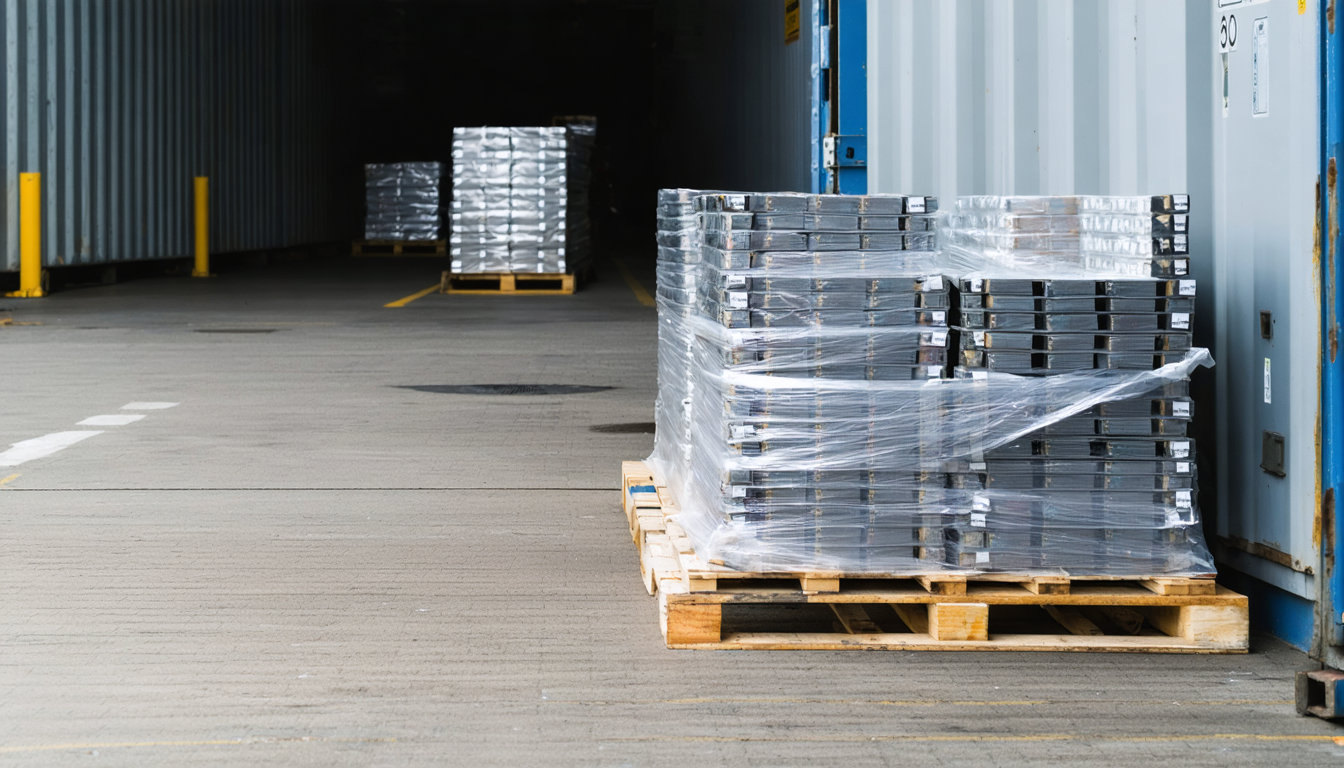
The IMF raised its 2026 growth forecast for South Korea to 3.3%, citing strong semiconductor exports. The OECD marked up its forecast to 3.7% from 2.6%. September exports reached a record $120.9 billion, up 83.5% from a year earlier, and semiconductor exports exceeded $60 billion for the first time.
| Figure | Value | Note | Claim |
|---|---|---|---|
| IMF 2026 forecast, raised | 3.3% | 2 | |
| OECD 2026 forecast | 3.7% | marked up from 2.6% | 12 |
| South Korea exports, September | $120.9 billion | record; up 83.5% from a year earlier | 6 |
| Semiconductor exports | $60 billion over | exceeded for the first time | 7 |
What happened
- The earlier step took the forecast to 2.6% in July from 1.9% in April, so October repeats a raise of the same 0.7-point size.
- Korea's 0.7-point raise was seven times the 0.1-point raise to the global forecast of 3.1%.
- September exports rose 83.5% from a year earlier to a record $120.9 billion on a surge in chip shipments, Yonhap reported.
- The outlook assumes the Strait of Hormuz reopens in November and that energy supplies and logistics normalize in February next year.
Why it matters
- Who's exposed exposure The IMF lists a reassessment of expected AI productivity gains among its downside risks, and the AI boom is also what supports the chip exports behind the upgrade.
- What doesn't add up contradiction Forecasters differ on the size of the offset: the OECD put Korea at 3.7% last month, 0.4 point above the IMF, while AMRO matches the IMF at 3.3%.
- What it limits constraint The IMF's 2027 forecast of 2.8% is 0.5 point below this year's, so even after a 0.3-point raise it has Korean growth slowing.
Next story · Invest · 19h ago
Record September exports of $120.9 billion hold up Seoul's 'steady recovery' callConfirmed2 publishers
Add the two steps and the 2026 forecast has moved 1.4 points since April [16]. The export figures behind the upgrade are concentrated. Semiconductor shipments topped $60 billion in September for the first time [7]. Set against the month's total, that is roughly half of everything Korea exported [19]. Backing the year-on-year gain out of that total puts the year-earlier base at about $65.9 billion [20], so chips alone last month were at least 91% of what Korea exported in all of September a year earlier [21].
We think the IMF has the direction right and the size unproven. It said chips more than offset the war [2]; the summaries of the outlook do not say by how many points. The chip side is already in the customs data, while the energy side depends on the November and February dates in the baseline [15]. If the strait stays shut past November, the drag is larger than the one the fund modelled. If monthly chip shipments slip back under $60 billion, the offset shrinks from the other end. If they hold, a forecast that has needed two raises in three months will probably need a third.
The finance ministry attributed the revision to exports of AI hardware and chips [9]. It also said: "The prolonged war in the Middle East and rising prices and interest rates continue to weigh on household livelihoods, and structural problems such as polarization and slowing potential growth also persist." [8] Its three named policy pushes are housing, jobs and financial support for low- and middle-income households [10]; none of the three is aimed at semiconductors.
What to watch
- Whether the Strait of Hormuz reopens in November, the date the IMF baseline uses before energy supplies and logistics normalize in February.
- Korea's October trade data: chip shipments against the $60 billion level crossed for the first time in September.
- Whether the IMF's next Korea figure moves toward the OECD's 3.7% or back toward AMRO's 3.3%.
Information, not investment advice. This story is general information about companies and markets, drawn from cited reporting. It is not a recommendation to buy, sell or hold any security; check the cited sources before acting.
Clarity's read
What the record supports and how the coverage leans. The claims behind it follow.
Reality
- Evidence80
- Adoption
- Not scored
- Hype gap+8
- Incentives
- Not scored
- Confidence78
Perspective Coverage
4 publishers- Builder
- Builder 10%
- Operator
- Operator 36%
- Investor
- Investor 54%
Claim ledger
Ranked by verification strength, evidence, and original report placement.
- [1]
The IMF's October World Economic Outlook, released on the 13th, projected South Korea's real GDP growth for 2026 at 3.3%.
- [2]
The IMF raised its 2026 growth forecast for South Korea to 3.3 percent, citing strong semiconductor exports that more than offset the fallout from the Middle East war.
- [3]
The IMF lifted its April projection for Korea's 2026 growth of 1.9% to 2.6% in July, a 0.7 percentage point increase; the October upgrade is another 0.7 percentage point.
- [4]
The IMF's 2026 growth projections are 2.3% for the United States, 1.1% for the eurozone and 0.7% for Japan, all below Korea's 3.3%.
- [5]
Korea's 0.7 percentage point upgrade was seven times the 0.1 percentage point increase in the IMF's global growth forecast, which stands at 3.1% for this year.
- [6]
In September, South Korea's exports rose 83.5 percent from a year earlier to a record US$120.9 billion, driven by a surge in chip shipments.
- [7]
Semiconductor exports exceeded $60 billion for the first time in September.
- [8]
The Ministry of Economy and Finance said, "The prolonged war in the Middle East and rising prices and interest rates continue to weigh on household livelihoods, and structural problems such as polarization and slowing potential growth also persist."
- [9]
The finance ministry said the latest forecast reflects South Korea's robust exports of AI hardware and chips.
- [10]
The government plans to push three core social policies on housing, jobs and financial support for low- and middle-income households.
- [11]
The IMF cited commodity price volatility, inflationary pressures, a reassessment of expected productivity gains from AI and a possible resurgence in trade tensions as downside risks.
- [12]
Last month the OECD marked up its 2026 growth forecast for South Korea to 3.7 percent from 2.6 percent, also citing robust exports.
- [13]
Earlier this month the ASEAN+3 Macroeconomic Research Office projected South Korea's economy will expand 3.3 percent this year, raising its previous forecast from 3.1 percent.
- [14]
The IMF projected South Korea's economy will grow 2.8 percent in 2027, up 0.3 percentage point from its previous forecast.
- [15]
The IMF outlook assumes the Strait of Hormuz reopens in November and that energy supplies and logistics normalize in February next year.
- [16]
Korea's 2026 forecast has risen 1.4 percentage points, from 1.9% in April to 3.3% in October.
- [17]
The OECD's 3.7% forecast for Korea is 0.4 percentage point above the IMF's 3.3%.
- [18]
The IMF's 2027 forecast of 2.8% is 0.5 percentage point below its 2026 forecast of 3.3%.
- [19]
September chip exports of more than $60 billion were roughly half (at least 49.6%) of the $120.9 billion total.
- [20]
The year-earlier (September 2025) export base was about $65.9 billion.
- [21]
September chip exports of more than $60 billion were at least 91% of the roughly $65.9 billion Korea exported in all of September a year earlier.
Sources
3 independent publishers whose own reporting we read for this story.
- en.sedaily.comIMF Lifts Korea's 2026 Growth Forecast to 3.3% on Chip Exports
3 articles · October 13, 2026
- en.yna.co.krIMF raises S. Korea's growth forecast to 3.3 pct amid chip supercycle
1 article · October 12, 2026
- koreaherald.comIMF raises S. Korea's growth forecast to 3.3% amid chip supercycle
1 article · October 12, 2026
- koreajoongangdaily.comIMF raises Korea's 2026 growth forecast to 3.3 percent on AI chip boom
1 article · October 12, 2026
Topics and entities
Topics
- IMF World Economic Outlook
- Semiconductor exports
- AI Hardware Supply Chain
- South Korea economy
Entities
- International Monetary Fund
- ASEAN+3 Macroeconomic Research Office
- OECD
- World Economic Outlook
- Ministry of Economy and Finance (South Korea)