WeatherNext 3 refreshes a 5 km global forecast every hour off live satellite mosaics
Google's new model trains on sparse station observations instead of six-hour-old physics output, which is what buys the 5 km surface grid. Wind aloft still comes out at 25 km, the same as WeatherNext 2.
The Engineer · Build desk
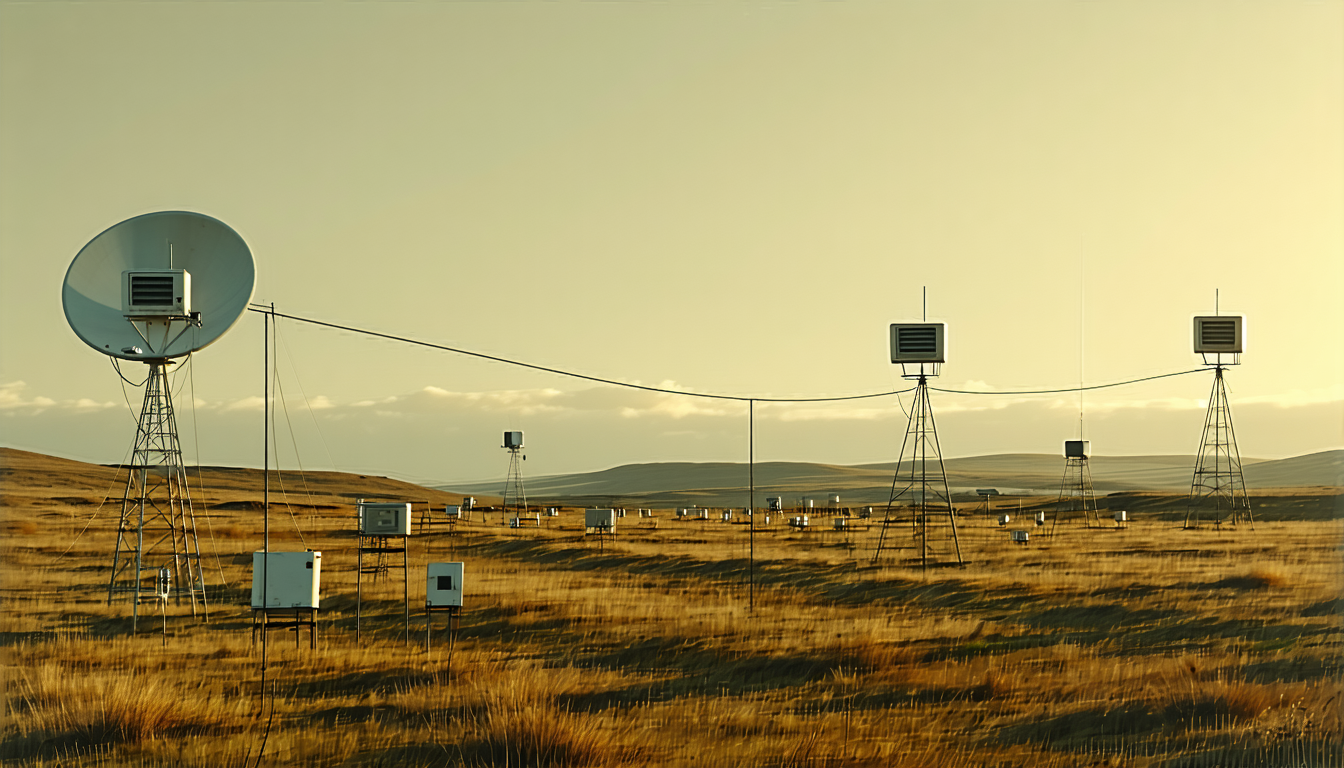
What happened
- Google DeepMind and Google Research have released WeatherNext 3, which produces global forecasts on hourly timesteps out to 15 days ahead.
- The system feeds live one-hour geostationary satellite mosaics and historical analysis into a single Functional Generative Network mesh transformer that also emits cyclone tracks and station-level points.
- The published documentation covers forecast capability and coverage but not commercial pricing, access tiers, or a specific API implementation workflow.
Why it matters
- What's now possible capability Places that could never fund a high-resolution physics stack can now consume a 5 km surface forecast without owning the supercomputer, which Google names as the point for Latin America, Africa and Asia-Pacific.
- What it costs cost The resolution gain is paid for downstream in storage, egress and join time, since one field now carries roughly 150 times the values at equal horizon and ensemble size.
- What it limits constraint Upper-air planning gets no finer here, so anyone keying turbine or aviation decisions off modelled wind speed is still working the same 25 km grid they had before.
- Who has to decide decision With no published pricing or access tier, a team can validate the forecast spec but cannot size the contract, which leaves the build-now-or-wait call sitting with engineering rather than procurement.
Next story · Build · 6h ago
Gemini 4 Argon falls from 97.5% to 49.8% on ARC-AGI-3 once vendor features come offConfirmed2 publishers
The 5 km figure comes from a different output head, not a downscaled grid. WeatherNext 3 trains directly on sparse weather station observations, and it predicts station-level sparse coordinates natively [9][10]. That is what the documentation means when it quotes 0.05 degrees for "station-calibrated surface variables" [1]. So a 5 km value near your site is only as good as the station network near your site, and Google's own limitations page says a 5 km grid remains a model representation rather than a promise about a specific address [13].
Then the arithmetic. WeatherNext 2 ran a 25 km grid in 6-hour increments [4]. Going from 0.25 to 0.05 degrees is five times finer per side, so twenty-five times the cells per unit area [17]. Hourly steps multiply that by six again, which puts one field for one member at roughly 150 times the values it used to carry [18]. Keep the full 64-member ensemble out to 15 days and a single variable is 360 timesteps across 64 members, about 23,040 member-steps per run [16][20]. That is what the resolution claim costs, and it lands in your object store and your joins.
The two published framings differ in a way worth reading closely. The documentation quotes a 2.5x to 5x improvement [3]. The blog post says roughly five times sharper [4]. Both are true of different variables. Temperature and moisture get 5 km, other surface fields 10 km, and atmospheric variables such as wind speed 25 km [2]. That last tier is the grid WeatherNext 2 already produced [21]. The gridded core at 0.1 degrees is 2.5x per side, so 6.25x the cells [19].
This is where the renewables framing needs a spec sheet. WeatherNext 3 outputs 100-metre wind speed, cloud cover and surface solar radiation downwards directly [6]. Neither source says which tier 100-metre wind sits on. If it is filed with atmospheric wind, a wind desk is getting WeatherNext 2's grid with a better ensemble bolted to it.
The strongest engineering here is upstream of the grid. Models trained on numerical weather prediction output inherit a six-hour data lag, which biases exactly the fast variables that matter, rain and surface temperature [11]. WeatherNext 3 ingests live one-hour geostationary satellite mosaics and emits a new forecast every hour against the most recent observations [10][12]. That is a mechanism, and it explains the precipitation result better than the score does.
About that score. Google reports up to 50% off Brier and CRPS, credited to training against ECMWF reanalysis, NASA IMERG and its own satellite-radar reanalysis [5]. The material does not state the baseline, the verification dataset, the region, or the lead time. For the number to transfer you would need held-out verification at gauge density comparable to whatever produced it, and the "most accurate" framing rests on live evaluations by Brightband, cited by Google itself [8].
A forecast that refreshes hourly and a planning system that refreshes nightly meet once a day, and the other twenty-three runs are decoration. The dev.to write-up makes the same point in plainer terms: the value comes from wiring a forecast to a concrete decision, such as when to dispatch a crew or alter a route, and a sharper number does not create that workflow [15].
What to watch
- Pricing and access tiers, and whether the hourly refresh ships the full 64-member ensemble or a single member.
- A published statement of which resolution tier the 100-metre wind, cloud cover and SSRD fields sit on.
- Precipitation scores broken out by region and lead time, verified by an evaluator other than Brightband.
Clarity's read
What the record supports and how the coverage leans. The claims behind it follow.
Reality
- Evidence55
- Adoption45
- Hype gap+25
- Incentives70
- Confidence60
Perspective Coverage
3 publishers- Builder
- Builder 37%
- Operator
- Operator 45%
- Investor
- Investor 18%
Claim ledger
Ranked by verification strength, evidence, and original report placement.
- [1]
According to Google's WeatherNext 3 benefits and limitations documentation, the model reaches resolution of up to 0.05 degrees, roughly 5 km, for station-calibrated surface variables, while core gridded fields reach 0.1 degrees, roughly 10 km.
- [2]
Google's blog states that key surface variables such as temperature and moisture are available at 5 km resolution, other surface variables at 10 km, and atmospheric variables such as wind speed at 25 km.
- [3]
Google says its training approach produces a 2.5x to 5x resolution improvement over WeatherNext 2, which operated at 0.25 degrees.
- [4]
Google's blog says WeatherNext 3 provides a global weather picture roughly five times sharper than WeatherNext 2, which produced forecasts on a 25 km grid in 6-hour increments.
- [5]
Google says WeatherNext 3 can reduce Brier score and Continuous Ranked Probability Score (CRPS) by up to 50%, and attributes the precipitation improvement to training against ECMWF reanalysis, NASA IMERG, and Google's satellite-radar reanalysis.
- [6]
The model directly outputs variables relevant to renewable-energy planning, including 100-metre wind speeds, cloud cover and surface solar radiation downwards (SSRD).
- [7]
WeatherNext 3 provides hourly forecast timesteps up to 15 days ahead, with global coverage.
- [8]
Google DeepMind and Google Research introduced WeatherNext 3, which Google's blog describes as the most advanced and accurate global weather model to date, according to independent live evaluations by Brightband.
- [9]
WeatherNext 3 trains directly on sparse weather station observation data, which Google says allows global forecasts on a 5 km grid that account for regional details such as topography.
- [10]
The WeatherNext 3 system ingests live 1-hour geostationary satellite mosaics alongside traditional historical analysis to feed a single Functional Generative Network (FGN) mesh transformer, which outputs dense gridded fields, discrete cyclone tracks, and predicts station-level sparse coordinates natively.
- [11]
Most AI weather models, including WeatherNext 2, are trained on numerical weather prediction model data, which carries a six-hour data lag that can lead to biases for fast-changing variables like rain or surface temperature.
- [12]
WeatherNext 3 generates a new forecast every hour, each grounded in the most recent satellite observations available, at up to 5 km resolution.
- [13]
A roughly 5 km forecast grid is still a model representation of conditions, not a promise that weather at a specific address will unfold exactly as predicted; local terrain, infrastructure and the decision being made all affect how useful a forecast is.
- [14]
Google's blog says the station-trained 5 km approach is particularly vital for regions across Latin America, Africa and Asia-Pacific that have historically been underserved by high-resolution forecasting due to the supercomputing requirements.
- [15]
The dev.to analysis argues the business value comes from connecting forecasts to a concrete decision, such as when to dispatch a crew, alter a route, prepare stock or notify a customer, and that a more precise forecast alone does not create that workflow.
- [16]
WeatherNext 3 produces 64-member probabilistic ensembles.
- [17]
Moving from 0.25 degrees to 0.05 degrees is a factor of five per side, which is 25 times as many grid cells per unit area.
- [18]
At equal forecast horizon and ensemble size, one field at 0.05 degrees hourly carries about 150 times the values of the same field at 0.25 degrees in 6-hour increments.
- [19]
The 0.1 degree gridded core is 2.5 times finer per side than 0.25 degrees, which is 6.25 times as many cells per unit area.
- [20]
A full-horizon, full-ensemble run is about 23,040 member-timesteps per variable: 360 hourly steps over 15 days across 64 members.
- [21]
WeatherNext 3's atmospheric tier at 25 km matches the 25 km grid WeatherNext 2 produced, so that tier shows no resolution gain.
- [22]
The documentation supplied for WeatherNext 3 establishes forecast capabilities and global coverage but does not set out commercial pricing, access tiers, or a specific API implementation workflow.
Sources
3 independent publishers whose own reporting we read for this story.
- blog.googleIntroducing WeatherNext 3, our most advanced and accurate global weather AI model
1 article · September 3, 2026
- dev.toGoogle WeatherNext 3 Delivers Finer Global AI Forecasts for Weather-Sensitive Operations
1 article · September 3, 2026
- the-decoder.comGoogle's WeatherNext 3 ditches physics simulations and learns weather directly from live satellite data
1 article · September 6, 2026
Topics and entities
Topics
- AI Weather and Atmospheric Forecasting
- Probabilistic ensemble forecasting
- Renewable Energy Forecasting
Entities
- European Centre for Medium-Range Weather Forecasts
- Continuous Ranked Probability Score
- Scalevise
- Google Research
- Google DeepMind
- Functional Generative Network