OpenAI reportedly buys camera software startup Glass Imaging for over $300M
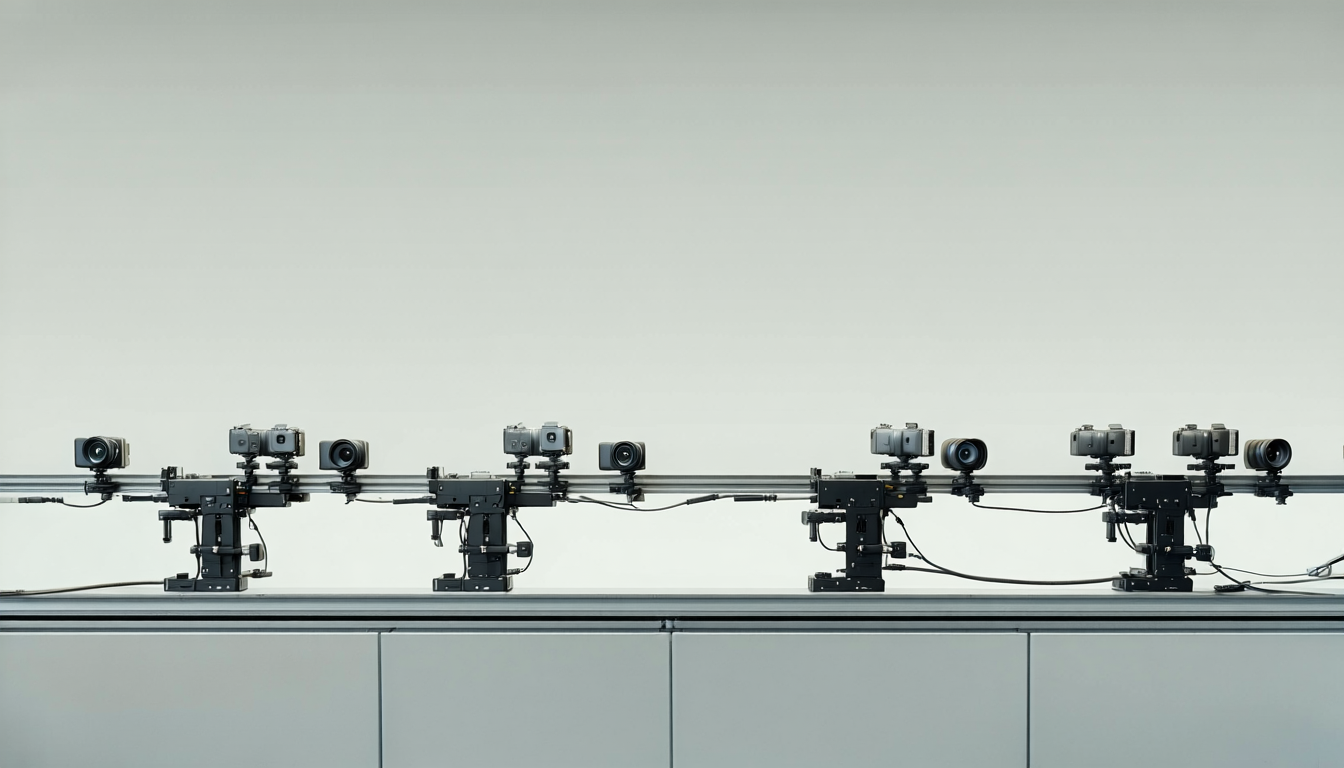
Glass Imaging trains a separate neural network for each lens and sensor pairing, so the reported purchase hands OpenAI a bench measurement job on every camera it eventually ships. Neither company has confirmed the deal.
The Product Desk
What happened
- The Wall Street Journal reported that OpenAI has bought smartphone camera software startup Glass Imaging for more than $300 million, and neither company has confirmed the purchase publicly.
- Glass Imaging's GlassAI is a neural image signal processor that runs raw sensor output through a network trained on one specific camera module, and it does in one pass what an ordinary pipeline splits into separate stages.
- The software reached handsets this year: Honor uses it for zoom on its 600 series, which has a 200-megapixel main camera, and a raw video version has been demonstrated on Qualcomm chipsets.
Why it matters
- What it limits constraint Per-module training puts a bench measurement in front of every camera variant OpenAI wants to ship, so each added SKU adds calibration work.
- Who's exposed exposure Honor's shipping zoom path and the demonstrated Qualcomm raw video path now rest on software owned by a company that is building devices of its own.
- What doesn't add up contradiction The only priced OpenAI device in the reporting is a screenless speaker at around $300, while the camera-bearing hardware TechCrunch describes stays at the rumor stage, so the purchase runs ahead of anywhere to put it.
- What's now possible capability Product categories with cramped optics, including drones and wearables, get a route to usable images at their current lens and sensor size.
Next story · Invest · 2d ago
OpenAI answers Apple's trade-secrets suit with a claim that an ex-employee moved 100-plus device filesConfirmed11 publishers
Glass Imaging tunes one module at a time. The company measures the point spread function, sensor response and noise profile of a particular lens and sensor pairing, then trains a network around that exact set of flaws [11]. Tuning is therefore specific to each phone the software ships in [11]. The pipeline it replaces treats color reconstruction, noise reduction, sharpening and frame fusion as separate stages; GlassAI runs them in a single pass and models the optical behavior of the individual lens [4].
The price is more than ten times the money that went in: over $300 million against about $29 million raised since the 2019 founding [1][7][17]. Insight Venture Management led a $20 million Series A in May 2025, following a $9.3 million extended seed in 2024 [7]. TechCrunch put total funding at about $30 million [8]. The reported price is also about 4.6% of the $6.5 billion in stock OpenAI paid for Jony Ive's io Products in May 2025 [9][18]. Ziv Attar and Tom Bishop worked on the computational photography behind Apple's Portrait Mode before starting the company [5]. Attar came to Apple in 2015, when it bought his Israeli camera startup LinX Imaging for about $20 million, according to Globes [10].
The strongest performance figure available comes from the company itself. Shivansh Rao of the Glass Imaging machine learning team told PetaPixel that submicron pixels encode fine detail conventional processing cannot decode [22]. In controlled tests, he said, the neural approach lifted a standard resolution measure by more than 50% as pixel size fell from 0.75 to 0.35 microns [22]. Attar told PetaPixel in June that Glass Imaging was proud to see the software shipping in a phone on sale [13]. Neither company has confirmed the purchase publicly [2], and OpenAI did not immediately respond to TechCrunch's request for comment [3].
OpenAI has bought a per-lens method, and the two engineers who built it, in advance of any announced product with a camera in it.
For anyone specifying a device, the question is what the camera is for. Glass Imaging's claim for its output is detail the sensor actually captured [21]. Verify that claim on your own module before the tuning work goes into a budget. If the value of the product depends on what the lens recorded, a neural image signal processor is a procurement item and the per-module measurement is what it costs to get one. If the camera is there so a model can take a rough look at the room, I would put the money in the microphone.
What to watch
- A price and deal structure appearing in an OpenAI filing ahead of the 2027 initial public offering.
- Whether GlassAI keeps turning up in Qualcomm chipset demonstrations now that its owner sells devices of its own.
- The first OpenAI device disclosure that names a camera module, which would show whether the per-lens method travels beyond phones.
Clarity's read
What the record supports and how the coverage leans. The claims behind it follow.
Reality
- Evidence55
- Adoption45
- Hype gap+18
- Incentives60
- Confidence62
Perspective Coverage
3 publishers- Builder
- Builder 33%
- Operator
- Operator 13%
- Investor
- Investor 54%
Claim ledger
Ranked by verification strength, evidence, and original report placement.
- [1]
OpenAI Group PBC has apparently bought smartphone camera software startup Glass Imaging Inc. for more than $300 million, in a deal first reported by The Wall Street Journal.
- [2]
Neither OpenAI nor Glass Imaging has confirmed the purchase publicly.
- [3]
OpenAI did not immediately respond to TechCrunch's request for comment.
- [4]
GlassAI is a neural image signal processor that runs raw sensor output through networks trained against a specific camera module; ordinary pipelines treat demosaicing or color reconstruction, noise reduction, sharpening and frame fusion as separate stages, while GlassAI handles them in a single pass and models the optical behavior of the individual lens.
- [5]
Ziv Attar and Tom Bishop started Glass Imaging in 2019 as chief executive and chief technology officer; both came from Apple, where they worked on the computational photography behind Portrait Mode.
- [6]
Glass Imaging was founded in 2019 and is based in Los Altos, California.
- [7]
Glass Imaging had raised about $29 million before the sale; Insight Venture Management led its $20 million Series A round in May 2025, following a $9.3 million extended seed in 2024.
- [8]
TechCrunch reports that Glass Imaging had previously raised about $30 million in funding from investors.
- [9]
OpenAI paid $6.5 billion in stock for Jony Ive's io Products Inc. in May 2025, then spent the months after that hiring dozens of Apple employees.
- [10]
Attar joined Apple in 2015, when it acquired his Israeli camera startup LinX Imaging for about $20 million, according to Globes.
- [11]
Glass Imaging measures the point spread function, sensor response and noise profile of one particular lens and sensor pairing, then builds a network around that exact set of flaws, so tuning is specific to each phone the software ships in.
- [12]
Chinese smartphone maker Honor Device Co. Ltd. uses GlassAI for zoom on the 600 series, which carries a 200-megapixel main camera, and a raw video version has been demonstrated running on Qualcomm Inc. chipsets.
- [13]
Founder Ziv Attar told PetaPixel in June that Glass Imaging was proud to see the software shipping in a phone on sale.
- [14]
OpenAI bought the tech industry podcast company TBPN in April.
- [15]
Reports have pushed OpenAI's initial public offering to 2027.
- [16]
Glass Imaging has pitched the same software at drones, wearables and other small cameras where the optics are too cramped to deliver a clean image on their own.
- [17]
The reported price of more than $300 million is more than ten times the roughly $29 million Glass Imaging had raised before the sale.
- [18]
The reported Glass Imaging price of more than $300 million is about 4.6% of the $6.5 billion OpenAI paid for io Products.
- [19]
A screenless speaker priced at around $300 is among the devices reported to be in development at OpenAI.
- [20]
TechCrunch reports that OpenAI is rumored to be working on its own hardware, including smartphones, earbuds and AI companion devices.
- [21]
Glass Imaging says the result is detail the sensor actually captured, not detail the model invented.
- [22]
Shivansh Rao, who works on the Glass Imaging machine learning team, told PetaPixel that submicron pixels encode fine detail in ways conventional processing cannot decode, and that in controlled tests the neural approach lifted a standard resolution measure by more than 50% as pixel size fell from 0.75 to 0.35 microns.
Sources
2 independent publishers whose own reporting we read for this story.
- siliconangle.comOpenAI reportedly buys AI camera startup Glass Imaging for more than $300M
2 articles · September 14, 2026
- techcrunch.comOpenAI buys smartphone camera maker Glass Imaging for $300 million, report says
2 articles · September 14, 2026
- thenextweb.comOpenAI buys camera startup Glass Imaging for over $300m, WSJ reports
1 article · September 15, 2026
Topics and entities
Topics
- On-Device AI
- AI consumer devices
- AI Acquisitions
- Computational Photography