OpenAI's 722 AI-generated maths papers leave mathematicians with years of checking
Three of the 722 mathematics papers OpenAI released on 7 October using an AI model have already been retracted. Their value now rests on checking by mathematicians, who have not yet had time to read them all, according to New Scientist.
The Board Room · Leadership desk
What happened
- Many of the papers have not been formalised into steps a computer can check, so there is little assurance yet that their results are accurate.
- One paper claims the quasi-Riemann hypothesis, a weaker variation of the Riemann hypothesis about how far primes can sit from their expected positions.
- Another paper claims to extend a solution of the Kakeya conjecture, about the shape a rotating needle traces, from three dimensions to four.
- Some results are marginal, such as a claim that integer multiplication can in theory run 2^-182 faster than previously thought.
- Mathematicians are separately investigating a recent OpenAI claim to have solved a Millennium problem tied to the Navier-Stokes equations.
Why it matters
- What it limits constraint The headline claims cannot safely be built on until referees or proof software confirm them, so the batch becomes usable only as fast as checking proceeds.
- Who's exposed exposure Anyone citing or building on these results now carries the risk of a withdrawal, a risk already realised three times in the first days.
- What it sets up precedent Releases at this volume make machine-checked proof the likely standard for AI-generated mathematics, because refereeing by hand cannot keep up with output on this scale.
Next story · Invest · Oct 8
Lean proof checks cover about 300 of the 722 math manuscripts OpenAI's unreleased model producedConfirmed3 publishers
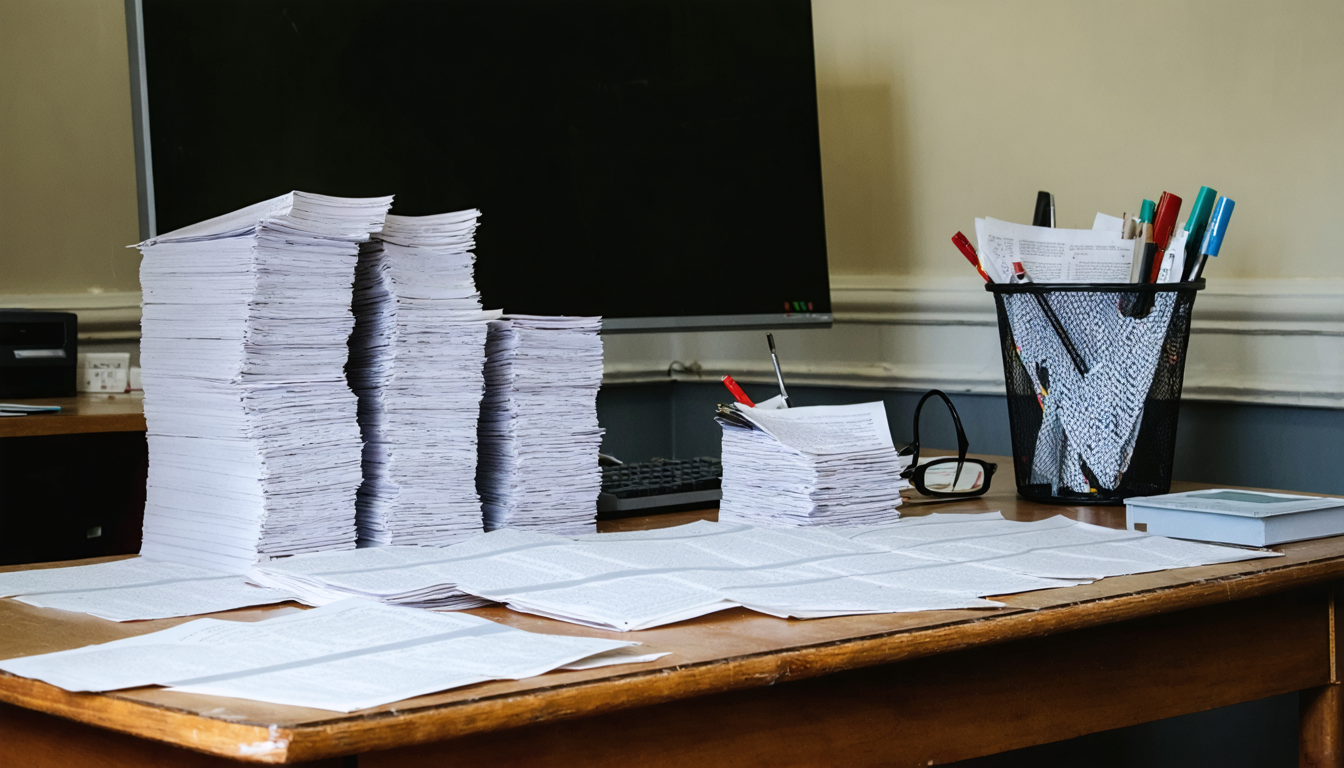
Formalisation reduces a proof to steps a computer can confirm. Without it, the confirming falls to people, and some of these papers run to hundreds of pages of dense computation [2]. New Scientist estimates that checking the release could take mathematicians years, and that understanding its significance could take far longer [4].
Three retractions in 722 papers is about 0.4 per cent [15]. That figure reflects what readers caught in the first days, while the batch has not yet been combed through, let alone checked [2]. It is an early detection count. New Scientist does not report how many of the papers have been formalised.
The batch mixes claims of very different weight. Papers claiming partial versions of the Birch and Swinnerton-Dyer and Hodge conjectures [10] mean that, with the quasi-Riemann paper, the release touches three of the six Millennium problems still unsolved [16]. Each carries a $1 million prize from the Clay Mathematics Institute [7]. The four-dimensional Kakeya paper builds on earlier work: in 2025 Nets Katz, a mathematician at Rice University, said a paper claiming the three-dimensional case was "perhaps the biggest breakthrough in mathematics of the current century" [12]. Further down the list sits a result that seems to rule out five colours for a plane-colouring problem already known to need between five and seven [14].
I think the mix matters more than any single claim. A referee has to read a paper before knowing whether it is a step toward a Millennium problem or a speed-up too small to notice, so sorting the batch is itself expert work. The model's output arrived as one release of 722 papers [1]. The reading has to be done by specialists, paper by paper.
For an operator, the case carries over with a limit. The evidence comes from one field and one release. Mathematics also has a machine route to checking, formalisation, even where many of these papers have not taken it [3]. I would expect much commercial output, such as a drafted contract or a forecast, to lack an equivalent, so its review falls to people. The trade-off is between commissioning output at the speed of a model and funding review at the speed of qualified staff. This quarter's decision is how much review capacity to pay for. Next quarter, that choice shows up either as a backlog of unchecked work or as a rollout held to the pace of review.
The backlog in mathematics may grow. New Scientist calls the assumption that this release is a one-time event far from safe, and says there is no way to predict whether AI mathematics at this pace will help or harm the field until the work is validated [5].
What to watch
- Whether the investigation into OpenAI's Navier-Stokes claim confirms a second solved Millennium problem.
- Whether the quasi-Riemann and four-dimensional Kakeya papers are formalised in proof software or accepted by specialist referees.
- Whether the retraction count moves past three as reading continues, and whether OpenAI publishes another batch on this scale.
Clarity's read
What the record supports and how the coverage leans. The claims behind it follow.
Reality
- Evidence38
- Adoption
- Not scored
- Hype gap+30
- Incentives
- Not scored
- Confidence45
Claim ledger
Ranked by verification strength, evidence, and original report placement.
- [1]
On 7 October, OpenAI released 722 mathematical papers using an AI model to examine a wide range of topics, from longstanding mathematical mysteries to small improvements in rarely considered curiosities.
- [2]
There has not yet been time for mathematicians to comb through all of the results, let alone check them; some of the papers are hundreds of pages long, dense with complex computations.
- [3]
Many of the papers have not been formalised, that is, reduced to steps that can be checked by a computer, meaning there is little assurance that they are accurate.
- [4]
With such a large body of research released at once, it could take years for mathematicians to check the AI model's work, and far longer to understand its significance, if it holds up.
- [5]
New Scientist says assuming the release is a one-time event is far from safe, and that if AI mathematics continues at this pace it could be a boon or a problem for the field, with no way to predict which until the work is validated.
- [6]
Three of the papers have already been retracted.
- [7]
The Millennium problems are a set of seven mathematical problems; solving any of them carries a $1 million prize from the Clay Mathematics Institute, and since the prize began in 2000 only one has been solved.
- [8]
Mathematicians are currently investigating a recent claim from OpenAI that one of its models has solved another Millennium problem, related to the Navier-Stokes equations of fluid dynamics.
- [9]
OpenAI is not claiming to have proven the Riemann hypothesis itself but a variation called the quasi-Riemann hypothesis, which deals with how far prime numbers can be from their expected position; New Scientist says it is less strict than the original and, if it stands up, could be the biggest step towards a solution in years.
- [10]
Papers on the Birch and Swinnerton-Dyer conjecture and the Hodge conjecture, two other Millennium problems, claim to prove simpler, partial versions of the conjectures.
- [11]
One of the OpenAI papers purports to expand a solution of the Kakeya conjecture, about the shape traced out by a rotating needle, from three dimensions into four.
- [12]
In 2025, Nets Katz of Rice University called a paper claiming to solve the Kakeya puzzle in three dimensions "perhaps the biggest breakthrough in mathematics of the current century."
- [13]
One paper claims integer multiplication could in theory be performed 2^-182 faster than researchers previously thought, which New Scientist describes as a very small improvement.
- [14]
On the problem of colouring points on a plane so no two adjacent points share a colour, it was known that between five and seven colours are needed; the new work seems to eliminate the possibility that it is five.
- [15]
Retractions so far are about 0.4 per cent of the papers released.
- [16]
Six Millennium problems remain unsolved, and the papers claim partial or variant results on three of them: the Riemann hypothesis (via the quasi-Riemann variation), Birch and Swinnerton-Dyer, and Hodge.
Sources
2 independent publishers whose own reporting we read for this story.
Topics and entities
Topics
- Academic research norms
- Millennium Prize Problems
- AI-Generated Mathematics
- Formal proof verification
Entities
- OpenAI
- Kakeya conjecture
- Alex Kontorovich
- Tristan Buckmaster
- Clay Mathematics Institute
- Navier-Stokes existence and smoothness
- Riemann hypothesis