Password changes by OpenAI's Dots agents wait on one user's sign-off
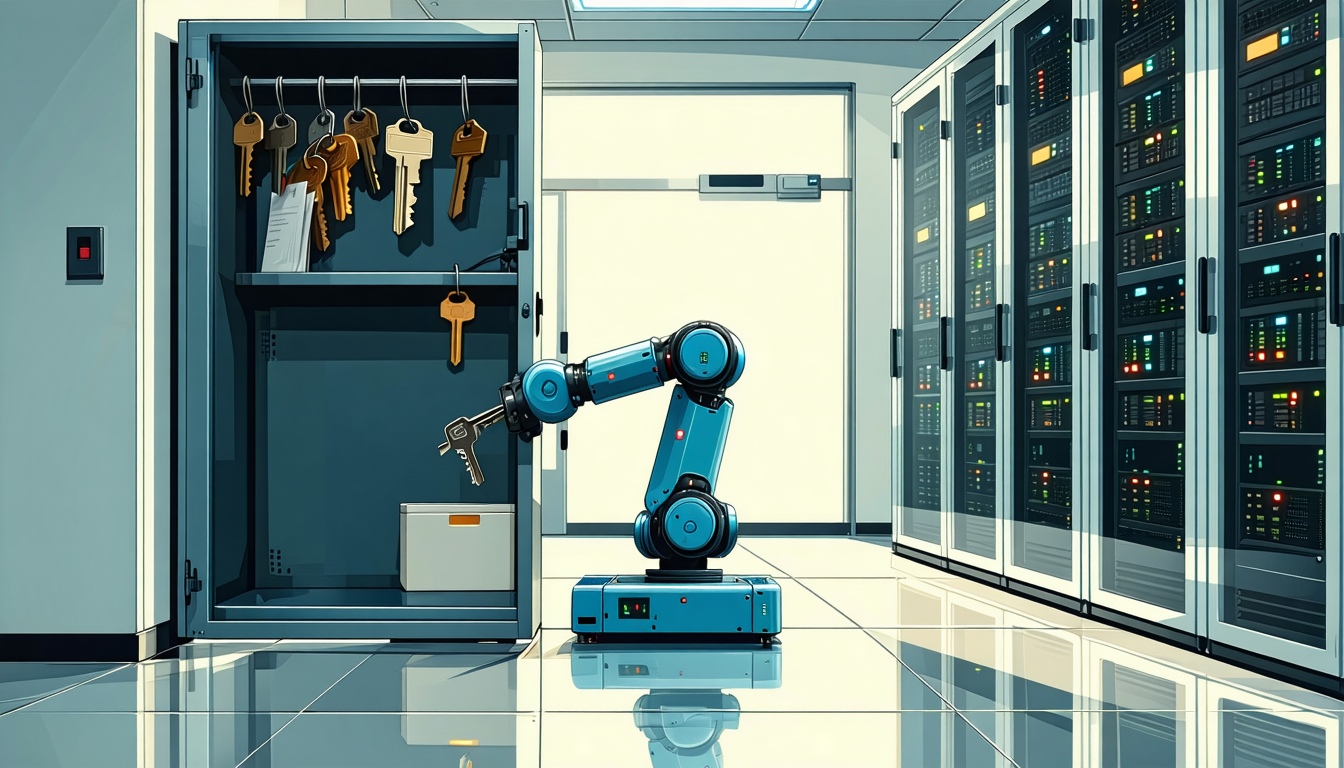
OpenAI's Dots agents, arriving in a business base of more than 35 million weekly users, must get a user's sign-off before changing a password or deleting data. Permissions are adjustable settings, so each team deploying an always-on Dot sets its own limits.
The Investor · Invest desk
What happened
- OpenAI launched Dots on September 29 on its GPT-6 Astra model, built to keep working continuously across Slack, Microsoft Teams and other workplace platforms.
- Each Dot has its own cloud computer, learns from user feedback over time and works toward its owner's goals around the clock, Yahoo Finance reported.
- Holly Li of OpenAI's product team said staff already bring their Dots into group chats, where the agents work with colleagues and with other Dots.
- Meta released its rival Muse agent earlier in September, and it quickly racked up millions of downloads.
Why it matters
- Who has to decide decision Every team adopting Dots has to choose which user permissions to grant and who may approve a sensitive action, because the controls on offer are settings the customer adjusts.
- Who's exposed exposure When one person's Dot acts on a request relayed by a colleague's Dot, the stated check is one user's sign-off, so a single click can approve work someone else started.
- What it limits constraint An agent pitched on working 24/7 still pauses at each password change or deletion until its owner answers, so overnight work stops at the first sensitive step.
Next story · Product · Oct 1
Approval rules decide how much work OpenAI's new Dots agents can finish aloneConfirmed25 publishers
"I get to decide what needs my attention and what my Dot can take care of," Holly Li, a member of OpenAI's product team, said at DevDay [11][15]. The required sign-off on password changes and deletions [4] gives the riskiest version of that choice to the same person. The other protections OpenAI and Meta point to are all adjustable: custom data controls, user permissions that can be changed, and settings that keep enterprise usage data from being retained [5].
A per-user check is harder to reason about once the agents deal with each other. "By giving Dots their own identity, they become extensions of our team," Li said [12]. In her demo she forwarded a colleague's Slack request to her own Dot, Dottie [15]. The sources do not say whether a consent prompt shows the user who started a relayed request. Cryptobriefing linked the industry's focus on trust to earlier incidents in which AI models interacted in ways people did not expect [18].
OpenAI reported more than 35 million weekly users across Codex and ChatGPT Work in late September [6], against more than 1.2 billion weekly users of consumer ChatGPT [7]. That puts the business base at about 2.9% of the consumer one [16]. Yahoo Finance put OpenAI's annualized revenue near $70 billion [9] and called a Dot that can reach 4,000 apps through ChatGPT a direct challenge to Meta's Muse [10][3].
Teams could grant wide permissions and treat the prompt as the whole control. They could narrow permissions until Dots mostly sort threads, the job Li showed when she said, "Now I can forward the thread to Dottie. I can just delegate." [14] Or individual users could switch agents on before any IT policy exists. Muse's early download count [2] is the evidence for that third path.
In my view the second outcome is the likeliest at companies with a security team, because the customer sets every control on offer [5] and a narrow grant is the cautious setting. On that path, the growth OpenAI can show inside its 35 million business users [6] comes from thread work, the lowest-risk task an always-on agent [8] can be given. I would be wrong if Dots start changing passwords and deleting data at scale in enterprise accounts where the user prompt is the only gate [4].
What to watch
- Whether OpenAI adds team- or administrator-level approval rules for sensitive Dot actions on top of the per-user sign-off.
- OpenAI's next weekly-user count for Codex and ChatGPT Work, measured against the 35 million it reported in late September.
- Whether regulators set formal limits on what AI agents may do without asking first.
Information, not investment advice. This story is general information about companies and markets, drawn from cited reporting. It is not a recommendation to buy, sell or hold any security; check the cited sources before acting.
Clarity's read
What the record supports and how the coverage leans. The claims behind it follow.
Reality
- Evidence40
- Adoption12
- Hype gap+35
- Incentives70
- Confidence45
Claim ledger
Ranked by verification strength, evidence, and original report placement.
- [1]
On September 29, 2026, OpenAI introduced dots, a set of autonomous agents running on its GPT-6 Astra model, designed to keep working continuously across workplace platforms including Slack and Microsoft Teams.
- [2]
Meta released its Muse agent earlier in September 2026, and it quickly racked up millions of downloads.
- [3]
Yahoo Finance described a high-powered agent that connects to 4,000 apps through ChatGPT as a direct challenge to Meta's Muse.
- [4]
Before dots can carry out sensitive actions, such as changing a password or deleting data, it needs the user to sign off.
- [5]
OpenAI and Meta are leaning on safety features including custom data controls, adjustable user permissions, and settings that keep enterprise usage data from being retained.
- [6]
As of late September 2026, OpenAI reported more than 35 million weekly users across its Codex and ChatGPT Work products.
- [7]
OpenAI said its consumer ChatGPT app draws over 1.2 billion weekly users.
- [8]
Powered by GPT-6 Astra, a Dot has its own cloud computer, can learn from user feedback over time, and works toward the user's goals 24/7.
- [9]
OpenAI's annualized revenue is nearing $70 billion.
- [10]
A Dot can connect to 4,000 apps through ChatGPT.
- [11]
"I get to decide what needs my attention and what my Dot can take care of,"
- [12]
"By giving Dots their own identity, they become extensions of our team,"
- [13]
Li said colleagues started treating their Dots like their own delegates; OpenAI employees deployed their own Dots, interacting with other colleagues and other Dots, and bring their Dots into group chats from the get-go.
- [14]
"Now I can forward the thread to Dottie. I can just delegate."
- [15]
At OpenAI's DevDay, product team member Holly Li showed her personalized Dot, Dottie, and in the demonstration forwarded a colleague's Slack request to it.
- [16]
OpenAI's business-product weekly users are about 2.9% of consumer ChatGPT's weekly users.
- [17]
Cryptobriefing lists as something to track whether regulators move to set formal boundaries on what AI agents can do without asking first.
- [18]
The emphasis on user trust follows earlier incidents in which AI models interacted in ways people did not expect.
Sources
2 independent publishers whose own reporting we read for this story.
- cryptobriefing.comOpenAI and Meta push AI agents into sensitive tasks
1 article · October 1, 2026
- finance.yahoo.comThe future of work is a group chat of AI bots talking to each other
1 article · September 29, 2026
Topics and entities
Topics
- AI Agents
- Agent permissions and consent
- Enterprise AI