POSCO and Hanwha Ocean plan a demonstration LNG carrier to test manganese steel in place of nickel alloy
POSCO and Hanwha Ocean signed an MOU for a demonstration LNG carrier with a high-manganese steel cargo tank that takes over 10,000 tons of material. Until the ship sails, the saving over nickel alloy steel is POSCO's own claim.
The Investor · Invest desk
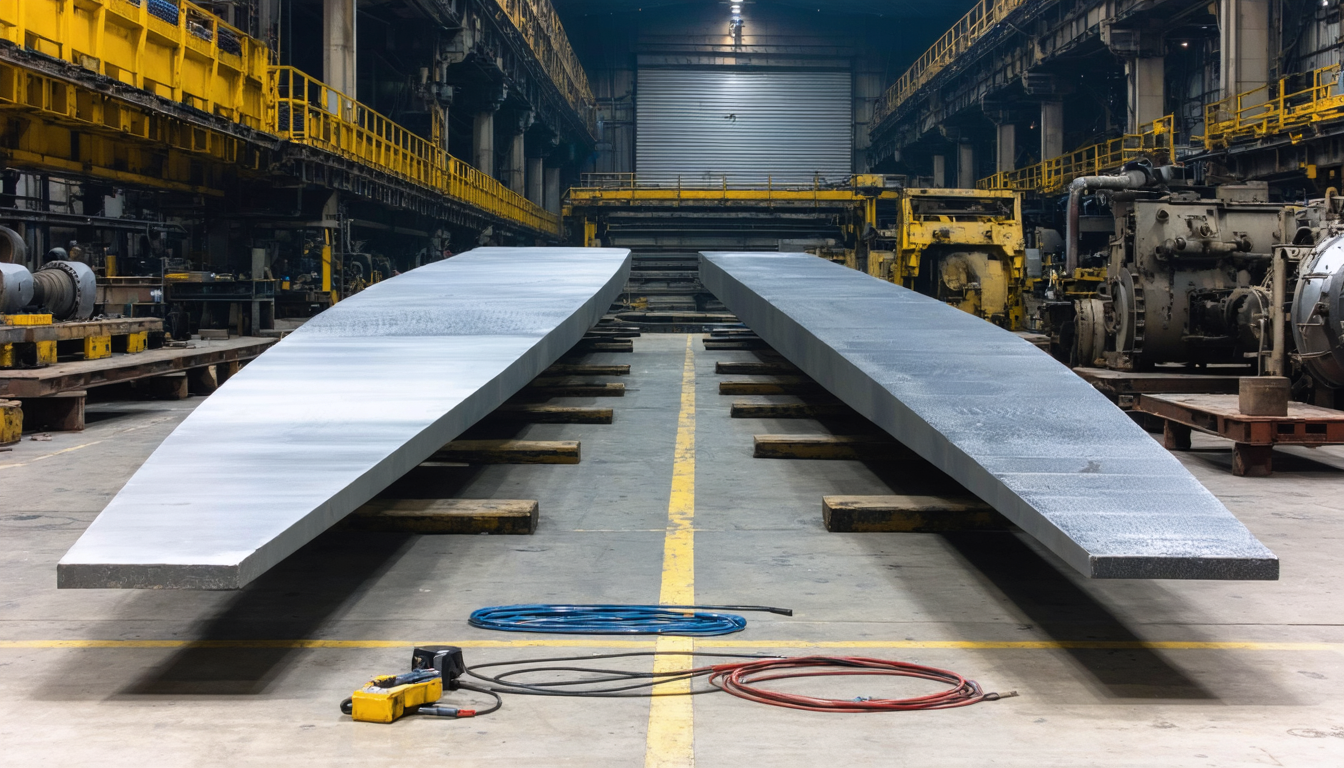
Comparison of material needed per vessel: an LNG carrier cargo tank takes more than 10,000 tons, and an LNG fuel tank takes about 1,000 tons.
Material required per vessel, in tons In tons per vessel
| Item | Value | Claim |
|---|---|---|
| LNG carrier cargo tank, over | 10,000 tons per vessel | 5 |
| LNG fuel tank, about | 1,000 tons per vessel | 5 |
What happened
- The MOU on securing the vessel was signed on the 15th at Hanwha Ocean's Geoje shipyard, with POSCO President Lee Hee-keun and Hanwha Ocean CEO Kim Hee-cheol attending.
- Hanwha Ocean will lead the build, and the pair plan to verify safety, durability and operational efficiency under actual sailing conditions.
- According to the report, abundant manganese reserves give the steel better cost competitiveness and steadier supply than the expensive nickel alloy steel used in most LNG cargo tanks until now.
- The steel has been used on a cumulative 51 vessels since Hanwha Ocean applied it to very large crude carriers and container ship fuel tanks in 2021.
Why it matters
- What it costs cost POSCO International and POSCO Flow are committed to supporting the securing and operating of a ship whose payoff, orders from shipowners, can come only after its operating record exists.
- What's now possible capability POSCO says a cargo tank built separately and installed afterwards can sharply shorten shipyard construction time. If that holds on the demonstration vessel, Hanwha Ocean could put more hulls through the same yard.
- What it sets up precedent One vessel's record is meant to support several markets: the companies name LNG bunkering vessels, FSRUs and liquefied hydrogen, ethane and ammonia carriers as the next applications.
Next story · Invest · Oct 7
Posco paid about $41,500 per tonne of yearly capacity for its second Argentine brine plantConfirmed2 publishers
Take the 51 vessels that already carry POSCO's steel [6]. The report puts an LNG fuel tank at about 1,000 tons of material a vessel and a carrier cargo tank at more than 10,000 [5], so if every one of the 51 used the fuel-tank figure (an assumption; the 1,000 tons is for fuel tanks generally), the whole fleet to date comes to about 51,000 tons [15]. About five carrier cargo tanks at the 10,000-ton minimum would match that [16].
We think the sequence is sound. Chang In-hwa led the steel's use at the No. 5 unit of the Gwangyang LNG terminal in 2017 [7], went to Hanwha Ocean's management in person in 2020 to argue for putting it in vessels [8], and saw it go into fuel tanks in 2021 [6]. A cargo tank is the same material at ten times the volume, or rather at least ten times, since 10,000 tons is the report's floor [9]. "Starting with LNG cargo tanks, we will lead global standards in the market for eco-friendly ship materials," POSCO President Lee Hee-keun said [13].
The signing itself is an MOU on securing a demonstration vessel [1], and the stated payoff is an operating record to present to global shipowners [3]. Any order therefore sits behind a test of safety, durability and operational efficiency under actual sailing conditions [2]. That test can go three ways. The results hold, but the saving per ship turns out smaller than the supply argument implies and owners stay with nickel alloy. Or the voyage turns up a durability problem. Or the results hold and orders follow, which is the case the thesis needs. It fails if a shipowner is handed the operating record and still specifies nickel alloy.
The report frames the project as a domestically developed material entering an LNG cargo tank market that has long depended on foreign technology [14]. The steel is the Korean part. Any cut in reliance on foreign containment technology is, so far, inferred from the steel alone, because the report does not say who designed the cargo tank, whether a foreign licence is involved, what either steel costs per ton or when the vessel is due.
What to watch
- A named owner, an operator and a delivery date for the demonstration vessel, or a shipowner order that references it.
- Published results on safety, durability and operational efficiency from actual sailing, and any figure for the construction-time saving.
- Disclosure of who owns the cargo tank design and whether any foreign licence applies to it.
Information, not investment advice. This story is general information about companies and markets, drawn from cited reporting. It is not a recommendation to buy, sell or hold any security; check the cited sources before acting.
Clarity's read
What the record supports and how the coverage leans. The claims behind it follow.
Reality
- Evidence35
- Adoption30
- Hype gap+30
- Incentives70
- Confidence65
Claim ledger
Ranked by verification strength, evidence, and original report placement.
- [1]
POSCO said it signed a memorandum of understanding on securing a high-manganese steel cargo tank demonstration vessel on the 15th at Hanwha Ocean's Geoje shipyard in Geoje, South Gyeongsang Province, with POSCO President Lee Hee-keun and Hanwha Ocean CEO Kim Hee-cheol attending the signing ceremony.
- [2]
The two companies plan to build a demonstration vessel equipped with a high-manganese steel cargo tank, with Hanwha Ocean taking the lead, and to verify safety, durability and operational efficiency under actual sailing conditions.
- [3]
The demonstration will give the companies an operating record to present to global shipowners.
- [4]
Group affiliates including POSCO International and POSCO Flow will take part, providing full support for securing and operating the demonstration vessel.
- [5]
An LNG fuel tank requires about 1,000 tons of material per vessel, while an LNG carrier cargo tank takes more than 10,000 tons per vessel.
- [6]
After the material was applied to Hanwha Ocean's very large crude carriers and container ship fuel tanks in 2021, high-manganese steel has been adopted on a cumulative 51 vessels to date.
- [7]
As head of the technology investment division in 2017, Chang In-hwa led the application of high-manganese steel to construction of the No. 5 unit at the Gwangyang LNG terminal.
- [8]
While serving as POSCO president in 2020, Chang In-hwa visited Hanwha Ocean's management in person to explain the feasibility of applying the material to vessels.
- [9]
A carrier cargo tank takes at least ten times the material of a fuel tank.
- [10]
Because it uses manganese, which is abundant in reserves, high-manganese steel offers better cost competitiveness and more stable material supply than the expensive nickel alloy steel previously used in most LNG cargo tanks.
- [11]
The high-manganese steel cargo tank has an independent structure, manufactured separately and then installed on the vessel, which can sharply shorten shipyard construction time compared with conventional methods.
- [12]
The two companies plan to broaden the application to LNG bunkering vessels and floating storage and regasification units, and to carriers for liquefied hydrogen, ethane and ammonia.
- [13]
Starting with LNG cargo tanks, we will lead global standards in the market for eco-friendly ship materials.
- [14]
The plan is to launch a demonstration vessel built with domestically developed materials in an LNG cargo tank market that has long depended on foreign technology.
- [15]
If each of the 51 vessels used about 1,000 tons, the total is about 51,000 tons (assumption: the fuel-tank figure applies to all 51).
- [16]
About five LNG carrier cargo tanks at the 10,000-ton minimum would equal that 51,000-ton total.
Sources
2 independent publishers whose own reporting we read for this story.
- en.sedaily.comPOSCO, Hanwha Ocean Team Up to Localize LNG Cargo Tanks
1 article · October 14, 2026
- koreaherald.comPosco targets LNG cargo tank market with Hanwha Ocean
1 article · October 14, 2026
Topics and entities
Topics
- Korean shipbuilding
- Shipbuilding materials
Entities
- High-manganese steel
- Hanwha Ocean
- POSCO International