Apple renews its Qualcomm patent license as its own modems replace Qualcomm chips in iPhones
Qualcomm renewed its global patent license with Apple from April 1, 2027, and neither company disclosed the terms. Apple's C-series modems are pushing Qualcomm chips out of iPhones, but the patent payments sit on a separate contract that keeps running.
The Product Desk
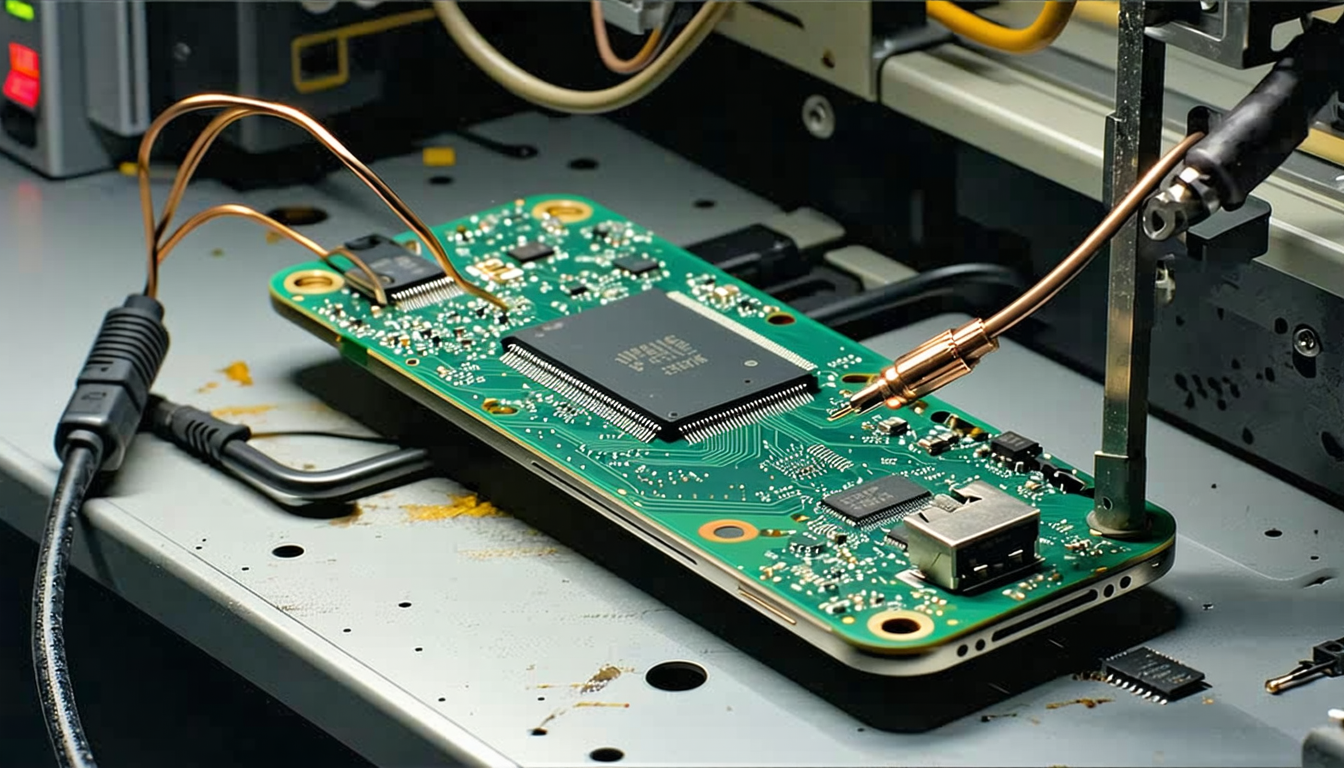
What happened
- The license dates back to a 2019 settlement that ended the companies' litigation and set up both royalty payments and a multiyear chipset supply agreement.
- Qualcomm's announcement covered only the patent license, and no renewal of the chipset supply agreement was announced with it.
- Apple issued no statement of its own, so Qualcomm's one-paragraph release is the only public account of the deal.
- Last year's base iPhone 17 used a Qualcomm modem, while the iPhone 17 Pro and iPhone Air did not.
Why it matters
- What it costs cost Apple's modem program cuts what it buys from Qualcomm, but Apple still owes an undisclosed royalty under the new license whoever builds the modem.
- What it limits constraint Because the terms are confidential, nobody outside the two companies can set the royalty against the modem savings to work out what Apple's switch is worth.
- Who has to decide decision Any team planning an in-house component has to price the parts saving and the licensing cost as separate lines, since only the parts saving falls when the build moves in-house.
Next story · Product · Oct 2
iPhone 18 Pro Max owners who lost AT&T service need a new phone, Apple saysConfirmed9 publishers
Buy an iPhone 18 Pro Max in a US store this year and you walk out with a Qualcomm modem. Six Colors reports that the same model sold outside the US has no Qualcomm modem, and neither does any other new iPhone [7]. Apple is moving to its own C-series chips one model at a time. Six Colors says they seem to offer better performance and power efficiency, and the C2 adds mmWave support [16].
The usual case for in-house silicon is that it ends a vendor relationship. So far Apple has ended one of its two contracts with Qualcomm [15]. Swapping the modem changes who supplies the part. GSMArena's reading of the renewal is that even if Apple dropped Qualcomm modems completely, it would still pay Qualcomm an undisclosed amount for the use of its patents [13].
Qualcomm's entire public statement is one line from John Han, who runs its licensing business. "We are pleased to extend the Apple license agreement," Han said [2]. GSMArena puts the brevity down to confidential terms [3]. Neither report says which patents the license covers. The two reports also give different dates for the previous extension. GSMArena says Apple used an option in the 2019 deal in 2024 to move the end date to March 2027 [5]. Six Colors dates the last re-up to 2023 and says it ran through 2026 [14].
Six Colors offers two possible reasons for the one model that still carries a Qualcomm modem. Apple needs a lot of modems and perhaps cannot yet make enough for every phone, iPad and Apple Watch it sells [17]. The terms of the licensing agreement and the end of the court case may also play a part [18]. The site expects Apple devices to carry fewer and fewer Qualcomm modems, since "they didn't buy an entire modem division for nothing" [10]. It also wrote that untangling the relationship "can take a long time, given manufacturing timelines" [12].
If your team is weighing its own build, split the vendor relationship into two bills. The first pays for the part. It shrinks only as fast as your own production covers your volume. The second pays for the right to use someone else's inventions, and bringing the part in-house does not change it.
A plan can be sorted by two questions: does the team make the part, and does it hold the rights the part depends on. Apple's 2019 arrangement answered no to both, with a supply agreement plus royalties [4]. Making the part while still licensing the rights ends the component invoice and keeps the royalty. The incumbent drops off every invoice only when a company both makes the part and owns the rights. The fourth combination, buying a part built on rights you own, is the one where the supplier pays royalties to you. On the evidence in both reports, Apple will be in the second box from April 1, 2027 [15].
What to watch
- Any announcement renewing the chipset supply agreement, or a next iPhone lineup with no Qualcomm modem in any region.
- Qualcomm's licensing-segment results after April 2027, the first public figures that could hint at the size of the renewed royalty.
- Whether Apple's modem output covers iPad and Apple Watch volumes, the supply gap Six Colors cites for the remaining Qualcomm parts.
Clarity's read
What the record supports and how the coverage leans. The claims behind it follow.
Reality
- Evidence60
- Adoption65
- Hype gap+10
- Incentives
- Not scored
- Confidence60
Perspective Coverage
4 publishers- Builder
- Builder 29%
- Operator
- Operator 31%
- Investor
- Investor 40%
Claim ledger
Ranked by verification strength, evidence, and original report placement.
- [1]
Qualcomm announced the renewal of its global patent license agreement with Apple, effective April 1, 2027.
- [2]
"We are pleased to extend the Apple license agreement," said John Han, Executive Vice President and General Manager of Qualcomm Technology Licensing (QTL).
- [3]
The actual terms of the renewed agreement are confidential, which GSMArena gives as the reason the release is so short.
- [4]
Apple first struck a deal with Qualcomm in 2019, which ended ongoing litigation between the two and launched both the patent licensing deal and a multiyear chipset supply agreement.
- [5]
The 2019 agreement had an extension option, which Apple exercised in 2024, moving its end to the end of March 2027.
- [6]
The Qualcomm announcement specified only the patent license, not a renewal of the original chipset supply agreement.
- [7]
This year only the new iPhone 18 Pro Max uses Qualcomm modems, and only in the U.S.
- [8]
Qualcomm announced the renewal in a one-paragraph press release.
- [9]
Last year's iPhone 17 used a Qualcomm modem, unlike the iPhone 17 Pro and iPhone Air.
- [10]
"they didn't buy an entire modem division for nothing"
- [11]
Apple has made no announcement about the renewal.
- [12]
"untangling a longstanding relationship like this can take a long time, given manufacturing timelines"
- [13]
Even if Apple were to completely give up on Qualcomm modems, it will still pay Qualcomm an undisclosed amount for the use of its patents.
- [14]
Apple's last re-up of its Qualcomm deal, in 2023, extended that deal through 2026.
- [15]
From April 1, 2027, Apple will make its own modems for nearly all of its new iPhones while still paying Qualcomm to license its patents, ending the chip purchases but not the royalty.
- [16]
Apple's C-series modem chips seem to offer better performance and power efficiency, and the C2 adds support for mmWave.
- [17]
Some of Apple's continued Qualcomm modem use could be due to supply: Apple needs a lot of modems and perhaps can't yet make enough for every phone, iPad and Apple Watch it produces.
- [18]
Some of Apple's continued Qualcomm modem use could also be due to the specifics of the licensing agreement and the dropping of the ongoing court case.
Sources
4 independent publishers whose own reporting we read for this story.
- 9to5mac.comApple and Qualcomm renew global patent licensing agreement
2 articles · September 24, 2026
- gsmarena.comApple will keep paying Qualcomm royalties for its patents - GSMArena.com news
1 article · September 24, 2026
- macrumors.comQualcomm Announces Renewed Agreement With Apple - MacRumors
2 articles · September 24, 2026
- sixcolors.comApple renews Qualcomm patent deal – Six Colors
1 article · September 24, 2026
Topics and entities
Topics
- Patent licensing
- Cellular Modem Silicon
Entities
- Qualcomm Technology Licensing
- Apple
- Qualcomm
- iPhone 18 Pro Max
- Apple C2 modem