Pentagon asks $30.3 million to put AI scoring on the 1920s polygraph
Pentagon budget documents seek $30.3 million over five years for Polygraph+, adding machine-learning scoring and contactless sensing to the lie detector. Both upgrades still depend on the bodily responses that reviews in 1983 and 2003 found poorly supported for screening staff.
The Product Desk
What happened
- A Defense Department budget request seeks $30.3 million over five years for Polygraph+, also called Polygraph Next, covering AI scoring and contactless 'standoff' sensing.
- The Defense Counterintelligence and Security Agency would run it to vet prospective employees and detect insider threats, and Congress has not yet approved the request.
- In 2023 the Defense Innovation Unit chose Presage Technologies and Altec Research to build deception-detection prototypes, with Presage claiming to read heart and breathing rates from standard cameras.
- Congress's Office of Technology Assessment found very limited evidence for polygraph screening in 1983, and the National Research Council called the evidence 'weak at best' in 2003.
Why it matters
- Who has to decide decision Congress would approve five years of spending before DCSA has said which technologies it would buy, so appropriators are judging a category of tool.
- Who's exposed exposure Standoff sensing takes readings with nothing attached to the subject, so a person could be assessed without the physical cue that a test is under way.
- What it limits constraint A more consistent AI score would still need its own validation against real deception before it could justify a hiring or security decision, since the 1983 and 2003 reviews faulted the evidence for the polygraph itself.
- What it costs cost Wrong calls land on the people tested: MIT Technology Review estimates an imperfect system across DoD's 2.8 million staff could falsely accuse tens of thousands.
Next story · Invest · 2d ago
Anthropic asks the full D.C. Circuit to undo the ruling that upheld its Pentagon blacklistingConfirmed6 publishers
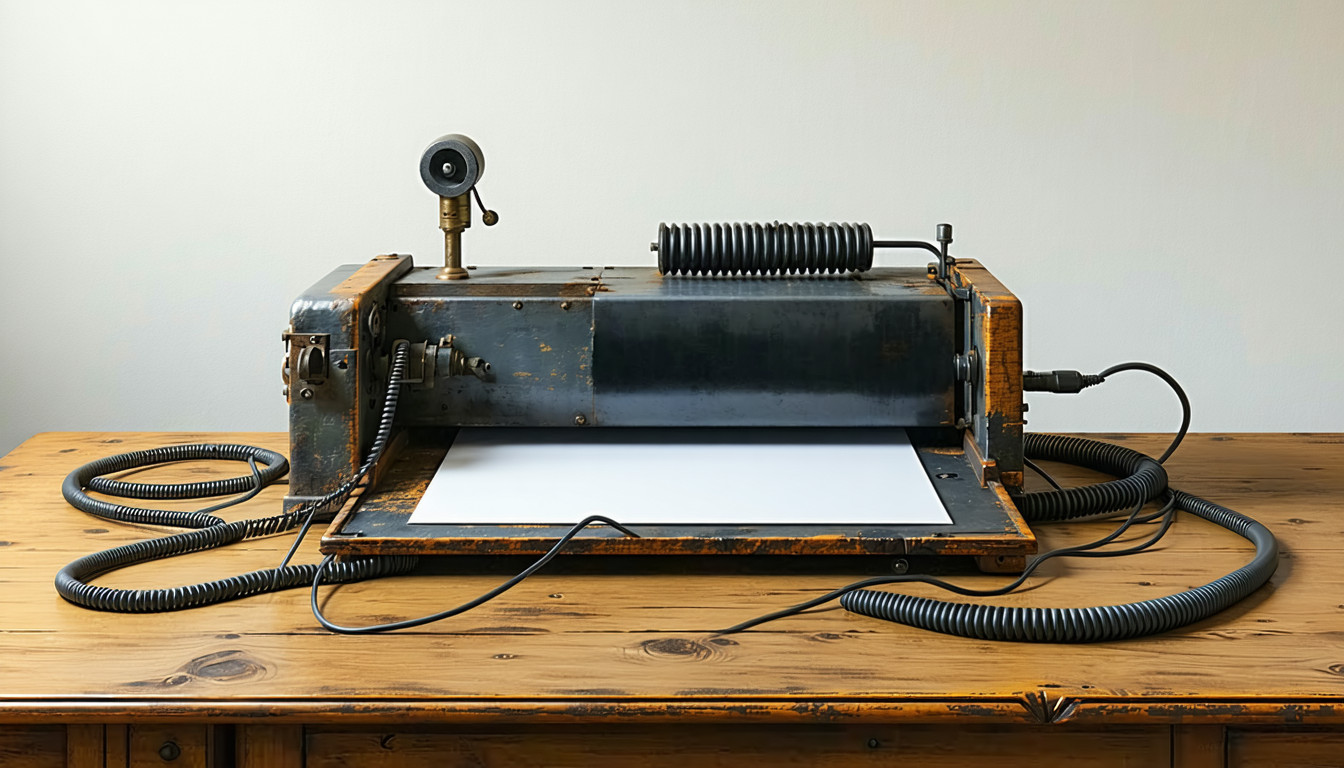
Under Defense Secretary Pete Hegseth, the Pentagon has been turning more often to polygraphs to find the sources of alleged press leaks [5]. In September, the New York Times reported that around 50 officers on the Joint Staff had been given polygraph tests after news coverage of depleted US weapons stockpiles in the war with Iran, according to MIT Technology Review [6]. The test they took has barely changed since the 1920s. It records blood pressure, pulse, breathing and sweat [10]. The examiner compares the reaction to a baseline question such as "Is the sky blue?" with the reaction to a target question such as "Have you ever committed a crime?" [10]
Polygraph+ is pitched as modernization, a way to make those tests more accurate and reliable [2]. The work it would actually do is screening job applicants and hunting insider threats [3]. The federal government already runs tens of thousands of polygraphs a year on employees, and courts rarely admit the results [15]. The budget line would upgrade a tool already in routine use, at about $6.06 million a year if the $30.3 million is spread evenly over five years [20].
Here's what teams tell themselves about the device. The American Polygraph Association claims it is 80 to 94 percent accurate, while research suggests people with no equipment spot a lie just over half the time [12][16]. Taken at face value, the association's own range leaves 6 to 20 wrong results per 100 tests, or 60 to 200 per 1,000 [19]. The 2003 National Research Council report made the same point: a screening test at that accuracy could still produce a lot of mistakes [13].
Here's what users actually do. Interviewees learn countermeasures, most often by inflating their response to the baseline questions, for example by stepping on a pin hidden in a shoe [17]. Different examiners get wildly different results, and people from minority groups are more likely to be judged deceptive [18]. An AI scorer could make results consistent from one examiner to the next. Standoff sensing removes the cuff and wires [1]. I'd expect the pin to work against a camera about as well as it works against a cuff. The Altec prototype the Defense Innovation Unit released tracks head movement, facial skin temperature and pore activity, all physical reactions [8], and the pin trick works by producing a physical reaction on cue [17].
Kyri Kotsoglou, a professor at Northumbria Law School who studies polygraph use in the justice system, said: "It's a misguided effort to reduce the complex to something that is tangible." [4] DCSA, Presage and Altec did not respond to the Review's requests for comment, and the DIU declined to comment [9].
For an operator weighing a scoring upgrade on any screening tool, two axes sort the decision. One is whether the input signal has been validated for the decision it will feed. The other is how many people with nothing to hide will pass through it. With a validated signal and a small pool, a better scorer is a plain improvement. With a validated signal and a large pool, it is worth buying if a human review sits between a flag and any action. An unvalidated signal and a small pool make a research project whose results should decide nothing. An unvalidated signal and a large pool mean a faster, more consistent model delivers the old error rate to more people. Polygraph+, scoped for applicant vetting and insider-threat work across the department, lands in that last box, on the signal the 1983 and 2003 reviews doubted [3][11].
What to watch
- Whether Congress approves the Polygraph+ line when it acts on the Defense Department budget request.
- Whether DCSA names the technologies or vendors it would buy, and whether the 2023 Presage and Altec prototypes feed into that choice.
- Any published validation of the AI scoring against known outcomes, independent of the American Polygraph Association's accuracy claim.
Clarity's read
What the record supports and how the coverage leans. The claims behind it follow.
Reality
- Evidence60
- Adoption12
- Hype gap+35
- Incentives45
- Confidence55
Claim ledger
Ranked by verification strength, evidence, and original report placement.
- [1]
The US government wants to spend $30.3 million over the next five years on an improved form of lie detector, according to a Department of Defense budget request. The program, called Polygraph+ or Polygraph Next, will focus on AI and machine-learning scoring algorithms and on 'standoff sensing', the ability to take physiological readings from a subject without attaching a device to their person.
- [2]
According to the budget document, first reported by Inside Defense, the project will 'modernize federal polygraph and credibility assessment technologies' to improve their accuracy and reliability.
- [3]
Polygraph+ will be run by the Defense Counterintelligence and Security Agency, which conducts background checks for the federal government. According to the budget document, which has not yet been approved by Congress, the technology will be used for vetting prospective employees and 'insider threat detection'.
- [4]
"It's a misguided effort to reduce the complex to something that is tangible."
- [5]
Under Defense Secretary Pete Hegseth, the Pentagon has been increasingly turning to polygraph tests in an attempt to find the sources of alleged leaks to the press.
- [6]
In September, the New York Times reported that around 50 officers on the Joint Staff had been given polygraph tests after news coverage reported on depleted US weapons stockpiles in the war with Iran.
- [7]
In 2023 the Defense Innovation Unit ran an open submission process for deception-detection products and selected two companies to build prototypes: Presage Technologies, which claims to measure heart rate and breathing rate using standard cameras, and Altec Research, a medical sensor company branching into non-contact sensing.
- [8]
A screenshot of Altec's prototype technology released by the DIU shows that it tracks head movement, facial skin temperature, and pore activity.
- [9]
It is not yet clear which specific technologies will be used. DCSA did not respond to a request for more information; Presage Technologies and Altec Research did not respond to requests for comment; the DIU declined to comment.
- [10]
Current polygraph technology has barely changed since the device was invented in the 1920s. Examiners rely on blood pressure, pulse, breathing and sweat measurements, comparing responses to baseline questions like 'Is the sky blue?' with target questions like 'Have you ever committed a crime?'.
- [11]
In 1983, Congress's Office of Technology Assessment concluded there was very limited evidence supporting the polygraph's use for screening employees, and in 2003 the US National Research Council said evidence on its efficacy was 'weak at best'.
- [12]
The American Polygraph Association claims the polygraph is between 80 and 94% accurate.
- [13]
The 2003 NRC report pointed out that a screening test with 80 to 94% accuracy could still lead to a lot of mistakes.
- [14]
The DoD employs 2.8 million staff, and an imperfect system applied at that scale could end up falsely accusing tens of thousands of people.
- [15]
The federal government conducts tens of thousands of polygraph tests a year while screening employees, and the results are rarely admissible in court.
- [16]
Research suggests humans can spot a lie just over half the time without any technical assistance.
- [17]
With training, interviewees can learn countermeasures to beat the test, most commonly artificially heightening their physiological response to baseline questions, for example by stepping on a pin hidden in their shoe.
- [18]
Polygraph interpretations are often subjective: different examiners get wildly different results, and people from minority groups are more likely to be judged deceptive.
- [19]
Taken at face value, the APA's claimed 80 to 94% accuracy implies 6 to 20 wrong results per 100 tests, or 60 to 200 per 1,000.
- [20]
Spread evenly, $30.3 million over five years is about $6.06 million a year.
Sources
2 independent publishers whose own reporting we read for this story.
- technologyreview.comThe Pentagon wants $30 million to build an AI-powered lie detector
2 articles · September 25, 2026
- thenextweb.comPentagon seeks $30.3m for an AI lie detector that reads the body from afar
1 article · September 25, 2026
Topics and entities
Topics
- US defense budget
- Insider Threat and Data Exfiltration Detection
Entities
- Defense Counterintelligence and Security Agency
- Sophie van der Zee
- Office of Technology Assessment
- Pentagon
- Pete Hegseth
- Presage Technologies
- US National Research Council
- Defense Innovation Unit
- American Polygraph Association