Anthropic banned a northern Yemen cell that asked Claude why its guided rocket failed
Anthropic's third misuse report says accounts in Houthi-held northern Yemen used Claude Code to write guidance software for three weapons programs, and a weapons analyst doubts the group can build any of them.
The Watch · Security desk
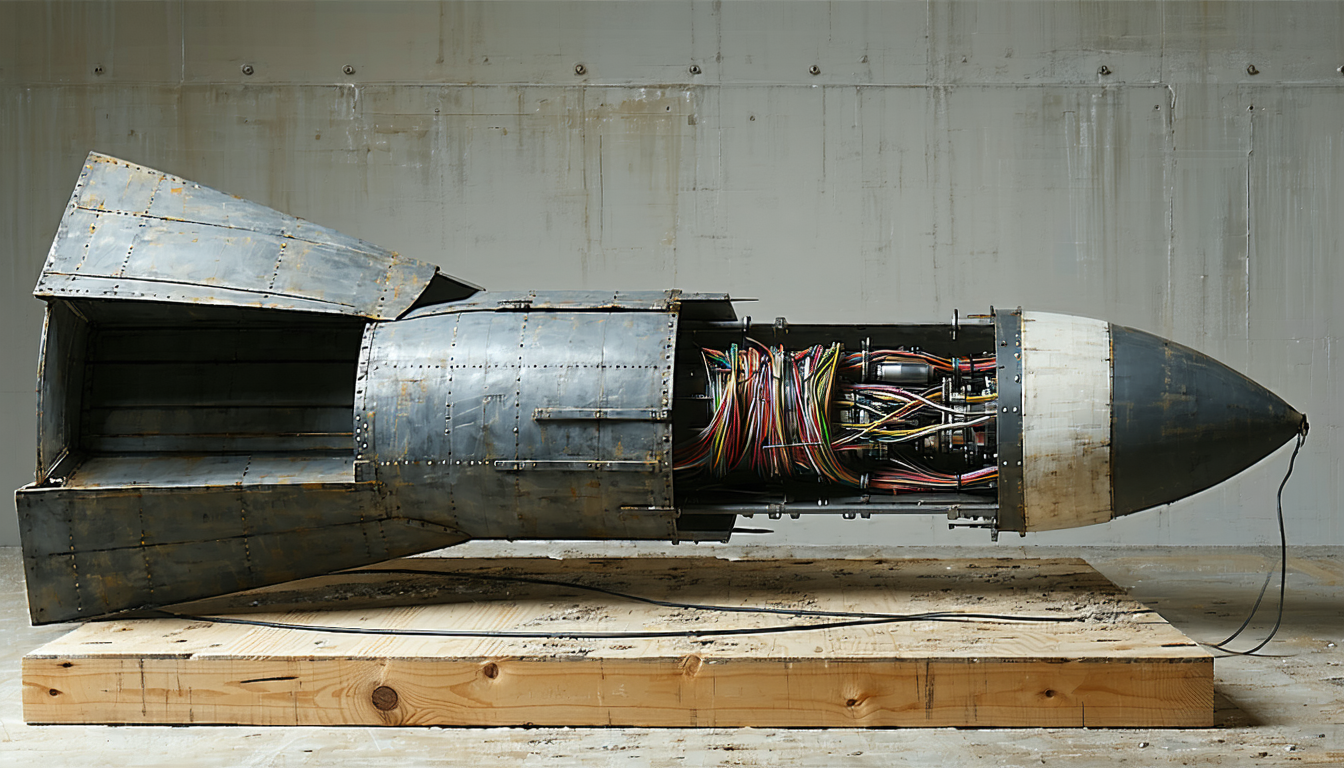
What happened
- Anthropic says Claude users in Houthi-controlled northern Yemen tried to develop advanced missiles, and it blocked the accounts after identifying them.
- Anthropic says the actors used Claude Code in place of human software engineers to write the guidance, navigation and control software.
- Trevor Ball of Armament Research Services said the group has nowhere near the production or technical capability to build a hypersonic missile even if it is asking Claude about one.
Why it matters
- What it sets up precedent A commercial abuse team's enforcement log is now the public record of a weapons test inside an embargoed territory, published on the vendor's schedule and in the vendor's words.
- What it limits constraint The ban stopped the queries and the visibility at the same moment, and the simulation work the cell had already stood up runs without any model platform.
- What doesn't add up contradiction Anthropic's account of stated ambition and Ball's assessment of buildable capability point different ways, so the same report supports either a proliferation warning or evidence of a group asking about weapon designs it has no capacity to build.
- Who's exposed exposure Anyone citing this as proof of Houthi weapons development is citing an inference from account geography, because the report does not identify the users.
Next story · Invest · Oct 9
OpenAI and Anthropic executives war-game the backlash from an AI cyberattack insiders expect within a yearConfirmed4 publishers
The detection depended on the users' own habits. They tested a guided rocket, it failed, and they went back to Claude to ask why [4]. Anthropic says they never reached "fielding an operational device" [3]. That follow-up question is what tied a stream of guidance, navigation and control code requests to hardware that had already flown [1].
The company did not name the account holders [6]. The attribution rests on geography: mountainous northern Yemen is controlled by the Iran-backed Houthis [2]. Hazam al-Assad, a member of the Houthis' political bureau, said it is "unreasonable and illogical" that the group would rely on open sources to develop and produce military capabilities [8]. "Our armed forces have modern, diverse and developed production capabilities and technology that it has accumulated over the period of Saudi aggression on Yemen," al-Assad said [9].
Anthropic describes a cell pursuing three programs, among them a multi-variant missile that glides at hypersonic speed and a warhead that uses mobile phone hardware to maneuver mid-course [5]. Trevor Ball, a weapons analyst at Armament Research Services, said the Houthis "might be looking into hypersonic (missiles) by asking Claude" but have nowhere near the production or technical capability to build them, and noted that U.S. hypersonic missiles "are still in testing" [10] [11]. He said the group already has Iranian-made anti-ship missiles that adjust guidance mid-course [12]. "They are probably just trying to develop their own capabilities more, so they are less reliant on Iranian shipments of weapons and components," Ball said in a text message [13].
Adam Baron, a Yemen-focused researcher at the New America think tank in Washington, said the group is routinely underestimated. "There's a tendency to see the Houthis as this group of barefoot tribal fighters, and that's just not true," he said [16].
This is Anthropic's third report on global misuse of its platforms since March 2025. It covers findings from December to August, nine months. The cases run from state-sponsored propaganda groups to unnamed actors researching how to make biological weapons more deadly [14] [15] [19].
Before the accounts were banned, Anthropic says, the users had already built an offline simulation toolkit that does not use Claude or any other computing platform [7]. Closing the accounts ended the vendor's view of the cell, and that toolkit does not need the vendor to keep working [20].
What to watch
- Whether any government or the U.N. panel monitoring the Yemen arms embargo cites Anthropic's report as evidence.
- Whether Anthropic releases indicators other model providers can use, or the same actors surface on a competitor's platform.
- Whether the next misuse report narrows the nine-month lag between the observed activity and publication.
Clarity's read
What the record supports and how the coverage leans. The claims behind it follow.
Reality
- Evidence45
- Adoption
- Not scored
- Hype gap+20
- Incentives55
- Confidence50
Claim ledger
Ranked by verification strength, evidence, and original report placement.
- [1]
Anthropic said the actors in Yemen used Claude Code instead of human software engineers to develop guidance, navigation and control software.
- [2]
Anthropic says Claude users in northern Yemen, territory controlled by Iran-backed Houthi rebels, tried to use the model to develop advanced missiles; the company blocked the accounts after identifying them.
- [3]
Anthropic said the account users did not succeed in "fielding an operational device" but did carry out a failed test of a guided rocket.
- [4]
Anthropic said it knows the guided rocket test failed because the users returned to its Claude chatbot to find out why it failed.
- [5]
Anthropic said it identified a cell in northern Yemen pursuing three different weapons programs, including a multi-variant missile that glides at hypersonic speed and a warhead that uses mobile phone hardware to maneuver mid-course.
- [6]
In the report released Thursday, Anthropic did not identify the users.
- [7]
Anthropic said it had evidence that before the accounts were banned, the users had already built an offline simulation tool kit that does not use Claude or any other computing platform.
- [8]
Hazam al-Assad, a member of the Houthis' political bureau, said it is "unreasonable and illogical" that they would rely on open sources to develop and produce military capabilities.
- [9]
"Our armed forces have modern, diverse and developed production capabilities and technology that it has accumulated over the period of Saudi aggression on Yemen," al-Assad said.
- [10]
Trevor Ball, a weapons analyst at Armament Research Services, said that while the Houthis "might be looking into hypersonic (missiles) by asking Claude," they have nowhere near the production or technical capabilities to actually build them.
- [11]
Ball noted that U.S. hypersonic missiles "are still in testing."
- [12]
Ball said the Houthis already have Iranian-made anti-ship missiles with systems that allow the missiles to adjust guidance mid-course.
- [13]
"They are probably just trying to develop their own capabilities more, so they are less reliant on Iranian shipments of weapons and components," Ball said in a text message.
- [14]
The report was the third Anthropic has put out since March 2025 on global misuse of its AI platforms.
- [15]
The report described findings from December to August, ranging from state-sponsored groups spreading propaganda to unnamed actors researching how to make biological weapons more deadly.
- [16]
Adam Baron, a Yemen-focused researcher at the New America think tank in Washington, said: "There's a tendency to see the Houthis as this group of barefoot tribal fighters, and that's just not true."
- [17]
Iran denies arming the Houthis, which would violate a U.N. embargo, but Iranian weapons have been found on the battlefield and seized from shipments bound for Yemen.
- [18]
The Houthis have launched waves of attacks on Saudi oil facilities and tankers in the Red Sea, and have made territorial gains since Wednesday including along the Red Sea coast and in the Bab al-Mandeb Strait.
- [19]
The December-to-August reporting window covers nine months of activity.
- [20]
Banning the accounts ended Anthropic's observation of the cell, while the offline simulation toolkit the users built remains usable without any model platform.
Sources
2 independent publishers whose own reporting we read for this story.
- schneier.comUsing AI for Weapons Development
1 article · September 14, 2026
- securityweek.comUsers in Houthi-Held Yemen Tried to Develop Advanced Weapons With AI, Anthropic Says
1 article · September 11, 2026
Topics and entities
Topics
Entities
- Houthis
- Claude
- Claude Code
- Armament Research Services
- Anthropic