Xiaomi's phone shipments fell more than 30% in a Q3 market that shrank 20%
Global smartphone shipments fell 20% in Q3, the lowest third-quarter level since 2012, Counterpoint Research's preliminary data show. Samsung's shipments slipped only 3% and Apple reached a record 22% share, so the loss concentrated in Xiaomi, OPPO and vivo.
The Investor · Invest desk
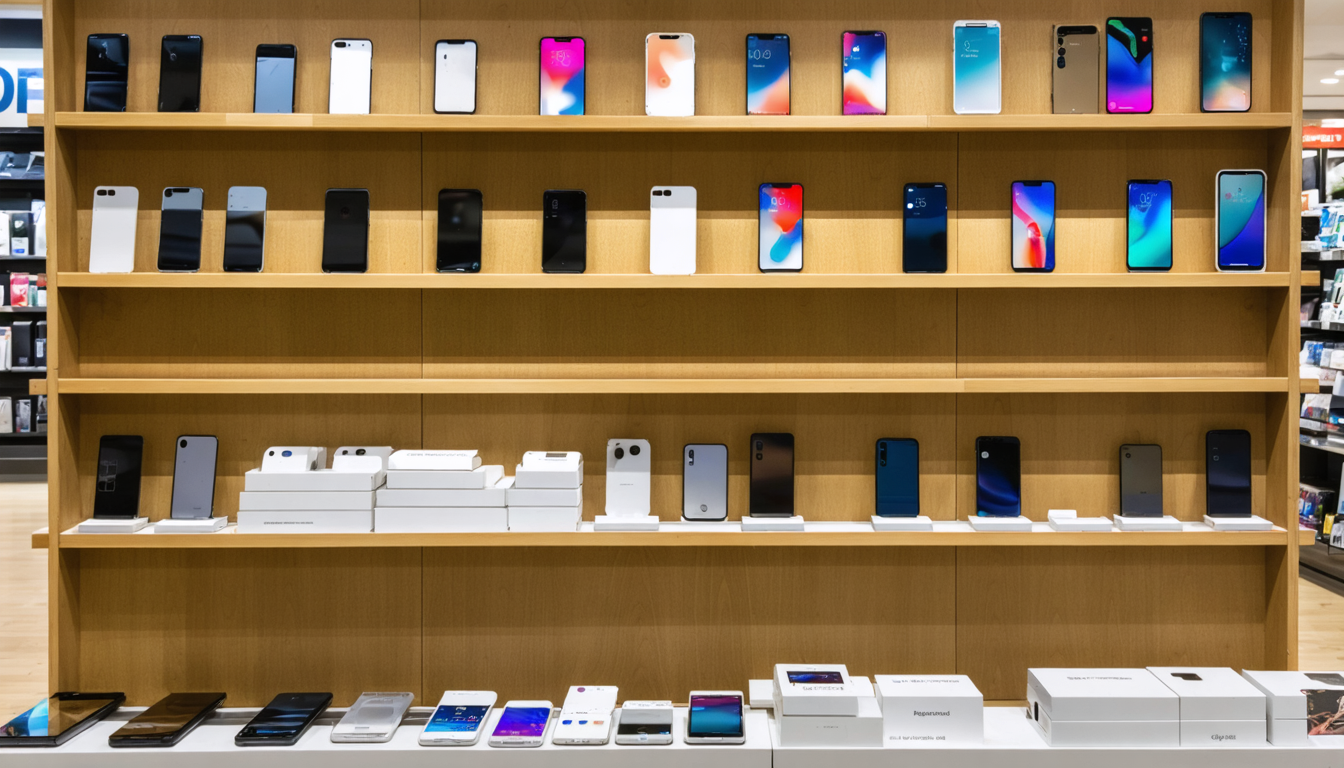
Key figures: Samsung retained the top position with a 23% market share; Apple's market share reached 22%, crossing 20% for the first time in a third quarter; Xiaomi's market share was 10% after its shipments fell by more than 30% year on year.
| Figure | Value | Note | Claim |
|---|---|---|---|
| Samsung market share, top position | 23% | 7 | |
| Apple market share | 22% | first time above 20% in a third quarter | 4 |
| Xiaomi market share | 10% | after shipments fell over 30% | 1 |
What happened
- OPPO and vivo each posted shipment declines of more than 20%, so the three Chinese-market leaders in the loss column all fell faster than or close to the market.
- Xiaomi said to have cut exposure to lower-priced devices and some overseas markets to protect margins, according to channelnewsasia.com.
- Samsung kept the top spot with a 23% share, helped by Galaxy Z Fold8 demand and stable component supplies for its mid-range devices.
- IDC data put PC shipments down 20.1% in Q3 2026, almost the same fall as phones.
- cryptobriefing.com reported that the memory shortage is anticipated to run into 2027 and that full-year 2026 smartphone shipments are forecast down about 14%.
Why it matters
- Who has to decide decision Makers are choosing margin over volume: fewer models and higher prices mean the thin-margin low end is the part of the range they stop defending.
- What doesn't add up contradiction Counterpoint ties part of Apple's smaller launch-month channel fill to the missing base iPhone 18, so memory does not explain every unit in the 20% fall.
- What it costs cost Higher memory costs reach retail prices first, so buyers pay before the makers do, and the makers then pay in lost volume.
Next story · Leadership · yesterday
IDC attributes a record 22% drop in smartphone shipments to memory costsConfirmed5 publishers
The reports of Counterpoint's data do not split the 20% [3] between memory and everything else, so the share figures are the better test. Samsung's shipments fell 3% [7] in a market that fell 20% [3]. That implies a year-ago share near 19%, since 23% divided by the ratio of 0.97 to 0.80 is 18.97% [15].
Xiaomi runs the other way. A fall of more than 30% to a 10% share [1] means it held at least 11.4% a year earlier, since 10% times 0.80 divided by 0.70 is 11.4% [13]. Apple's shipments also fell, but its share rose to a record 22% [4], so its decline was smaller than the market's 20% [14]. Between Xiaomi and Samsung the gap in shipment decline is more than 27 percentage points [16].
There are three ways to read that spread. One is supply denial: makers could not get the chips. A second is price. Channelnewsasia.com reported that rising memory prices, as AI infrastructure projects corner supplies, pushed manufacturers to raise retail prices, cut shipments and prioritize profitability over volumes [9]. A third is demand, and Counterpoint senior analyst Shilpi Jain said, "Consumers are holding on to their devices longer than estimated, increasingly considering refurbished devices and prioritizing higher-value devices." [10]
We think price carries most of it, and the Xiaomi detail is the reason. A maker that pulls back from cheap phones is choosing which volume to give up [6], and we'd expect Samsung, with stable supply for its mid-range devices [8], to have felt less pressure to choose. Cryptobriefing.com argued that Apple's customers are the least price-sensitive in the market, which is why its slice grew while the whole shrank [12].
This would be wrong, or at least incomplete, if memory costs eased and volume at Xiaomi, OPPO and vivo did not come back. That outcome would mean Jain's reading, buyers choosing to wait, was the larger share of the 20%. The preliminary status of the data adds a second risk, because the Apple and Samsung share figures could move when final numbers replace them.
What to watch
- Counterpoint's final Q3 numbers, to see whether Apple's record 22% share and Samsung's 23% survive revision.
- Q4 shipments at Xiaomi, OPPO and vivo: another fall of more than 20% would show the squeeze is not easing.
- Memory pricing through 2027: if costs ease and low-end volume still does not return, the demand reading gains ground.
Information, not investment advice. This story is general information about companies and markets, drawn from cited reporting. It is not a recommendation to buy, sell or hold any security; check the cited sources before acting.
Clarity's read
What the record supports and how the coverage leans. The claims behind it follow.
Reality
- Evidence68
- Adoption
- Not scored
- Hype gap+6
- Incentives
- Not scored
- Confidence72
Perspective Coverage
15 publishers- Builder
- Builder 8%
- Operator
- Operator 44%
- Investor
- Investor 48%
Claim ledger
Ranked by verification strength, evidence, and original report placement.
- [1]
Xiaomi's shipments fell by more than 30% year on year, cutting its market share to 10%.
- [2]
OPPO and vivo each recorded shipment declines of more than 20%.
- [3]
Global smartphone shipments fell 20% year on year in Q3 2026 to their lowest third-quarter level since 2012, according to preliminary Counterpoint Research estimates released on October 12, 2026.
- [4]
Apple's market share reached 22%, crossing 20% for the first time in a third quarter, despite a year-on-year decline in shipments.
- [5]
The absence of a base iPhone 18 model resulted in a smaller launch-month channel fill than the full iPhone 17 lineup a year earlier.
- [6]
Xiaomi cut exposure to lower-priced devices and some overseas markets to protect margins.
- [7]
Samsung retained the top position with a 23% market share, and its shipments fell 3% from a year earlier.
- [8]
Samsung was helped by demand for its Galaxy Z Fold8 series and stable component supplies for its mid-range devices.
- [9]
Rising memory component prices, as AI infrastructure projects corner supplies, have driven up production costs and prompted manufacturers to raise retail prices, cut shipments and prioritize profitability over volumes.
- [10]
"Consumers are holding on to their devices longer than estimated, increasingly considering refurbished devices and prioritizing higher-value devices," said Counterpoint senior analyst Shilpi Jain.
- [11]
Manufacturers are streamlining portfolios and steering toward premium offerings: fewer models, higher price tags, and less exposure to the thin-margin segment where component inflation hurts most.
- [12]
Apple got to its record share largely by leaning into premium device sales; its customers are the least price-sensitive buyers, so its share grows even as the market shrinks.
- [13]
Xiaomi's year-ago share was at least about 11.4%.
- [14]
Apple's Q3 shipments fell by less than the market's 20%.
- [15]
Samsung's year-ago share was about 19%.
- [16]
The gap between Xiaomi's and Samsung's shipment declines is more than 27 percentage points.
- [17]
The memory shortage is anticipated to persist into 2027, and full-year 2026 global smartphone shipments are forecast to decline approximately 14%.
- [18]
IDC data shows PC shipments fell 20.1% in Q3 2026.
Sources
15 independent publishers whose own reporting we read for this story.
- 9to5google.comSmartphone shipments dropped by 20%, lowest point in 14 years amid memory crisis
1 article · October 13, 2026
- 9to5mac.comiPhone hits record Q3 shipment share as global smartphone market plunges 20%, per report
1 article · October 12, 2026
- businesstoday.inGlobal smartphone shipments hit a 14 year low in Q3 amid a memory shortage - BusinessToday
1 article · October 13, 2026
- channelnewsasia.comGlobal smartphone shipments record worst third quarter in 14 years amid memory shortage
1 article · October 12, 2026
- cnet.comSmartphone Shipments Just Hit a New Low. Thanks, RAMageddon - CNET
1 article · October 12, 2026
- Global smartphone shipments fell 20% YoY in Q3 to a 14-year low amid memory shortages; Apple's share crossed 20% for the first time in any Q3, reaching 22%
counterpointresearch.com
1 article · October 12, 2026
- cryptobriefing.comGlobal smartphone shipments fall 20% in Q3 as AI drives chip shortages
1 article · October 12, 2026
- engadget.comApple's iPhone market share rose despite a downturn in smartphone shipments
1 article · October 13, 2026
- gsmarena.comSamsung and Apple were the winners in a Q3 smartphone market that dropped 20% - GSMArena.com news
1 article · October 12, 2026
- hindustantimes.comSmartphone market hits 14-year low, India braces for a 20% shipment plunge | Business News
1 article · October 12, 2026
- macrumors.comiPhone Takes Bigger Slice of a Shrinking Smartphone Market
1 article · October 13, 2026
- notebookcheck.net14-year low: Apple iPhone reaches record market share in 20% smaller smartphone market - Notebookcheck News
1 article · October 13, 2026
- qz.comGlobal smartphone shipments fell 20% to a 14-year low on memory costs
1 article · October 13, 2026
- semafor.comSmartphone sales drop as chip costs soar
1 article · October 15, 2026
- siliconrepublic.comGlobal shipment of smartphones hits ‘new low’ amid supply shortages
1 article · October 13, 2026
Topics and entities
Topics
- Market share research
- Memory Chip Shortage
- AI infrastructure demand
- Smartphone market