WWF's Living Planet Report sets bluefin tuna's UK comeback against a 73% average wildlife decline
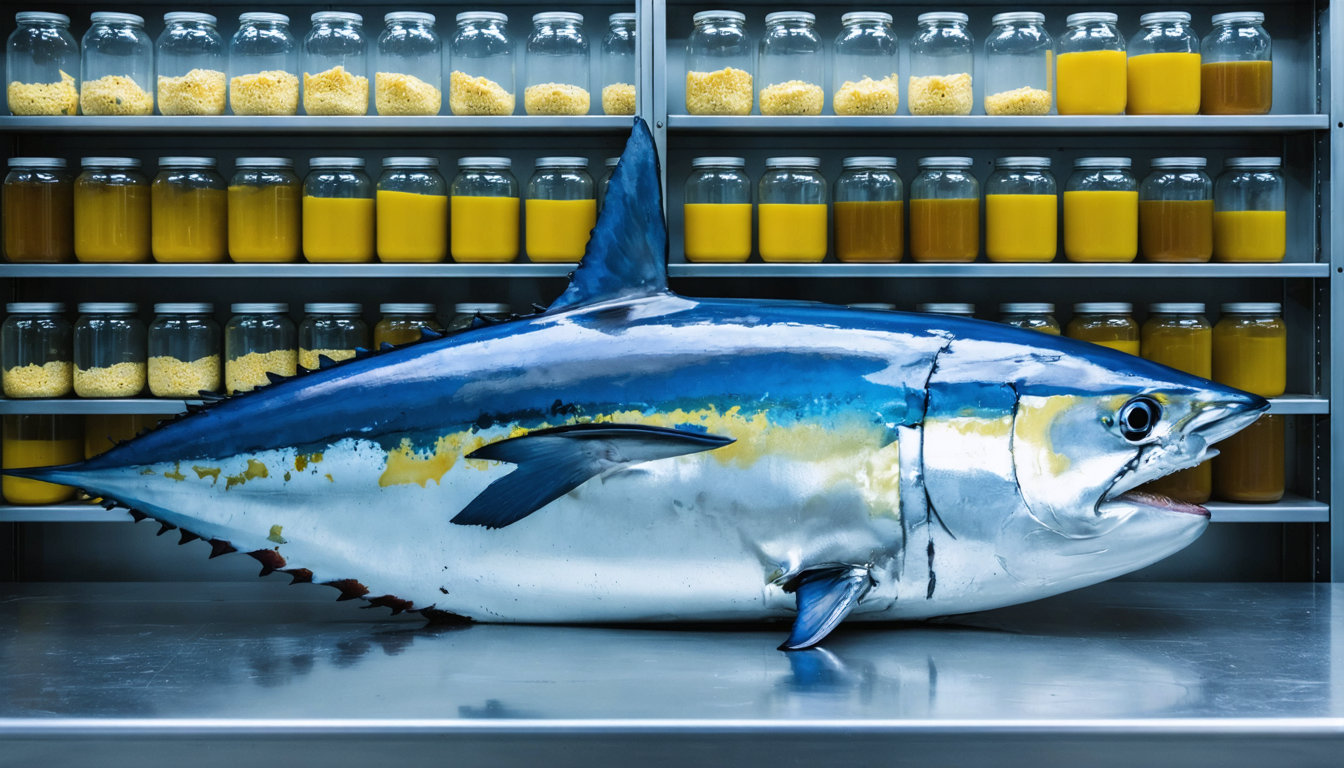
WWF's Living Planet Report 2026 finds monitored wildlife populations have fallen 73% on average since 1970. The report's case that conservation can work leans on bluefin tuna back in UK waters, credited to quota cuts, size limits and protected spawning grounds.
The Scientist · Science desk
What happened
- WWF and the Zoological Society of London follow close to 36,000 populations drawn from just under 6,000 species, covering mammals, birds and fish as well as reptiles and amphibians.
- Bluefin tuna, once the basis of large UK fisheries, had largely disappeared from British waters by the 1960s after overfishing of both the fish and its prey.
- The report counts wild tigers rising from around 3,200 in 2010 to about 5,700 in 2025.
- It estimates that in 2023 about $7.3 trillion went into activities that harm nature, against $220bn spent protecting or restoring it.
Why it matters
- What it limits constraint Headcount gains such as the tigers' sit on a different scale from the index's average trend, so the report's recoveries cannot be subtracted from its 73% to give a net figure.
- Who has to decide decision Fisheries managers elsewhere get a package to copy, but the tuna record credits quotas, size limits and spawning protection together and cannot tell them which measure to fund first.
- What it costs cost On WWF's estimate, protection receives about 3 cents for every dollar flowing into harm, and the charity says conservation alone cannot reverse the decline.
Next story · Science · 2d ago
Researchers say the Wildlife Photographer of the Year elephant has picked up other females' dead calvesConfirmed2 publishers
The 73% averages the change in size of each tracked population. It is not a count of animals lost [18]. About half of the populations are stable or growing, and losses elsewhere outweigh their gains [19]. That second fact tells you something about how the average is built. No population can shrink by more than 100%. So if half sit at zero or above, a plain mean of their percentage changes could not show a fall much larger than 50% [20]. A 73% fall [1] has to come from combining or weighting the series some other way [20].
The index also covers only vertebrates. Dr Katie Collins, a senior curator at the Natural History Museum in London, said it misses plants, insects and other creatures that vertebrates depend on [3]. "If you lose garden snails, you lose the song thrush," she said [4].
The tuna is the report's clearest case, because the remedy matches the diagnosis. The collapse was blamed on overfishing [6]. The report credits the recovery to limits on fishing: lower catch quotas, size limits and protected spawning grounds, backed by campaigns from consumers, chefs and retailers [7]. Those measures act on the tuna itself, but the original decline also involved overfishing of the smaller fish it eats [6]. As reported, the evidence is a before-and-after record of one species [5][6]. The BBC's account of the report does not include a population figure for the fish. The scale of the rebound rests on descriptions: "huge numbers" off the British coast [5], and what Hannah Rudd, head of marine at the Angling Trust, called close to an "explosion" [8].
In my view the case supports Rudd's reading [9]. "I think bluefin tuna is a golden case study that fisheries management works," she said [9]. The measures target the stated cause, and the return followed them [6][7]. A single before-and-after case can show that much. A count would show how large the effect is.
The report's other recoveries took decades, or new law [11][12]. The green sea turtle moved from "endangered" to "least concern" last year after 50 years of conservation work in about 80 countries [11]. Elephants are stable or growing in parts of southern Africa, helped by laws that give local people a share of the income the animals bring, including from tourism [12]. The tiger counts imply a rise of about 78% over 15 years [21].
Mike Barrett, chief scientific adviser at WWF-UK, has worked on seven Living Planet reports and said this is the first whose takeaway is hope [14]. "Hope is not the same thing as wishful thinking," he said. "Hope is not passive. Hope's about action." [13]
WWF names farming and the burning of fossil fuels as the biggest pressures on wildlife [15]. Neither is among the levers credited with the tuna's return [7][15]. "So it's a closing window of opportunity, but it's still open, just, if we act now," Barrett said [17].
What to watch
- A published UK bluefin population estimate and survey method would put a size on a recovery so far described in words.
- The full report's methods should show how the nearly 36,000 population series are weighted and combined into the 73% average.
- Evidence on whether the smaller fish that bluefin eat have recovered too would test how much of the return the fishing limits explain.
Clarity's read
What the record supports and how the coverage leans. The claims behind it follow.
Reality
- Evidence60
- Adoption
- Not scored
- Hype gap+10
- Incentives55
- Confidence65
Claim ledger
Ranked by verification strength, evidence, and original report placement.
- [1]
WWF's Living Planet Report 2026 estimates that monitored wildlife populations around the world have fallen by an average of 73% since 1970.
- [2]
Working with the Zoological Society of London, WWF tracks nearly 36,000 populations of almost 6,000 species of mammals, birds, fish, reptiles and amphibians.
- [3]
Dr Katie Collins, a senior curator at the Natural History Museum in London, said the index misses vast numbers of important species because it covers only vertebrates, missing plants, insects and other creatures they depend on.
- [4]
"If you lose garden snails, you lose the song thrush."
- [5]
Bluefin tuna have returned in huge numbers off the British coast after almost disappearing from UK waters.
- [6]
The UK was once home to large tuna fisheries, but overfishing of both the tuna and the smaller fish it preys on meant that by the 1960s it had largely disappeared.
- [7]
The report credits the tuna's recovery to a concerted international effort that included reducing catch quotas, size limits and protection of spawning grounds, backed by campaigns from consumers, chefs and retailers.
- [8]
Hannah Rudd, head of marine at the Angling Trust, said the result of the effort was close to an "explosion" in the population of the species.
- [9]
"I think bluefin tuna is a golden case study that fisheries management works."
- [10]
The report highlights an increase of more than 70% in the number of wild tigers, from around 3,200 in 2010 to about 5,700 in 2025.
- [11]
Last year the green sea turtle became the first marine turtle to have its protection status downgraded from "endangered" to "least concern", after 50 years of conservation work in about 80 countries.
- [12]
Elephant numbers are stable or growing in parts of southern Africa, thanks in part to new laws that give local people a share of the income elephants bring, including tourism.
- [13]
Mike Barrett, chief scientific adviser at WWF-UK, said: "Hope is not the same thing as wishful thinking. Hope is not passive. Hope's about action."
- [14]
Barrett has worked on seven Living Planet reports and said this was the first where the takeaway message was to focus on hope.
- [15]
WWF says conservation alone cannot reverse the decline and the causes must be tackled; the biggest pressures come from farming, which can destroy habitats, and burning fossil fuels for energy, which drives climate change.
- [16]
The report estimates that in 2023 about $7.3 trillion went into activities that harm nature, compared with $220bn spent protecting or restoring it, a ratio of roughly 33 to one.
- [17]
"So it's a closing window of opportunity, but it's still open, just, if we act now."
- [18]
The 73% figure measures the average change in the size of the tracked populations, not the number of animals lost.
- [19]
About half of the tracked populations are stable or growing, but their gains are outweighed by losses elsewhere.
- [20]
If about half of tracked populations changed by zero or more and no population can fall by more than 100%, a plain mean of percentage changes could not show a fall much larger than about 50%; a 73% average fall must therefore come from combining or weighting the series some other way.
- [21]
Wild tiger numbers rose by about 78% over the 15 years from 2010 to 2025.
- [22]
Spending on protecting or restoring nature was about 3% of the money flowing into harmful activities in 2023, roughly 3 cents per dollar.
Sources
2 independent publishers whose own reporting we read for this story.
- bbc.co.ukUK bluefin tuna comeback shows nature can recover, says WWF
1 article · October 7, 2026
- phys.orgWorld must seize shrinking window to save nature as wildlife decline continues, warns major report
1 article · October 8, 2026
Topics and entities
Topics
- Fisheries management
- Biodiversity loss and recovery lags
- Wildlife conservation
Entities
- WWF
- Living Planet Index
- Living Planet Report
- University of Exeter
- Zoological Society of London
- Atlantic bluefin tuna
- Natural History Museum, London