JAXA's Phobos sample mission MMX is set to launch on 19 October
JAXA's MMX is set to launch on an H3 rocket on 19 October and return at least ten grams of Phobos material to Earth in 2031, according to ESA. The sample is meant to help decide whether Mars's moons are captured asteroids or giant-impact debris.
The Scientist · Science desk
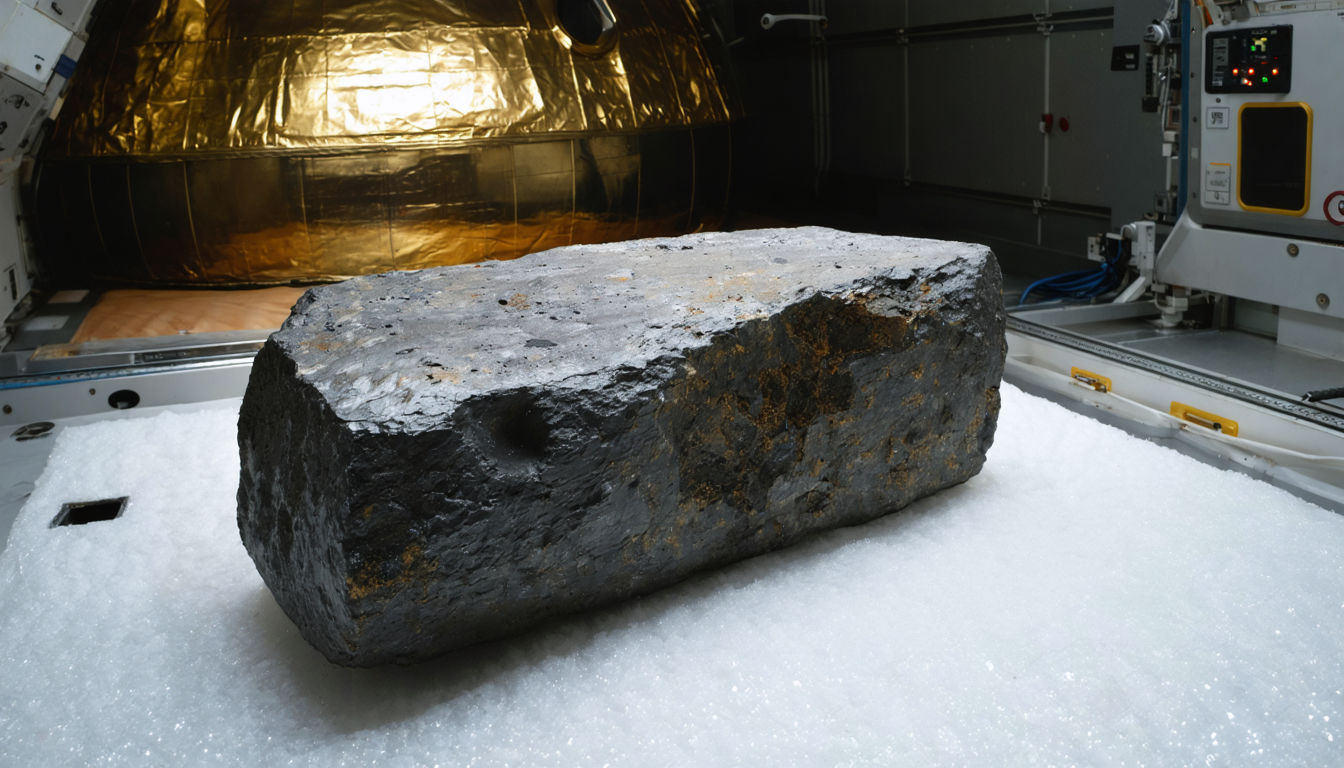
Timeline: MMX is set to launch on an H3 rocket from Tanegashima Space Center on 19 October 2026 at 20:41 BST. It is expected to enter orbit around Mars in August 2027 and to orbit Phobos from September 2027.
| Date | Event | Claim |
|---|---|---|
| October 19, 2026 | Launch on an H3 rocket from Tanegashima, 20:41 BST | 1 |
| August 2027 | Expected to enter orbit around Mars | 4 |
| September 2027 | Expected to begin orbiting Phobos | 4 |
What happened
- Liftoff is planned from the Tanegashima Space Center at 04:41 JST on 20 October 2026, which is 20:41 BST on 19 October.
- ESA lists three firsts for MMX: orbiting Phobos, landing on a moon other than Earth's, and gathering surface samples from it.
- The trip to Mars takes about a year, with orbit entry expected in August 2027 and orbit of Phobos from September 2027.
- After studying Phobos and Deimos from a distance, MMX is to release the Idefix rover in early 2029.
- The sample return capsule is to land in Australia and then be transferred to Japan, where the sample is extracted, catalogued and shared with mission partners.
Why it matters
- What it limits constraint The earliest sample-based answer is 2031, five calendar years after launch, so the flight itself decides nothing about where the moons came from.
- Who's exposed exposure The 2030 collection depends on robotic technology created for extremely low gravity, so the sample's existence rests on that step working.
- What's now possible capability MMX would be the first mission to return to Earth after visiting the Mars system, and ESA says that round-trip ability could interest future missions that bring back samples from Mars itself.
- Who has to decide decision Researchers who want Phobos material will apply through announcements of opportunity that ESA is preparing with CNES, DLR and JAXA, and European scientists are planned to have access.
Next story · Product · 5d ago
NASA offers its 800GB Artemis II record two ways, as a browsing page and a researchers' archiveConfirmed2 publishers
ESA, a partner in a mission JAXA leads [7], is the only source here, and its account of the science is guarded. The agency says the origin of Phobos and Deimos is unknown: they may be asteroids captured into Mars orbit, or debris thrown up by a giant collision on the surface of Mars [3]. What is known comes from a few flybys, because no spacecraft has stayed near the moons for long [8]. ESA's answer is that samples are needed [3].
The ESA text does not say which measurements on the returned material would separate the two stories. We would say the sample bears on the question, and we would hold the word "settles" until that analysis exists.
The sample also covers one body of two. On the way home the spacecraft flies past Deimos and investigates it further [15], but the physical material comes from Phobos [5]. A Phobos result speaks for Deimos only if the two moons share an origin.
The step that produces the sample comes late. In 2030 the main spacecraft lands on Phobos [5], after the rover Idefix has gathered information to prepare that landing [19]. According to ESA, the 25-kg Idefix will weigh the equivalent of 15 grams on the surface [18]. That is about 0.06% of its weight on Earth [20].
Ten grams is a small mass. ESA says tiny amounts of sample may hold a lot of information when measured precisely [16]. Elliot Sefton-Nash, ESA's MMX project scientist, made the case for bringing it home. "Bringing samples to our most sophisticated labs here on Earth is a multiplier for discoveries, because our most precise instruments are too large, complex or sensitive to send to space," Sefton-Nash said [13].
What to watch
- Whether the H3 lifts off from Tanegashima at 04:41 JST on 20 October 2026 as scheduled.
- Mars orbit entry in August 2027 and orbit of Phobos from September 2027, the first checks on ESA's timeline.
- Any statement from JAXA or its partners on which measurements of the returned sample will test the capture and giant-impact origins.
Clarity's read
What the record supports and how the coverage leans. The claims behind it follow.
Reality
- Evidence70
- Adoption
- Not scored
- Hype gap+20
- Incentives55
- Confidence72
Perspective Coverage
3 publishers- Builder
- Builder 45%
- Operator
- Operator 33%
- Investor
- Investor 22%
Claim ledger
Ranked by verification strength, evidence, and original report placement.
- [1]
MMX is set to launch on an H3 rocket from the Tanegashima Space Center at 04:41 JST on 20 October 2026 (20:41 BST / 21:41 CEST on 19 October 2026).
- [2]
The return module will arrive back at Earth in 2031 and send down at least ten grams of Phobos material in a sample return capsule.
- [3]
The origin of Mars's moons is unknown: they may be asteroids captured into Mars orbit, or remnants of debris thrown into orbit after a giant collision on Mars's surface; ESA says samples are needed to find out.
- [4]
MMX will take around a year to arrive at Mars, is expected to enter orbit around Mars in August 2027, and to orbit Phobos from September 2027.
- [5]
In 2030 the main spacecraft will land on Phobos to collect samples and pack them into a return module for the journey back to Earth.
- [6]
The sample return capsule will land in Australia before being transferred to Japan, where the sample will be extracted, catalogued and shared with mission partners.
- [7]
MMX is led by JAXA, in collaboration with NASA, CNES, DLR and ESA.
- [8]
No spacecraft has dwelled near Phobos and Deimos for long, so what is known comes from a few flybys.
- [9]
After studying Phobos (and Deimos) from a distance, MMX will release Idefix in early 2029.
- [10]
MMX will be the first spacecraft to orbit Phobos, the first to land on a moon other than our own, and the first to collect samples from Phobos's surface.
- [11]
Special technology has been created to help land, manoeuvre and collect samples robotically in the extremely low gravity at Phobos.
- [12]
Samples are planned to be made available to European scientists, and ESA is working with CNES, DLR and JAXA to provide announcements of opportunity to work with the samples.
- [13]
"Bringing samples to our most sophisticated labs here on Earth is a multiplier for discoveries, because our most precise instruments are too large, complex or sensitive to send to space," said Elliot Sefton-Nash, ESA MMX Project Scientist.
- [14]
MMX will be the first mission that returns to Earth after visiting the Mars system; ESA says the ability to make such round trips could be interesting for future robotic missions that bring back samples from Mars itself.
- [15]
On the way home, MMX will fly past and further investigate Deimos and Mars itself.
- [16]
ESA says tiny amounts of sample may contain a lot of information that can be revealed with precise measurements.
- [17]
The returned sample arrives five calendar years after the October 2026 launch.
- [18]
The 25-kg Idefix rover will weigh the equivalent of 15 grams on the surface of Phobos.
- [19]
One of the two main tasks of the 25-kg Idefix rover is providing information to prepare for the landing of the main spacecraft to collect samples.
- [20]
Idefix's weight on Phobos is about 0.06% of its weight on Earth.
Sources
3 independent publishers whose own reporting we read for this story.
- esa.intMars moon lander set to launch on 19 October
1 article · October 13, 2026
- nasa.govNASA to Help Unlock Mysteries of Mars’ Moons in Upcoming Mission
1 article · October 15, 2026
- newscientist.comJapan is launching a mission to Mars’s largest moon Phobos
1 article · October 16, 2026
Topics and entities
Entities
- Phobos
- Deimos
- European Space Agency
- Martian Moons eXploration
- NASA
- Japan Aerospace Exploration Agency