NASA opens its Probe Explorer class with a far-infrared telescope capped at $1.2 billion
PRIMA, a 1.8-metre far-infrared telescope managed by JPL, moves into preliminary design with a project cost ceiling of $1.2 billion that excludes launch, a 2033 launch target and a confirmation review still ahead.
The Scientist · Science desk
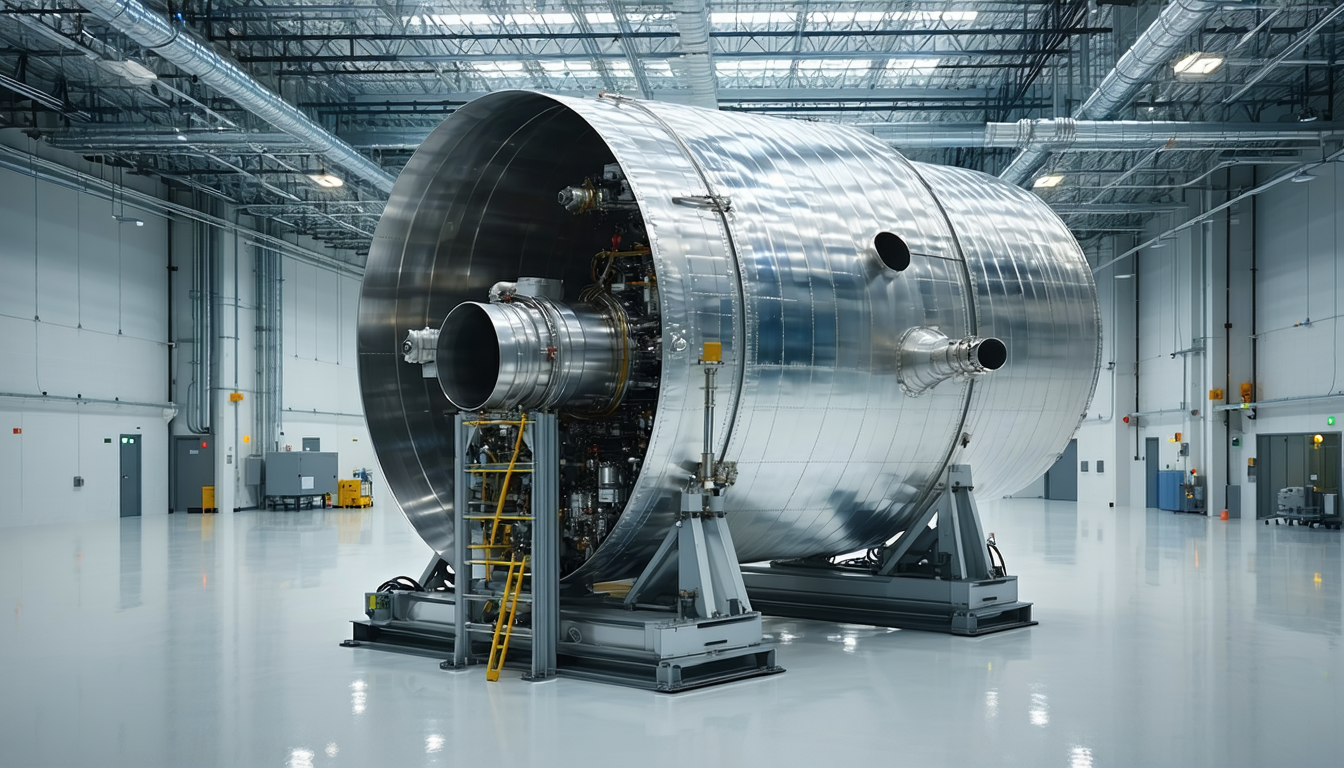
What happened
- NASA said Wednesday that PRIMA, the PRobe far-Infrared Mission for Astrophysics, is advancing to the next phase of development as a mission to study the history and evolution of the universe.
- PRIMA is the first mission in a new class called Probe Explorers, created inside NASA's long-running Explorers Program.
- If PRIMA clears a confirmation review covering technical, programmatic and cost performance, its project cost is capped at $1.2 billion, a figure that excludes launch and other non-project costs.
- JPL will manage the mission, with Goddard and Marshall among the NASA partners and contributions from CNES, ASI, DLR, CSA, KASI, JAXA and the UK Space Agency.
Why it matters
- What it limits constraint A ceiling that excludes launch bounds what the project office may spend, not what the mission costs the agency, so the $1.2 billion figure is not comparable with mission totals that include a rocket.
- Who has to decide decision This week's selection buys design and technology work; the decision to build waits on the confirmation review, where NASA judges whether technical and cost performance justify implementation.
- What's now possible capability A confirmed PRIMA would give NASA survey coverage in far-infrared wavelengths, the band NASA places between its existing infrared observatories and radio telescopes.
Next story · Science · Oct 8
MeerKAT and Webb trace the most distant fast radio burst to a small galaxy at redshift 2.15Confirmed5 publishers
The $1.2 billion is a ceiling on project cost. Launch and other non-project costs sit outside it, NASA said, and the announcement does not state a launch vehicle or a launch cost [5][15]. Anyone setting that number beside a past astrophysics mission has to add the rocket back in first.
Phase B pays for preliminary design and technology development [3]. The cap applies if the mission is confirmed, and confirmation comes at a review of technical, programmatic and cost performance that decides readiness to begin implementation in Phase C [4][5].
PRIMA's telescope is 5.9 feet across [7], about 1.8 metres [18]. It will run deep, sensitive surveys in far-infrared light, a band NASA describes as bridging the gap between existing infrared observatories such as the James Webb Space Telescope and radio telescopes [7]. The stated science targets are the origins of planets outside the solar system, how galaxies and their black holes have grown over cosmic history, and how dust and heavy elements built up [8]. Launch is targeted for 2033 with a planned five-year mission [6], so planned operations run to about 2038 [19].
A 2020 decadal survey from the National Academies recommended NASA establish the Probe Explorers class [9]. NASA said it chose PRIMA after evaluating concept studies on scientific merit against the decadal recommendations, on the feasibility of their development plans on cost and schedule, and on use of technologies that could support the development of future large missions [10]. Part of a probe's job, by NASA's own selection logic, is maturing hardware a later flagship can use.
"A single mission alone can't probe all the universe's mysteries. But by extending the survey capabilities of our fleet into far-infrared wavelengths with PRIMA, we're enabling an incredibly comprehensive look at the cosmos," said Shawn Domagal-Goldman, director of NASA's Astrophysics Division [16]. On the pipeline, he said: "With our Webb and Roman space telescopes, we set a cadence of launching premiere-class missions in both halves of the decade. We're going to keep that up and kick off the next decade with PRIMA, as part of a pipeline that will consistently have missions of this caliber ready to go" [17].
The Explorers Program is NASA's oldest continuous program, built to give frequent, low-cost access to space through investigations led by principal investigators [13]. It has launched more than 100 missions since Explorer 1 in 1958, which discovered Earth's radiation belts, among them Uhuru and the Cosmic Background Explorer, whose investigators won Nobel prizes [14].
Now NASA has to hold that number. Far-infrared detectors need cold optics, and thermal and cryogenic engineering tends to run over schedule. Phase B is when that gets priced, and the confirmation review is when NASA says whether the price fits.
What to watch
- The confirmation review: whether NASA finds PRIMA's technical and cost performance ready for Phase C, and whether the $1.2 billion cap survives it unchanged.
- Whether NASA names a launch vehicle and publishes a launch cost, the line that sits outside the capped project total.
- Whether a second Probe Explorer competition opens, and what cost and schedule profile NASA asks proposers to match.
Clarity's read
What the record supports and how the coverage leans. The claims behind it follow.
Reality
- Evidence72
- Adoption
- Not scored
- Hype gap+10
- Incentives60
- Confidence75
Claim ledger
Ranked by verification strength, evidence, and original report placement.
- [1]
NASA announced Wednesday that PRIMA (PRobe far-Infrared Mission for Astrophysics), a mission to explore the history and evolution of the universe, is advancing to the next phase of development.
- [2]
PRIMA is the first mission in a new class of NASA astrophysics missions called Probe Explorers, within the agency's longstanding Explorers Program.
- [3]
NASA selected PRIMA to move into Phase B, the stage of development that advances the preliminary design and technology development for the mission.
- [4]
The mission is subject to a confirmation review, based on technical, programmatic and cost performance, to determine its readiness to begin implementation in Phase C.
- [5]
If confirmed, PRIMA's project cost is capped at $1.2 billion, not including launch and other non-project costs.
- [6]
The observatory will be targeted to launch in 2033, for a planned five-year mission.
- [7]
With a 5.9-foot telescope, PRIMA will conduct deep, sensitive surveys of the universe in far-infrared light, helping bridge the gap between existing infrared observatories, such as NASA's James Webb Space Telescope, and radio telescopes.
- [8]
PRIMA's questions include the origins of planets outside our solar system, how galaxies and their black holes have grown and evolved over cosmic history, and how dust and heavy elements have built up in the universe over time.
- [9]
The National Academies of Sciences, Engineering, and Medicine's 2020 Decadal Survey, Pathways to Discovery in Astronomy and Astrophysics for the 2020s, recommended NASA establish the Probe Explorers mission class.
- [10]
NASA selected PRIMA for development after detailed evaluation of concept studies for Probe Explorer missions, based on their scientific merit in alignment with the Decadal Survey's recommendations, feasibility of their development plans on cost and schedule, and use of technologies that could support the development of future large missions.
- [11]
NASA's Jet Propulsion Laboratory in Southern California will manage the PRIMA mission, with NASA's Goddard Space Flight Center and Marshall Space Flight Center among the partners.
- [12]
PRIMA will have contributions from international partners CNES, ASI, DLR, CSA, KASI, JAXA and the UK Space Agency.
- [13]
The Explorers Program is the oldest continuous NASA program, designed to provide frequent, low-cost access to space using principal investigator-led space science investigations.
- [14]
Since the Explorer 1 launch in 1958, which discovered Earth's radiation belts, the Explorers Program has launched more than 100 missions, including the Uhuru and Cosmic Background Explorer missions that led to Nobel prizes for their investigators.
- [15]
NASA's announcement does not state a launch vehicle or a launch cost for PRIMA.
- [16]
"A single mission alone can't probe all the universe's mysteries. But by extending the survey capabilities of our fleet into far-infrared wavelengths with PRIMA, we're enabling an incredibly comprehensive look at the cosmos," said Shawn Domagal-Goldman, director, Astrophysics Division, NASA Headquarters.
- [17]
"With our Webb and Roman space telescopes, we set a cadence of launching premiere-class missions in both halves of the decade. We're going to keep that up and kick off the next decade with PRIMA, as part of a pipeline that will consistently have missions of this caliber ready to go," said Shawn Domagal-Goldman.
- [18]
A 5.9-foot telescope aperture is about 1.8 metres.
- [19]
A 2033 launch target with a planned five-year mission puts planned operations through about 2038.
- [20]
Seven international agencies are listed as contributing partners to PRIMA.
Sources
2 independent publishers whose own reporting we read for this story.
- livescience.comNASA teases new PRIMA telescope that could see what even the James Webb telescope can't
1 article · September 25, 2026
- nasa.govNASA Selects Far-Infrared Telescope as First in New Mission Class
1 article · September 23, 2026
Topics and entities
Topics
- NASA Astrophysics Missions
- Far-infrared astronomy
- Space Telescopes
Entities
- National Academies
- Goddard Space Flight Center
- Explorers Program
- Meredith MacGregor
- Nancy Grace Roman Space Telescope
- Marshall Space Flight Center
- NASA Jet Propulsion Laboratory
- Shawn Domagal-Goldman
- 2020 Astronomy and Astrophysics Decadal Survey
- NASA
- Advanced X-ray Imaging Satellite
- James Webb Space Telescope