Kazakhstan's flared-gas decree fits bitcoin miners better than AI builders
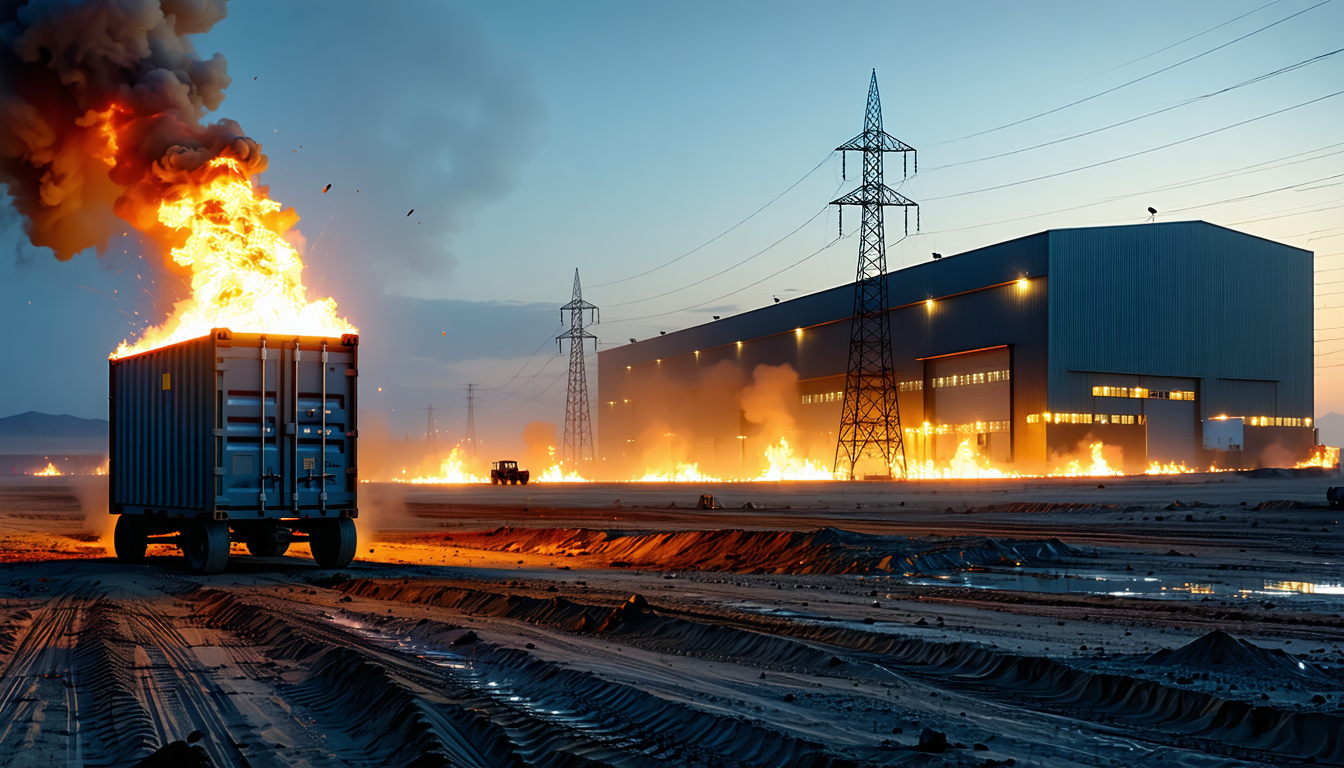
Kazakhstan's July decree lets oil producers supply flared-gas power to crypto miners, as Crusoe did before assembling 10 gigawatts of AI projects. Crusoe sold those flare operations to NYDIG, so AI demand in Kazakhstan more likely lands on new grid capacity.
The Investor · Invest desk
What happened
- In July, President Kassym-Jomart Tokayev signed a decree letting Kazakh oil producers burn otherwise-flared gas for off-grid electricity used in crypto mining, Interfax-Kazakhstan reported.
- The decree came from the Ministry of Artificial Intelligence and Digital Development, with input from the central bank and the Astana International Financial Centre, and proposed stablecoin settlement for cross-border trade.
- Crusoe, which pioneered flare-gas bitcoin mining in US shale fields, sold its mining and flare-mitigation operations to NYDIG in 2025 as it moved fully into AI infrastructure.
- Kazakhstan ranked among the top three countries by bitcoin mining hash rate after China's 2021 ban, according to Cambridge Centre for Alternative Finance data.
Why it matters
- What it limits constraint Because the state can reclaim the gas for its own purposes, producers can offer only interruptible supply, and a miner willing to switch off is the easiest buyer to sign.
- What it sets up precedent If Kazakh operators follow Crusoe, their flare sites are more likely to end up with a bitcoin owner, as Crusoe's did with NYDIG, than to host AI clusters.
- What it costs cost The proposed personal income tax exemption on regulated crypto income is revenue the state would give up to attract the capital its minister is courting.
- Who's exposed exposure Putting data centers in the same 70% category as miners adds a second large buyer to a grid that has already strained under miners alone.
Next story · Invest · yesterday
Bank of America's $1.21 billion fine gives crypto critics a comparison with Zhao's four months in prisonConfirmed4 publishers
The condition attached to this power decides who buys it. Producers may redirect the gas only when it is not needed for state purposes [2], so the buyer at the wellhead is taking electricity the government can take back. Flaring exists to get rid of gas in places pipelines often cannot reach [6]. Crusoe's chief executive, Chase Lochmiller, explained what first drew his company to that gas. "Bitcoin mining is the best buyer of last resort," he said [13].
The Crusoe precedent is narrower than the comparison suggests. The company built mobile data center sites across the North Dakota and Montana shale fields and worked with producers including Equinor, Devon Energy and Kraken Oil & Gas [9]. "What started with capturing waste methane in the oilfield to power Bitcoin mining has evolved into finding new and creative ways to power AI data centers," its founders wrote in 2025 [12]. That evolution included the NYDIG sale [10]. The AI business Crusoe kept has a pipeline of more than 10 gigawatts of data center projects [11].
The opening for AI in Kazakhstan is in a different rule. Under the country's 70/30 model, data centers and miners, counted as one category of buyer, may take up to 70% of new power capacity created by infrastructure upgrades [14]. At least 30% stays with other users [16]. That capacity comes from upgrading the grid, which is a separate supply from gas at the wellhead. The report does not give a volume of flared gas or a megawatt figure for what producers could generate.
The demand the report cites is crypto demand. It puts the regulated crypto market's growth at more than 30-fold in three years, to over $10 billion [15]. Taken at those floors, the market started near $333 million [17]. Binance has picked the country for a regional settlement hub [19], and the decree proposes exempting regulated crypto income from personal income tax [7]. "Our goal is to make Kazakhstan a point of attraction for global capital and expertise while ensuring maximum transparency and protection for every participant in this market," Zhaslan Madiyev, who heads the ministry, said [8].
This can go a few ways. In the first, producers sign miners at the wellhead while AI builders compete with those same miners for the 70% on the upgraded grid [14]. In the second, a local operator follows Crusoe's sequence: it learns on flare gas, then sells the wellhead units to a bitcoin company [10]. In the third, the state reclaims the gas for its own purposes often enough that no buyer of either kind commits [2].
I think the first is the likeliest. The decree builds a bitcoin mining business at the wellhead, and AI compute, if it comes, arrives on the grid. Cryptopolitan answers the AI question with "a qualified yes" [18], citing a decree steered by a ministry named for artificial intelligence [3] and a rule that bundles data centers with miners [14]. The same report notes that nothing in the decree names AI training as the goal, and that Kazakhstan's grid has strained under miners before [5]. I would be wrong if the first contracts under the decree put a data center operator at a flare site.
What to watch
- Any published volume of redirectable flared gas, or megawatts of off-grid capacity, from Kazakh oil producers.
- How Kazakhstan divides the 70% of upgraded capacity between data centers and digital miners.
- Whether the personal income tax exemption for regulated crypto income moves from proposal into law.
Information, not investment advice. This story is general information about companies and markets, drawn from cited reporting. It is not a recommendation to buy, sell or hold any security; check the cited sources before acting.
Clarity's read
What the record supports and how the coverage leans. The claims behind it follow.
Reality
- Evidence55
- Adoption15
- Hype gap+40
- Incentives60
- Confidence50
Claim ledger
Ranked by verification strength, evidence, and original report placement.
- [1]
The decree President Kassym-Jomart Tokayev signed in July allows oil producers to burn otherwise-flared gas for off-grid generation, which can be used to generate electricity for digital mining, Interfax-Kazakhstan reported.
- [2]
The excess power redirection is only on the table when those resources are not needed for state purposes.
- [3]
The decree was put out by the Ministry of Artificial Intelligence and Digital Development (MAIDD); the central bank and the Astana International Financial Centre contributed, and it proposed building infrastructure to use stablecoins to settle cross-border trade.
- [4]
Kazakhstan ranked among the top three countries by Bitcoin mining hash rate after China's 2021 ban, per Cambridge Centre for Alternative Finance data.
- [5]
Nothing in the decree names AI training as the goal, and Kazakhstan's grid has strained under miners before.
- [6]
Flaring was a necessity to dispose of the gas that oil wells vent into areas that pipelines often cannot reach.
- [7]
The decree also proposed carving out an exemption for regulated crypto income from personal income tax.
- [8]
"Our goal is to make Kazakhstan a point of attraction for global capital and expertise while ensuring maximum transparency and protection for every participant in this market," MAIDD Minister Zhaslan Madiyev said.
- [9]
Crusoe turned flare gas into mobile data center sites across the North Dakota and Montana shale fields and worked with producers such as Equinor, Devon Energy and Kraken Oil & Gas, according to the company in 2021.
- [10]
By 2025, Crusoe sold its Bitcoin mining and digital flare-mitigation operations to NYDIG as it fully pivoted to AI infrastructure.
- [11]
Crusoe now operates a pipeline of more than 10 gigawatts of AI data center projects.
- [12]
"What started with capturing waste methane in the oilfield to power Bitcoin mining has evolved into finding new and creative ways to power AI data centers."
- [13]
"Bitcoin mining is the best buyer of last resort," Crusoe CEO Chase Lochmiller said.
- [14]
The 70/30 model would allow data centers and miners to tap up to 70% of new power capacity created by infrastructure upgrades; the rule bundles "data centers and digital miners" into one category of power buyer.
- [15]
Kazakhstan's regulated crypto market has grown more than 30-fold in three years to top $10 billion.
- [16]
At least 30% of new power capacity from infrastructure upgrades remains outside the data center and miner category under the 70/30 model.
- [17]
Taking the reported figures at their stated floors, Kazakhstan's regulated crypto market was about $333 million three years ago.
- [18]
Asked whether Kazakhstan's mining play becomes an AI compute playbook, Cryptopolitan wrote: "The honest read is a qualified yes."
- [19]
Binance has picked Kazakhstan for a regional settlement hub.
Sources
2 independent publishers whose own reporting we read for this story.
- crowdfundinsider.comKazakhstan Seeks to Cut Flaring and Bring Bitcoin and Crypto Mining Operations Back with Wellhead Power
1 article · October 1, 2026
- cryptopolitan.comWill Kazakhstan's new Bitcoin mining strategy evolve into an AI compute playbook?
1 article · September 26, 2026
Topics and entities
Topics
- AI Data Centers
- Crypto Regulation and Licensing
- Flare gas power generation
- Bitcoin mining
Entities
- Ministry of Artificial Intelligence and Digital Development
- Cambridge Centre for Alternative Finance
- Crusoe
- Astana International Financial Centre
- Binance
- Chase Lochmiller
- NYDIG
- Equinor
- Kassym-Jomart Tokayev
- Kazakhstan